
Introduction
When we step into a library or settle into a home theater, we expect an atmosphere of comfort and focus. In a library, it is the scent of old books and the quiet hum of learning; in a home theater, it is the immersive escape of cinema. What we don’t expect is a cocktail of invisible chemicals drifting off the chairs and sofas. Creating a chemical-free environment is essential for indoor air quality, particularly in child-friendly spaces where young patrons spend hours huddled over their favorite stories, or in cozy media rooms where families gather for movie nights.
Prioritizing non toxic library seating and healthy home furniture isn’t just a design trend; it is a commitment to the long-term health of the community and your family. As we spend more time indoors, the materials that surround us dictate the quality of the air we breathe. This guide explores how to identify safe furniture, the certifications that matter, and why making the switch to non-toxic materials is one of the best investments you can make for your indoor environment.
Why Prioritize Non-Toxic Library Seating?
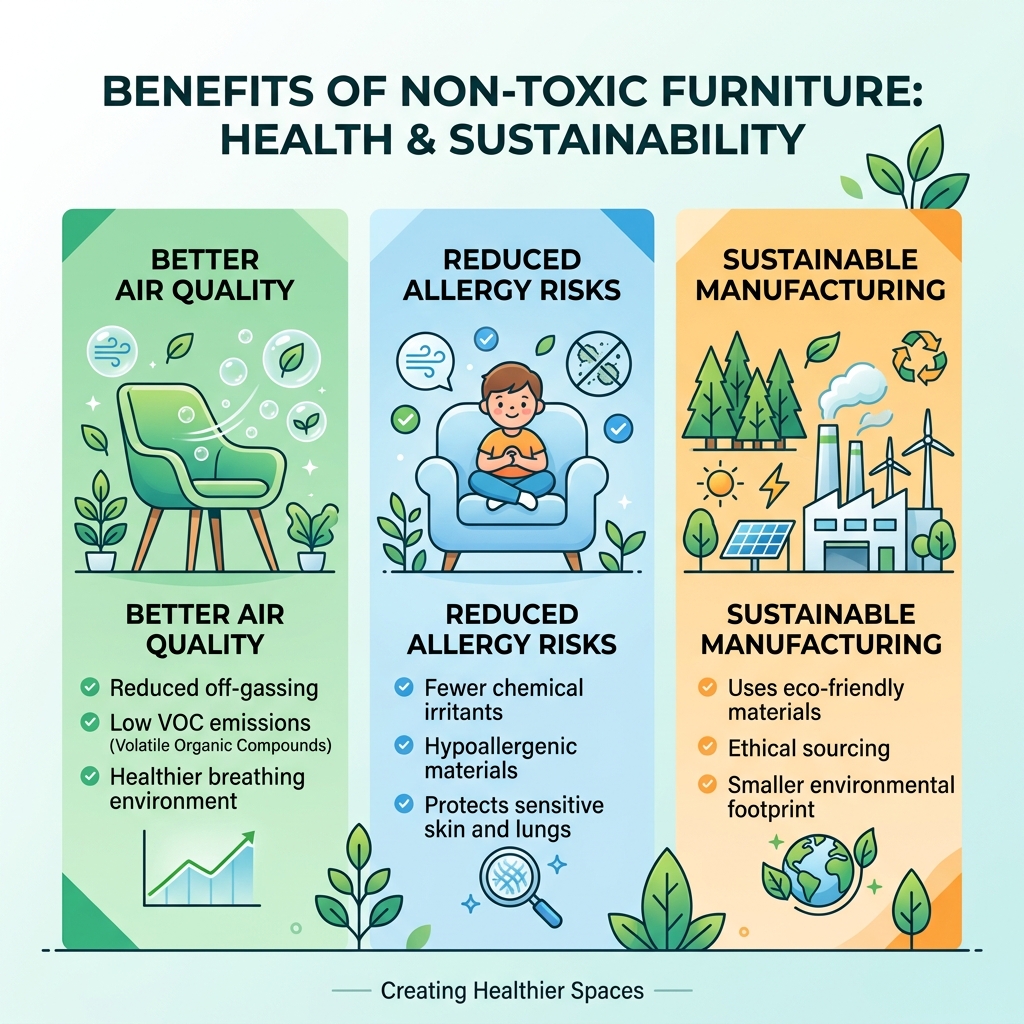
The traditional furniture industry has a bit of a “dirty” secret that many consumers are only just beginning to uncover. For decades, mass-produced seating has relied on cheap adhesives, chemical flame retardants, and synthetic finishes that release Volatile Organic Compounds (VOCs). According to research, VOCs can be toxic to humans and are found everywhere—including our furniture, cleaning agents, and paints. These chemicals “off-gas,” meaning they leak into the air long after the furniture has been installed, often creating that “new furniture smell” which is actually a warning sign of chemical saturation.
For children, whose respiratory systems and neurological pathways are still developing, this exposure is particularly risky. High VOC levels are linked to immediate symptoms like headaches, dizziness, and eye irritation, as well as long-term respiratory issues like asthma. In a library setting, where children may sit close to the floor or press their faces against cushions while reading, the proximity to these toxins is even more concerning.
Beyond the immediate health risks, the furniture industry often contributes to significant environmental degradation, including deforestation and greenhouse gas emissions issues. By choosing non-toxic options, we aren’t just protecting our lungs; we are protecting the planet by supporting manufacturers who avoid harmful harvesting and production methods.
In our experience at MoneyFinPro, maintaining a healthy space also means looking at the entire lifecycle of the room. Using safe cleaning for pets and kids ensures that we don’t reintroduce toxins into the environment after we’ve gone to the trouble of sourcing clean, sustainable furniture. A holistic approach to indoor air quality requires both the right products and the right maintenance habits.
Key Certifications for Safe Library Furniture
How do you know if a chair is actually “clean” or if it’s just clever marketing? In an era of “greenwashing,” where every brand claims to be eco-friendly, we look for rigorous third-party certifications. These are the gold standards that separate truly non toxic library seating from products that simply use recycled packaging.
- GREENGUARD Gold: This is the most critical certification for indoor air quality. While the standard GREENGUARD certification is good, the “Gold” level includes even stricter emission limits and considers safety factors for sensitive individuals, such as children and the elderly. It ensures that a product has been tested for over 10,000 chemicals in specialized environmental chambers.
- FSC-Certified: The Forest Stewardship Council (FSC) ensures that the wood used in the furniture comes from responsibly managed forests. This prevents the use of wood from endangered forests and ensures that the harvesting process supports local ecosystems and workers’ rights.
- OEKO-TEX Standard 100: Usually found on fabrics and upholstery, this certification guarantees that every component of the textile—from the thread to the buttons and linings—has been tested for harmful substances and is harmless for human health.
- PFAS-Free: Many commercial fabrics are treated with “forever chemicals” for stain resistance. Look for furniture explicitly labeled as PFAS-free to avoid these persistent environmental toxins.
| Certification | Focus Area | What it Guarantees |
|---|---|---|
| GREENGUARD Gold | Air Quality | Extremely low chemical emissions/VOCs |
| FSC | Forestry | Sustainably harvested and ethically sourced wood |
| OEKO-TEX | Textiles | No harmful substances in fabrics or dyes |
| Formaldehyde-Free | Adhesives | No added urea-formaldehyde resins in wood products |
Once you’ve invested in certified pieces, it is vital to maintain them correctly. Be sure to follow an eco-friendly furniture cleaning guide to keep those certifications “valid” in your own space. Using harsh chemical cleaners on a GREENGUARD Gold chair defeats the purpose of having a low-VOC environment.
Top Materials and Non-Toxic Library Seating Finishes
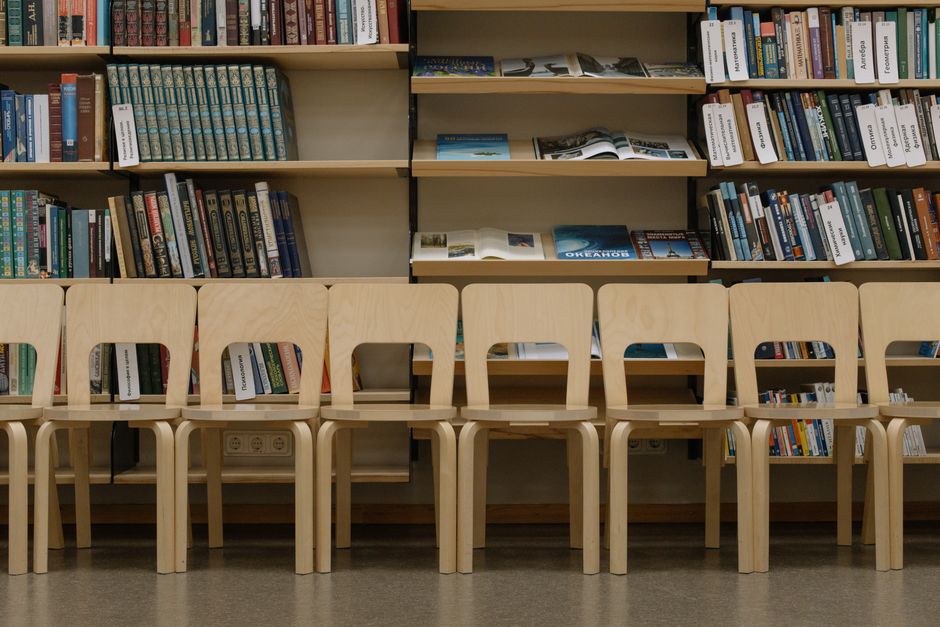
The materials used in modern library and home theater seating have come a long way. We are seeing a shift away from “mystery” plastics and particle boards toward solid, transparent materials that offer both longevity and safety.
Durable Wood and Non-Toxic Library Seating Finishes
Solid wood remains the champion of durability and health. Many high-quality library chairs are crafted from solid maple hardwood or FSC-certified birch plywood. Unlike particle board, which is often held together by formaldehyde-based glues, solid wood and high-grade plywood are structurally sound and naturally beautiful.
The finish applied to the wood is just as important as the wood itself. Traditional lacquers can off-gas for months. We recommend looking for:
- Zero-VOC Stains: These provide rich color without the chemical smell or respiratory irritants.
- Water-Based Finishes: These are much safer than traditional oil-based lacquers and provide a durable, clear coat that protects the wood from the heavy use typical in public libraries.
- Natural Plant-Based Oils: Some high-end brands use finishes derived from linseed, tung, or even cashew nut shells, which are completely biodegradable and non-toxic.
These materials offer “heirloom quality,” meaning they can last through generations of students. To keep them looking new without introducing toxins, check out our tips for safe cleaning for wooden furniture.
Innovative Recycled Components and Home Theater Comfort
Sustainability and non-toxicity often go hand-in-hand. Some of the most exciting developments in non toxic library seating involve upcycled materials. For example, the Fluit chair is made from 100% recycled fiberglass and polypropylene sourced from fruit and vegetable boxes, proving that waste can be transformed into high-design furniture.
For home theaters, where comfort is king, look for seating that utilizes natural latex instead of standard polyurethane foam. Natural latex is derived from rubber trees and is naturally resistant to dust mites and mold without the need for added chemicals.
Other modular systems, like the Organic Lite series, boast impressive statistics:
- 99.96% Recyclability: Almost the entire chair (including packaging) can be recycled at the end of its life, supporting a circular economy.
- 20.09% – 22.36% Recycled Content: Utilizing post-industrial waste to create new, functional art.
- Low CO2 Emissions: Only 0.034 – 0.035 kg of CO2 per chair during production, significantly lower than traditional plastic seating.
These innovative designs help reduce chemicals in home cleaning because their surfaces are often non-porous and easy to sanitize with simple, natural solutions rather than heavy solvents.
Flexible and Sensory-Safe Designs for Young Patrons
Libraries are no longer just places for “shushing.” They are active hubs for collaboration, digital exploration, and sensory learning. This is where flexible seating shines. In both libraries and home theaters, the ability to move and adjust your seating can significantly improve the user experience.
Full-foam construction, like that found in the FŌM Chair, is a game-changer for sensory-safe environments. Because these chairs have no hard wood or metal base, they are lightweight and easy for children to move. This supports student engagement and allows for quick room reconfigurations for storytime or group projects. For neurodivergent patrons, these soft, enveloping seats provide a “hug-like” sensation that can reduce anxiety and improve focus.
Modular chairs and flexible stools support social-emotional development by giving kids a sense of agency over their environment. When a child can choose a seat that fits their sensory needs—whether it’s a firm stool for upright reading or a soft foam chair for lounging—they are more likely to stay focused and engaged.
Furthermore, a clean space is easier to maintain when you reduce chemicals in home cleaning by choosing materials that don’t trap dust and allergens. Many modern non-toxic fabrics are engineered to be tightly woven, preventing the accumulation of dander and making them a superior choice for allergy sufferers.
Frequently Asked Questions about Library Seating
What are the most important certifications for non toxic library seating?
If you only look for one, make it GREENGUARD Gold. This specifically addresses the air your patrons breathe by limiting chemical emissions. If you are buying wooden furniture, FSC-certification is the next most important to ensure the wood was ethically and sustainably sourced. For fabrics, look for OEKO-TEX or GOTS (Global Organic Textile Standard).
Are non-toxic chairs as durable as traditional library furniture?
In many cases, they are more durable. Traditional library furniture often uses veneers and particle board held together by formaldehyde-based glues, which can peel, chip, or swell when exposed to moisture. Non-toxic options often use solid wood or high-performance plant-based polymers that meet or exceed BIFMA (Business and Institutional Furniture Manufacturers Association) standards for strength, safety, and longevity.
How do I maintain non-toxic finishes without using harsh chemicals?
Simple is best! For most non-toxic finishes, a damp microfiber cloth and a mild, plant-based soap are all you need. Avoid any cleaners containing ammonia, bleach, or synthetic fragrances, as these can degrade the safe finishes and compromise the air quality you worked so hard to protect. Regular dusting and prompt spot cleaning are the keys to longevity.
How long does off-gassing usually last for traditional furniture?
Traditional furniture can off-gas VOCs for several years, though the highest concentration is usually released in the first six months. By choosing non-toxic, GREENGUARD Gold certified furniture, you bypass this “peak” off-gassing period entirely, ensuring the air is safe from day one.
Is “natural” furniture always non-toxic?
Not necessarily. A “natural” wood table might still be finished with a high-VOC lacquer or held together with toxic glues. Always look for specific certifications like GREENGUARD Gold or Formaldehyde-Free rather than relying on vague marketing terms like “natural” or “eco-friendly.”
Conclusion
At MoneyFinPro, we believe that choosing non toxic library seating and healthy home theater furniture is a vital long-term investment in both human health and environmental sustainability. While the initial cost of certified, high-quality pieces might be slightly higher than “bargain” commercial furniture, the benefits—ranging from improved student engagement and focus to significantly reduced chemical exposure—far outweigh the price tag.
When selecting your seating, look for vendors that offer strong warranties, such as lifetime warranties on foam construction or 10-year warranties on solid wood frames. Transparency regarding the supply chain is also a hallmark of a trustworthy manufacturer. By prioritizing these health-conscious purchases, we create public and private spaces that truly welcome everyone and support a healthier future for the next generation of readers and learners.
