
Your Home Deserves Better Than Chemical Cover-Ups
A homemade natural odor absorber is one of the simplest, cheapest ways to keep your home smelling fresh — no harsh chemicals needed. Here’s a quick look at the most effective options you can make right now:
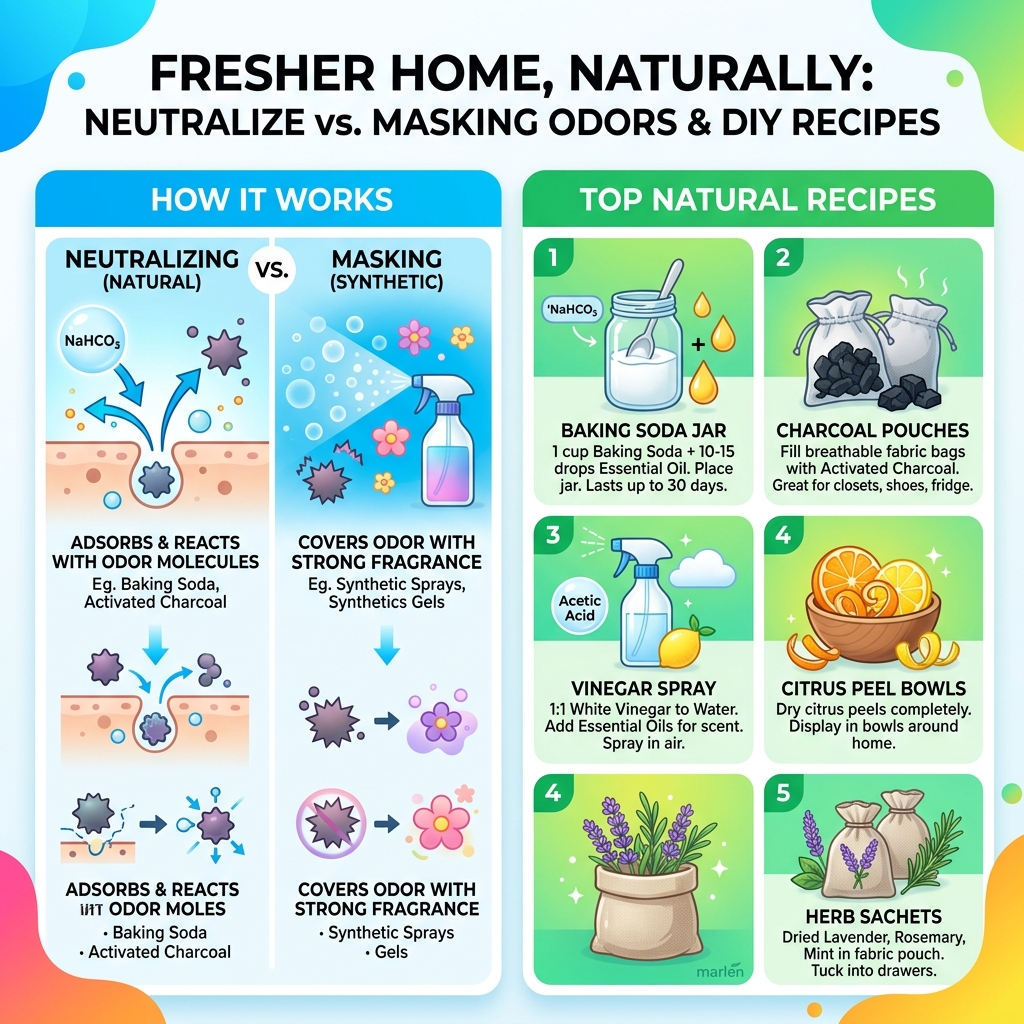
- Baking soda jar — Mix 1 cup baking soda with 10-15 drops of essential oil in a mason jar. Lasts up to 30 days.
- Activated charcoal pouches — Fill a breathable fabric bag with activated charcoal. Great for closets, shoes, and the fridge.
- Vinegar spray — Mix equal parts white vinegar and water in a spray bottle. Add a few drops of essential oil to soften the scent.
- Citrus peel bowls — Dry citrus peels completely, then place in bowls around the home.
- Herb sachets — Combine dried lavender, rosemary, or mint in a small fabric pouch. Tuck into drawers or wardrobes.
All five options cost next to nothing and take less than five minutes to make.
Commercial air fresheners might seem like the easy fix. But many contain a mix of chemicals — including VOCs like formaldehyde and phthalates — that can irritate your lungs, disrupt hormones, and lower your indoor air quality. Meanwhile, a DIY spray can cost as little as 50 cents a bottle.
The good news? Natural ingredients like baking soda, vinegar, and activated charcoal don’t just mask odors — they actually neutralize them at the source. That’s a meaningful difference for anyone who wants a genuinely fresh home, not just a heavily perfumed one.
I’m marlen, and I’ve spent years testing DIY cleaning and deodorizing solutions to find what actually works in real homes — including plenty of trial and error with every homemade natural odor absorber recipe you can imagine. In this guide, I’ll walk you through the best ingredients, easiest recipes, and smartest placement tips so you can ditch the chemical sprays for good.
Why Choose a Homemade Natural Odor Absorber?
Choosing a homemade natural odor absorber over a store-bought aerosol isn’t just a “crunchy” lifestyle choice; it’s a win for your health, your wallet, and the planet. When we spray commercial air fresheners, we aren’t removing the smell. We are simply coating our nasal passages with synthetic fragrances and nerve-deadening chemicals so we can’t detect the bad scent.
In contrast, natural DIY solutions offer several distinct advantages:
- Health Benefits: Many commercial products contain Volatile Organic Compounds (VOCs) like benzene and toluene. These can trigger asthma, cause headaches, and linger in your upholstery. Natural alternatives use simple elements like carbon and sodium bicarbonate that don’t off-gas toxins.
- Budget-Friendly: You can make a high-quality homemade natural odor absorber for about 50 cents. Compare that to the $5 or $10 you might spend on a “premium” brand-name spray that runs out in two weeks.
- Customization: Don’t like the smell of “Arctic Summer” or “Tropical Breeze”? When you DIY, you control the scent. You can use calming lavender in the bedroom and refreshing lemon in the kitchen.
- Environmental Impact: By reusing glass jars and fabric scraps, you reduce plastic waste and keep aerosol propellants out of the atmosphere.
If you are dealing with particularly stubborn smells, like those from pets, you might want to pair these absorbers with pet-safe stain removers that actually work on tough odors to ensure the source of the stink is truly gone.
Top Ingredients for Your Homemade Natural Odor Absorber
To build an effective deodorizer, you need to understand the “Big Three” of the natural cleaning world. These aren’t just myths; they are backed by chemistry.
- Baking Soda (Sodium Bicarbonate): This is a weak base that reacts with acidic odor molecules (like those in sour milk or sweaty gym bags) to turn them into neutral, odorless salts.
- White Vinegar: Because it is acidic, vinegar is the perfect counter-balance to alkaline odors (like fish or certain pet smells). It doesn’t just smell like a salad; it chemically alters the structure of the stink.
- Activated Charcoal: This is the heavyweight champion of absorption. It is processed to have millions of tiny pores, giving it a massive surface area. These pores trap odor molecules through a process called adsorption (where molecules stick to the surface).
| Ingredient | Primary Action | Best For | Longevity |
|---|---|---|---|
| Baking Soda | Neutralization | Fridges, Carpets, Trash Cans | 30 Days |
| White Vinegar | Chemical Breakdown | Air Spray, Hard Surfaces | Immediate |
| Activated Charcoal | Adsorption | Closets, Gym Bags, Shoes | 2-3 Months |
| Coffee Grounds | Absorption/Masking | Fridge, Small Cupboards | 1-2 Weeks |
Using Baking Soda as a Homemade Natural Odor Absorber
Baking soda is likely already in your pantry, making it the most accessible homemade natural odor absorber. Its power lies in its ability to balance pH levels. Most bad smells are either highly acidic or highly alkaline; baking soda brings them back to a neutral state.
For refrigerator freshness, don’t just open the box. Pour the baking soda into a shallow bowl or a wide-mouth mason jar to increase the surface area exposed to the air. The more surface area, the more “traps” there are for the odors.
In the living room, baking soda is a miracle worker for fabrics. If your sofa smells a bit “lived-in,” sprinkle a thin layer of baking soda over the cushions, let it sit for at least 15 minutes (an hour is better!), and then vacuum it up. For more detailed tips on fabric care, check out our quick-guide-to-eco-friendly-carpet-fresheners.
Essential Oils and Herbs for a Scented Homemade Natural Odor Absorber
While baking soda and charcoal do the heavy lifting of absorbing smells, essential oils and herbs add the “fresh” factor.
- Lavender: Perfect for closets and bedrooms. Not only does it smell great, but it is also a natural moth repellent.
- Eucalyptus and Tea Tree: These have antimicrobial and antifungal properties, making them ideal for bathrooms or damp basements.
- Citrus Peels: Don’t throw away those orange or lemon rinds! They contain limonene, a natural solvent and deodorizer. Once dried, they release a subtle, clean scent for weeks.
- Dried Rosemary and Mint: These herbs add a crisp, garden-fresh aroma to herb sachets without the intensity of concentrated oils.
5 Easy DIY Odor Eliminator Recipes

Ready to get started? These recipes are designed to be “five-minute crafts.” You don’t need a lab or expensive equipment—just a few household items. If you find that odors have already settled deeply into your furniture, you may need to use stop-the-stink-with-these-top-enzyme-upholstery-stain-fighters before placing your absorbers.
The 5-Minute Deodorizing Spray
This is our go-to for a quick room refresh. It’s significantly safer than commercial aerosols and works beautifully on “soft” surfaces like curtains and throw pillows.
Ingredients:
- 1 cup distilled water
- 1/2 cup white vinegar
- 2 tablespoons rubbing alcohol (helps the spray dry faster)
- 15-20 drops of lemon or eucalyptus essential oil
Instructions: Mix the ingredients in a glass spray bottle. Shake well before each use. Mist the air or lightly spritz fabrics. The vinegar scent will disappear within minutes, taking the bad odors with it!
Activated Charcoal Pouches for Closets
For areas with low airflow, like a shoe cabinet or a musty closet, you need a passive homemade natural odor absorber that works 24/7.
Ingredients:
- 1/2 cup activated charcoal (available at pet stores or health shops)
- A breathable fabric bag (muslin, linen, or even an old clean sock)
- A piece of twine or ribbon
Instructions: Fill the bag with the charcoal and tie it tightly. Place one in each shoe or hang a larger pouch from your closet rod. These are incredibly long-lasting; you can even “recharge” them by placing them in direct sunlight for a few hours once a month to release the trapped odors.
The Baking Soda “No-Stink” Disk
These are perfect for the bottom of trash cans or diaper pails. They provide a concentrated burst of neutralization.
Ingredients:
- 2 cups baking soda
- 1/2 to 1 cup distilled water
- 20 drops of essential oil (lavender or citrus works best)
Instructions: Mix the baking soda and oils, then slowly add water until you have a thick paste. Press the mixture into a silicone muffin mold and let it dry for 24-48 hours. Once hard, pop them out and place them wherever the funk is strongest.
Safety and Maintenance for Natural Deodorizers
Even though these ingredients are “natural,” safety is still paramount.
- Label Everything: Always label your glass spray bottles. Even though vinegar is safe, you don’t want someone mistaking your deodorizing spray for a window cleaner or a hair product.
- Pet Safety: Some essential oils—like tea tree, peppermint, and cinnamon—can be toxic to cats and dogs if inhaled in high concentrations or touched. Always research your specific oil before using it in a pet-heavy household.
- The 30-Day Refresh Rule: A homemade natural odor absorber isn’t a “set it and forget it” solution forever. Baking soda eventually becomes saturated and loses its ability to react with odor molecules. Mark your calendar to replace jar absorbers every 30 days.
- Storage Tips: Keep your essential oils and pre-made sprays in a cool, dark place. Heat and sunlight can cause the oils to oxidize, which changes their scent and reduces their effectiveness.
Frequently Asked Questions about Natural Odor Elimination
How often should I replace my homemade natural odor absorber?
For baking soda jars, we recommend a refresh every 30 days. Activated charcoal can last 2 to 3 months, especially if you “recharge” it in the sun. If you notice a scent returning sooner, it’s time for a change!
Are essential oils safe for pets and children?
Generally, yes, when diluted. However, avoid using strong oils like clove or oregano around young children or pregnant women without consulting a professional. For pets, ensure the room is well-ventilated so they can leave the area if the scent is too strong for their sensitive noses.
When should I use an air purifier instead of a DIY solution?
If you have persistent odors from mold, smoke damage, or deep-seated allergens, a homemade natural odor absorber might only be a temporary fix. In these cases, a HEPA-filter air purifier is a necessary investment to physically remove particles from the air.
Conclusion
At MoneyFinPro, we believe that a clean home should also be a healthy one. Transitioning to a homemade natural odor absorber is a small step that leads to a big change in your indoor air quality. By using simple science and pantry staples, you can transform your living space into a fresh, chemical-free sanctuary.
Sustainable habits don’t have to be expensive or time-consuming. With five minutes and fifty cents, you can stop the stink for good. For more ways to keep your home sparkling naturally, check out More room cleaning tips and tricks on our blog!
