
How to Mix the Best Homemade Laminate Floor Cleaner for a Streak-Free Shine
Why Your Laminate Floors Deserve a Better Clean
A homemade laminate floor cleaner is the simplest way to get streak-free, residue-free floors — without spending a fortune or exposing your family to harsh chemicals.
Quick answer: Here’s the basic recipe to make it right now:
- 1/2 cup white vinegar — disinfects and cuts through dirt
- 1/2 cup rubbing alcohol (isopropyl) — dries fast, prevents streaks
- 1/2 cup distilled water — reduces mineral buildup
- 3-5 drops liquid dish soap — loosens grease and grime
- 5-10 drops essential oil (optional) — adds scent, extra antibacterial boost
Mix in a spray bottle. Spray lightly on floors. Wipe with a microfiber mop. Done.
One of the biggest complaints about commercial laminate cleaners is the sticky residue they leave behind — residue that actually attracts more dirt over time. And at $1.60 per bottle, this DIY version costs a fraction of what you’d pay at the store.
Whether you have kids, pets, or just high-traffic floors that never seem to stay clean, this simple recipe delivers a genuine deep clean — fast.
I’m Marlen, and after years of testing DIY cleaning solutions throughout my home, I’ve found that a good homemade laminate floor cleaner consistently outperforms pricey store-bought alternatives in both results and value. Let’s walk through exactly how to make and use it.
Why You Should Switch to a Homemade Laminate Floor Cleaner
If you’ve ever mopped your floors only to find them looking dull or feeling tacky five minutes later, you aren’t alone. Many commercial cleaners rely on waxes and synthetic surfactants that don’t fully evaporate. This creates a sticky film that acts like a magnet for pet hair, dust, and footprints. By switching to a homemade laminate floor cleaner, we eliminate those unnecessary additives, leaving behind nothing but the actual surface of your floor.
The Financial Breakdown
Let’s talk numbers. Maintaining a home is expensive, but your cleaning cabinet doesn’t have to be. Based on common grocery store prices, a full 16-ounce bottle of DIY cleaner costs approximately $1.60. Here is how that breaks down:
- 10 drops of dish soap: ~2¢
- 2 cups rubbing alcohol: ~$1.26
- 2 cups white vinegar: ~32¢
- Distilled water: Pennies (or $0 if you boil and cool tap water)
Compare that to specialty brand-name laminate cleaners that often retail for $10 to $15 per bottle. Over a year of weekly cleaning, those savings really add up!
Health and Safety Benefits
Beyond the wallet, there’s the air we breathe. Commercial cleaners often contain artificial fragrances and volatile organic compounds (VOCs) that can trigger headaches or respiratory irritation. Our DIY version is non-toxic and significantly safer for households with crawling babies or pets who spend their lives inches away from the floor. For more on eco-friendly maintenance, check out our green cleaning tips for floors.
The Ultimate Recipe for Homemade Laminate Floor Cleaner
Creating the perfect solution is about balancing chemistry. Each ingredient in our homemade laminate floor cleaner serves a specific purpose to ensure the floor is sanitized, degreased, and dried before water damage can occur.
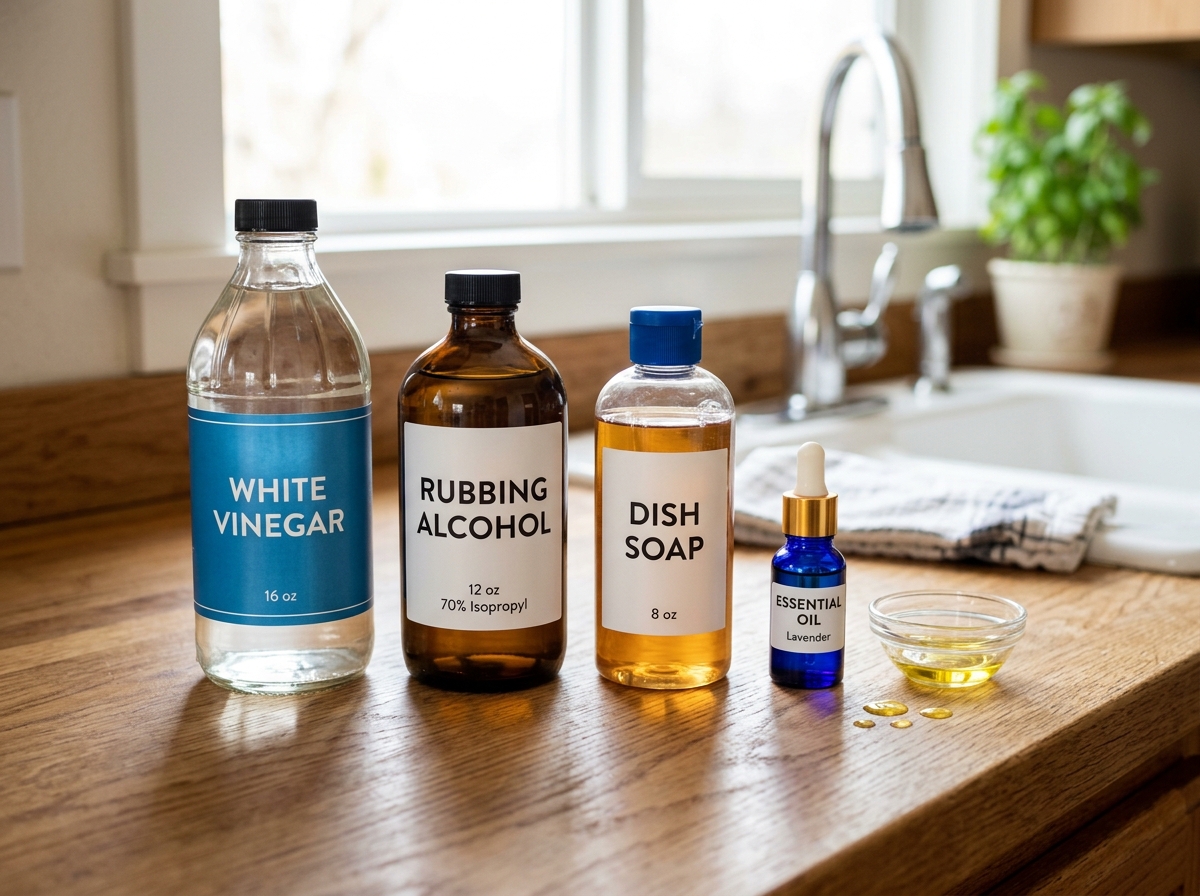
The Essential Ingredients
- Distilled Water: Using distilled or filtered water is a professional secret. Tap water contains minerals (like calcium and magnesium) that stay behind after the water evaporates, causing those annoying white streaks.
- Isopropyl (Rubbing) Alcohol: This is the “magic” ingredient. It acts as a solvent and a drying agent. It helps the solution evaporate almost instantly, which is vital for laminate.
- White Vinegar: The acetic acid in vinegar is a natural disinfectant. It cuts through alkaline grime and hard water spots without damaging the resin coating of your planks.
- Liquid Dish Soap: Just a few drops act as a surfactant, breaking the surface tension of water so the cleaner can lift dirt rather than just moving it around.
- Essential Oils: While optional, oils like lemon, peppermint, or lavender provide antimicrobial properties and mask the “pickling” scent of the vinegar.
Ingredient Ratio Comparison Table
| Cleaning Goal | Water | Alcohol | Vinegar | Dish Soap |
|---|---|---|---|---|
| Standard Maintenance | 1 Part | 1 Part | 1 Part | 3-5 Drops |
| Heavy Sanitizing | 1/2 Part | 1 Part | 1 Part | 5 Drops |
| Quick Refresh | 2 Parts | 1 Part | 1/2 Part | 2 Drops |
How to Mix and Store Your Homemade Laminate Floor Cleaner
We recommend using a glass spray bottle if you plan on using high concentrations of essential oils, as some oils can degrade plastic over time.
- Pour the water first: This prevents the soap from foaming up too much.
- Add the alcohol and vinegar: These help stabilize the mixture.
- Add the soap and oils last: These are your finishing touches.
- Gentle Swirling: Never shake the bottle vigorously. A gentle swirl is all you need to combine the ingredients without creating a bottle full of bubbles.
Shelf Life: Because this recipe contains water, it can develop bacteria over time. If you use distilled water, the solution is shelf-stable for about a month. If using tap water, try to make only what you need for a single cleaning session.
Best Tools for Applying Homemade Laminate Floor Cleaner
The method is just as important as the mixture. Laminate floors and “mop and bucket” cleaning are a recipe for disaster.
- Fine Mist Spray Bottle: You want a light, even distribution.
- Microfiber Mop: Microfiber is superior to cotton because the tiny fibers grab dirt rather than pushing it into the joints.
- The No-Bucket Method: We prefer a spray-as-you-go approach. This ensures you never over-saturate the floor. If you have a spray mop with a refillable reservoir, this DIY solution works perfectly in it!
Step-by-Step Guide to a Streak-Free Shine
1. The Pre-Clean (Don’t Skip This!)
Before any liquid touches the floor, you must remove “the grit.” Small particles of sand and dirt act like sandpaper under a mop. Use a soft bristle broom or a vacuum set to the “hard floor” setting (no beater bar). Pay special attention to corners where pet hair accumulates. For more detailed prep work, see your ultimate guide to homemade wood floor cleaner.
2. Spot Treatment
Before mopping the whole room, look for dried-on food or “mystery sticky spots.” Blot these with a damp microfiber towel first so you don’t spread the mess across the entire floor during the mopping phase.
3. The S-Pattern Technique
To avoid leaving streaks, work in small sections (about 4×4 feet).
- Lightly mist the area with your homemade laminate floor cleaner.
- Mop in an “S” pattern, overlapping your strokes.
- Work your way from the farthest corner toward the door so you don’t step on the wet floor.
Handling Tough Stains and Greasy Spots
Laminate is tough, but some stains require finesse:
- The Ice Pack Trick: For gum, wax, or hardened grease, place an ice pack on the spot for 5 minutes. Once the substance is brittle, gently scrape it off with a plastic credit card.
- Hydrogen Peroxide & Baking Soda: For stubborn organic stains (like wine or juice), a small amount of peroxide can help. Just be sure to rinse the area with a damp cloth afterward to prevent a chalky residue.
Pro Tips to Avoid Damaging Your Laminate Floors
Laminate is essentially a “photograph” of wood protected by a clear wear layer, sitting on a core of pressed wood fibers. This core is highly susceptible to standing water.
- Avoid Warping: If water seeps into the joints, the core will swell, leading to “peaking” where the edges of the planks push upward. Our alcohol-heavy recipe is designed to prevent this by evaporating rapidly.
- No Steam Mops: While some manufacturers say they are okay, many experts warn that the heat and pressure of steam can force moisture into the seams and degrade the glues.
- Buffing for Shine: If you want that “mirror” finish, take a dry microfiber cloth and do a quick once-over after the floor is dry. This removes any microscopic droplets and boosts the natural glow. For comparisons with other hard surfaces, check the novice’s guide to homemade tile floor cleaner.
Frequently Asked Questions about DIY Floor Care
Is this cleaner safe for pets, children, and LVP floors?
Yes! Because it uses food-grade vinegar and diluted alcohol, it is much safer than chemical alternatives. This recipe is also excellent for Luxury Vinyl Plank (LVP) floors, as they share similar non-porous characteristics with laminate. Just ensure the area is well-ventilated while the vinegar scent dissipates.
How often should I clean laminate floors with this DIY solution?
- Daily: Sweep or dust mop to remove grit.
- Weekly: Use the homemade laminate floor cleaner in high-traffic areas like kitchens and entryways.
- Monthly: Perform a full-room deep clean, including under furniture.
Why is rubbing alcohol important in laminate floor cleaners?
Rubbing alcohol is the secret to a streak-free finish. It lowers the boiling point of the water in your mixture, causing it to “flash dry.” This prevents the water from sitting long enough to leave mineral spots or soak into the floor’s joints.
Conclusion
At MoneyFinPro, we believe that taking care of your home shouldn’t break the bank or compromise your health. By mastering the art of the homemade laminate floor cleaner, you’re choosing a sustainable, budget-friendly, and highly effective way to maintain your living space. Say goodbye to that sticky commercial film and hello to the natural, sparkling shine your floors were meant to have.
Ready to tackle the rest of your home? Explore more DIY cleaning guides and tips and join the movement toward a cleaner, greener home!
