How to clean your house without a massive power bill
How Much Are Your Cleaning Habits Really Costing You?

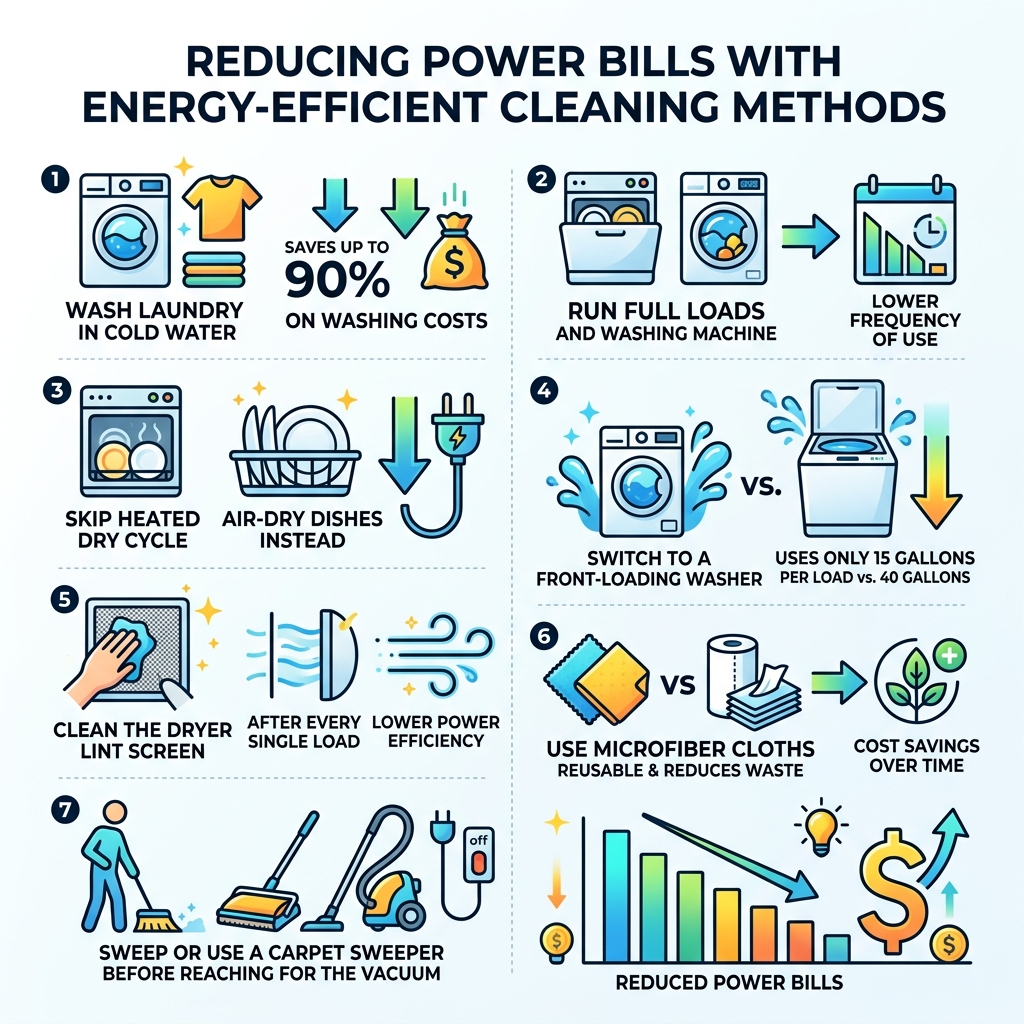
Energy efficient cleaning methods can dramatically cut your power bill without making your home any less clean. Here’s a quick summary of the most impactful changes you can make right now:
- Wash laundry in cold water — saves up to 90% on washing costs
- Run full loads in your dishwasher and washing machine every time
- Skip the heated dry cycle on your dishwasher and air-dry instead
- Switch to a front-loading washer — uses only 15 gallons per load vs. 40 gallons for top-loaders
- Clean the dryer lint screen after every single load
- Use microfiber cloths instead of paper towels or single-use wipes
- Sweep or use a carpet sweeper before reaching for the vacuum
Most people don’t think twice about how they clean. You run the hot wash, toss everything in the dryer, and hand-wash the dishes while the dishwasher sits half-empty. It feels normal — but it adds up fast.
Here’s the reality: a new clothes washer today uses 70% less energy than one from 1990. A new dishwasher uses 40% less. The technology has improved enormously — but only if you’re using it right.
Small habit changes, like lowering the water temperature or waiting for a full load, can cut a meaningful chunk from your energy bill every single month. And you don’t need to buy anything expensive to start.
I’m Marlen, and I’ve spent years researching practical, budget-friendly ways to run a home more efficiently — including a deep dive into energy efficient cleaning methods that save real money without sacrificing cleanliness. This guide walks you through everything I’ve found works.
The Core Principles of Energy Efficient Cleaning Methods
When we talk about energy efficient cleaning methods, we aren’t just talking about buying fancy new gadgets. At its heart, efficiency is about resource management. We want to use the least amount of electricity and water possible to achieve a sparkling result.
The first principle is simple: work with physics, not against it. This means adopting Sustainable Cleaning Habits At Home like cleaning from top to bottom. If you dust the coffee table and then wipe the ceiling fan, you’ve just doubled your workload (and your vacuum time) because the dust falls right back down. By starting at the highest point in a room and working your way down, you ensure that every movement counts.
Another core pillar is the “full load” rule. Appliances like dishwashers and washing machines use roughly the same amount of energy to run a half-empty cycle as they do a full one. By waiting until you have a complete load, you effectively halve your energy consumption per item cleaned. According to the American Cleaning Institute, Saving Energy starts with maximizing the utility of every cycle.
Energy efficient cleaning methods for laundry
Laundry is often the biggest energy hog in the cleaning routine. Did you know that about 90% of the energy used by a washing machine goes solely toward heating the water? By switching your temperature setting from hot to warm, you can cut a load’s energy use in half. If you switch to cold water entirely, you can reduce running costs by up to 90%.
Modern detergents are specifically formulated to work in cold water, so don’t worry about your clothes staying dirty. To further boost efficiency, we recommend using high-spin settings on your washer. This removes more moisture from the fabric, which significantly reduces the time (and energy) needed if you do choose to use a dryer. For more deep dives, check out our Eco Friendly Laundry Tips. The Department of Energy also provides excellent Laundry tips regarding load sizes and temperature settings.
Maximizing dishwasher efficiency
There is a common myth that hand-washing dishes saves water and energy. In reality, a modern dishwasher is a marvel of efficiency. Research shows that a dishwasher uses 3.5 times less water than washing dishes by hand. To get the most out of it, skip the “pre-rinse” at the sink; just scrape the food off.
Once the cycle is done, one of the easiest energy efficient cleaning methods is to skip the heated dry cycle. Simply crack the door open and let the dishes air-dry. This single habit can reduce the machine’s energy use by about 15-20%. For more on this, see our guide on Eco Friendly Appliance Cleaning Tips.

Upgrading to ENERGY STAR Certified Appliances
If your appliances are older than a decade, they might be costing you a fortune in “hidden” energy taxes. Upgrading to ENERGY STAR certified models is one of the most effective long-term energy efficient cleaning methods you can implement. These appliances meet strict efficiency guidelines set by the EPA and Department of Energy.
| Appliance Type | Standard Model Energy Use | ENERGY STAR Model Savings |
|---|---|---|
| Clothes Washer | Baseline consumption | 25% less energy / 35% less water |
| Clothes Dryer | Baseline consumption | 20% less energy |
| Dishwasher | Baseline consumption | 12% less energy / 15% less water |
When you look for ENERGY STAR Certified Clothes Washers, you’re looking at machines that use advanced sensors to adjust water levels based on the size of the load.
Benefits of high-efficiency washers
High-efficiency (HE) washers, particularly front-loading models, are game-changers. Traditional top-loading machines often submerge clothes in a deep tub, using about 40 gallons of water per load. In contrast, HE front-loaders use a tumbling action that only requires about 15 gallons. That is a massive reduction in water that doesn’t need to be pumped or heated.
If you have an HE machine, you must use HE-labeled detergents. These are low-sudsing and quick-dispersing, which prevents the machine from having to run extra “suds-reduction” cycles that waste electricity. We discuss this further in our Eco Friendly Laundry Tips.
Advanced dryer technologies
If you must use a dryer, look for models with moisture sensors. Rather than running on a fixed timer (which often over-dries clothes and wastes energy), these sensors detect when clothes are dry and shut the machine off automatically.
Even better are heat pump dryers. While they are a larger investment, they can save 20-60% more energy than conventional dryers by recirculating heat instead of venting it outside. Another pro tip from Molly Maid is to use the “cool-down” cycle. This uses the residual heat already in the dryer to finish the job without drawing more power from the heating element.
Sustainable Tools and Eco-Friendly Products
The tools we choose have a direct impact on our energy footprint. For instance, Achieving A Green Home With Zero Waste Cleaning Tools often involves moving away from power-hungry gadgets and toward high-quality manual alternatives.
Microfiber cloths are a superstar in this category. Because of their unique split-fiber structure, they have an electrostatic charge that traps dust and dirt better than traditional rags. This often means you can clean surfaces with just water, reducing the need for chemical sprays that require energy-intensive manufacturing processes. Furthermore, using reusable tools reduces the waste stream and the energy associated with producing and transporting disposable wipes. For beginners, we have a Sustainable Cleaning Products A Beginners Guide to help you navigate these choices.
Energy efficient cleaning methods with natural ingredients
Believe it or not, the ingredients in your cleaning cabinet affect energy efficiency. Traditional chemical cleaners often release Volatile Organic Compounds (VOCs), which degrade indoor air quality and may require you to run ventilation fans or air purifiers more often.
By using natural ingredients like vinegar and baking soda, you are using “low-energy” formulations. These substances require less energy to produce and are highly effective. For example, a paste of baking soda and water can clean a greasy oven just as well as a high-heat “self-clean” cycle, which can consume a massive amount of electricity. You can find more Simple Green Cleaning Routines on our site, and The Clean Home offers a complete guide on how these ingredients interact with different types of grime.
High-efficiency vacuuming and floor care
Vacuuming is necessary, but it doesn’t have to be a power drain. Using a vacuum with a HEPA filter ensures that dust isn’t just blown back into the air, meaning you don’t have to vacuum as frequently.
However, the most energy-efficient floor care starts with a broom. Sweeping hard floors or using a manual carpet sweeper for quick pick-ups can save significant electricity over the course of a year. When you do mop, Dyson suggests using cold water. Cold water maximizes the effectiveness of many cleaning solutions and protects delicate floor finishes better than hot water, all while saving you the cost of heating that water.
Room-by-Room Strategies for Lower Power Bills
To truly master energy efficient cleaning methods, we need to look at how we tackle different areas of the home. Each room offers unique opportunities to save.
Kitchen and bathroom efficiency
In the kitchen, “pretreating” is your best friend. Instead of scrubbing a dish under a running hot tap, let it soak in a small amount of water and soap. This “dwell time” allows the enzymes and surfactants to break down grease naturally, so you can rinse it quickly with cold water later.
In the bathroom, focus on descaling. Limescale buildup on showerheads and faucets can actually restrict water flow, causing your water heater to work harder to maintain pressure. Wrapping a vinegar-soaked cloth around a faucet for 20 minutes can dissolve this buildup without any power tools. For a deeper look at these spaces, see our Zero Waste Bathroom Cleaning Routine and the Spring Forward to Energy Savings guide.
Living area and bedroom habits
For living areas, we recommend the “top-to-bottom” systematic approach mentioned earlier. This prevents the need for “re-cleaning” and saves both time and energy. Use manual tools like microfiber dusters for furniture and blinds.
Another simple habit? Use natural lighting. Cleaning during the day with the curtains open allows you to see dirt more clearly without turning on every light in the house. We have more tips on this in our Simple Green Cleaning Routines.
Appliance Maintenance and Energy Audits
Even the most expensive ENERGY STAR appliance will waste power if it isn’t maintained. Maintenance is a critical, often overlooked part of energy efficient cleaning methods.
- Dryer Vents: A clogged dryer vent forces the machine to run longer and hotter, which is a major fire hazard and an energy drain. Inspect and clean your rigid venting periodically.
- Refrigerator Coils: Dust buildup on the coils at the back or bottom of your fridge makes the compressor work overtime. Vacuuming these once every six months can improve efficiency by up to 30%.
- Water Heater: Insulating your water heater and the first few feet of hot water pipes can reduce standby heat loss.
For more maintenance hacks, check out Eco Friendly Appliance Cleaning Tips. The American Cleaning Institute also emphasizes that a well-maintained machine lasts longer, reducing the environmental impact of manufacturing a replacement.
Maintaining peak performance
Small tasks lead to big savings. Cleaning the lint screen in your dryer after every load is non-negotiable. A clogged screen restricts airflow, which can increase drying time by 10-15 minutes per load. Similarly, checking for leaks in your dishwasher or washing machine hoses prevents water waste and potential property damage. You can read more about reducing the need for harsh chemicals during maintenance in our guide on Reducing Chemicals In Home Cleaning.
Conducting a home energy audit
If you’re serious about savings, we recommend conducting a simple home energy audit. This doesn’t have to be a professional service; you can do it yourself! Walk through your home and identify where energy is being wasted during your cleaning routine.
Are you running the dishwasher when it’s only half full? Is the water heater set to a scalding 140°F when 120°F would suffice? Assessing these habits helps you identify improvements and project long-term savings. For a comprehensive checklist, Freshco Cleaners offers a great guide to eco-friendly cleaning audits.
Frequently Asked Questions about Energy Efficient Cleaning
How much energy does washing in cold water actually save?
It saves a lot! Heating water accounts for about 90% of the energy used by a washing machine. By switching to cold water, you can reduce the energy cost per load by up to 90%. Additionally, cold water is gentler on fabrics, meaning your clothes last longer, which is another form of long-term resource saving.
Is a dishwasher really more efficient than hand-washing?
Yes, absolutely. Modern dishwashers are designed to recycle water throughout the cycle, using only about 3 to 5 gallons for a full load. Hand-washing the same amount of dishes can easily use 15 to 20 gallons of water, much of it heated. As long as you run full loads and skip the heated dry, the dishwasher wins every time.
What are the best manual alternatives to power-hungry tools?
Brooms and high-quality mops are the best alternatives to vacuums and steam cleaners for daily maintenance. For carpets, a manual carpet sweeper is surprisingly effective at picking up surface debris. Finally, the ultimate manual alternative is the clothesline. Air-drying your clothes costs zero dollars and uses zero electricity.
Conclusion
At MoneyFinPro, we believe that sustainability and financial health go hand in hand. Adopting energy efficient cleaning methods isn’t just about being “green” — it’s about being smart with your hard-earned money. By making small shifts, like washing in cold water, maintaining your appliances, and choosing manual tools when possible, you can see a noticeable drop in your monthly utility bills.
These habits create a cleaner home and a more sustainable future for everyone. Start with one change this week — maybe it’s air-drying your dishes or sweeping the kitchen instead of vacuuming — and watch the savings add up. For more tips on living an efficient life, visit our main page on Energy Efficient Cleaning Methods.
