
Why a Baking Soda Tub Cleaner Is the Smartest Swap You Can Make
A baking soda tub cleaner is one of the most effective, affordable, and non-toxic ways to scrub your bathtub clean. Here’s the quick answer:
How to clean your tub with baking soda:
- Sprinkle baking soda generously over the wet tub surface
- Spray white vinegar (1 part vinegar to 3 parts water) over the baking soda
- Let the mixture sit for 20-30 minutes
- Scrub with a soft sponge or brush
- Rinse thoroughly with warm water
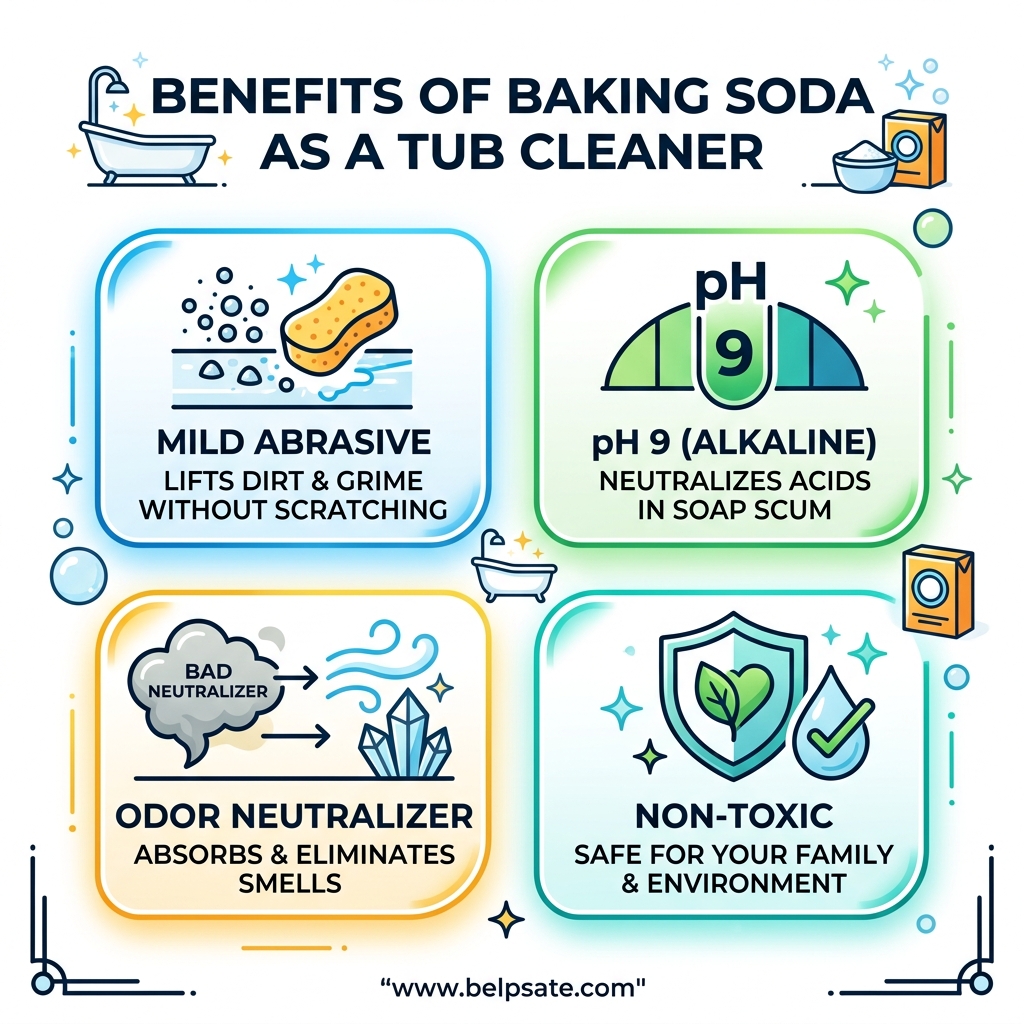
Soap scum, grime, and odors don’t stand a chance against this simple combo. Baking soda’s mild abrasive texture lifts buildup without scratching, while its alkaline pH neutralizes the acids in soap scum and hard water deposits.
And the best part? You probably already have everything you need under your kitchen sink.
A survey by Apartment Guide found that only 38% of Americans clean their bathrooms weekly. That means most bathtubs are quietly collecting dead skin cells, bacteria, and soap residue between cleanings. A natural, easy-to-use cleaner makes it far easier to stay on top of it.
I’m marlen, a natural cleaning enthusiast with hands-on experience formulating and testing DIY solutions like the baking soda tub cleaner for everyday household surfaces. In this guide, I’ll walk you through everything from the best recipes to material safety so you can clean smarter, not harder.
The Science Behind an Effective Baking Soda Tub Cleaner
When we talk about a baking soda tub cleaner, we aren’t just talking about a kitchen staple that makes cookies rise. We are talking about sodium bicarbonate, a powerhouse of chemistry that seems tailor-made for bathroom grime.
The effectiveness of baking soda comes down to its physical and chemical properties. Physically, baking soda is composed of crystals that measure approximately 65 microns (about 0.0026 inches) in diameter. To put that in perspective, these granules are small enough to be classified as a mild abrasive. They are tough enough to physically dislodge soap scum and dried-on body oils but gentle enough that they won’t scratch the finish of most modern bathtub materials.
Chemically, baking soda has a pH level of approximately 9. On the pH scale (where 0 is extreme acidity and 14 is extreme alkalinity), a pH of 9 makes it a mild alkaline cleanser. Why does this matter for your tub? Most bathroom odors and many types of grime are acidic. Baking soda works by neutralizing these acids, effectively breaking down grease and eliminating smells rather than just masking them. As highlighted in Everything You Can Clean in a Bathroom With Baking Soda (Plus How to Do It), this alkalinity is what makes it so superior for lifting oily stains.
Furthermore, when baking soda reacts with water, it helps dissolve dirt and grease more easily. If you want to dive deeper into how this pantry staple transforms your home maintenance, check out our guide on unveiling the power of baking soda diy cleaning solutions.
Best DIY Recipes for Natural Tub Cleaning
We love a good DIY project, especially when it saves us money and keeps harsh chemicals out of our homes. While a simple sprinkle of baking soda can do a lot, combining it with other natural ingredients can create a professional-grade baking soda tub cleaner.

Here are our favorite tried-and-tested recipes:
- The “Soft Scrub” Alternative: 1 cup baking soda, 1/4 cup liquid Castile soap (or Dawn dish soap), and 1 tablespoon hydrogen peroxide. Whisk this into a thick paste. This recipe is a fantastic homemade version of commercial cream cleansers.
- The Grime-Buster: 1/2 cup baking soda and 1/4 cup sea salt. The salt adds extra “grit” for those tubs that haven’t seen a sponge in a few months.
- The Aromatic Scrub: Add 10-15 drops of essential oils like lemon, eucalyptus, or tea tree oil to any baking soda base. Not only do these smell divine, but many have natural antibacterial properties.
For more inspiration on creating these mixtures, you can explore Finally, A DIY Bathtub Soft Scrub That Cleans Really Well or see how we handle Easy Homemade Sink and Tub Cleaner – Live Simply.
Creating a DIY Baking Soda Tub Cleaner with Vinegar
One of the most satisfying ways to clean is using the baking soda and vinegar reaction. When you combine these two, they create a fizzy chemical reaction that releases carbon dioxide gas. While the fizzing itself doesn’t “kill” bacteria, the physical action of the bubbles helps to lift dirt and grime out of the microscopic pores of your tub surface.
We recommend a 1:3 ratio for your vinegar spray (one part vinegar to three parts water). Sprinkle the baking soda first, then spray the solution on top. This is particularly effective for getting into the nooks and crannies of faucets and drains. To understand more about why vinegar is such a great partner for baking soda, read about the magic of vinegar in homemade cleaning products.
Formulating a Baking Soda Tub Cleaner for Tough Soap Scum
Soap scum is a stubborn beast. It forms when the fatty acids in soap react with the minerals in hard water. To beat it, you need a baking soda tub cleaner with high surface adhesion—meaning it needs to stick to the walls of the tub without sliding down.
To achieve this, we recommend making a thick paste. Mix baking soda with just enough liquid dish soap (like Dawn) or Castile soap to reach the consistency of cake frosting. Apply this paste to the soap scum and let it sit. The soap helps degrease the oily binders in the scum, while the baking soda works on the mineral deposits. You can find more of our favorite natural bathroom cleaning hacks to keep your sanctuary spotless.
Step-by-Step Guide to Scrubbing Your Tub
We’ve all been there: hunched over the tub, knees hurting, getting soaked while trying to scrub away a stubborn ring. To make this process easier and more effective, follow our systematic approach.
- Preparation: Remove all shampoo bottles, loofahs, and toys. Give the tub a quick rinse with warm water to dampen the surfaces. This helps the baking soda stick to the vertical walls.
- Application: Sprinkle your baking soda tub cleaner (either the powder or your prepared paste) generously over the stained areas. Focus on the “ring” around the water line and the area around the drain.
- Dwell Time: This is the most important step! Let the cleaner sit for at least 20 to 30 minutes. This “dwell time” allows the alkaline baking soda to break down the grime so you don’t have to use as much elbow grease.
- Mechanical Action: Use a soft-bristled brush or a non-abrasive sponge to scrub in circular motions. You’ll notice the grime lifting away much easier than if you had started scrubbing immediately.
- Rinsing: Use your showerhead or a bucket to rinse the tub thoroughly with warm water. Ensure all the “grit” is gone so you don’t have a sandy floor during your next bath.
- Drying: Wipe the tub down with a microfiber cloth. This prevents water spots and keeps the tub shining longer.
For more detailed strategies on maintaining a healthy home, see our non toxic cleaning tips for bathroom.
Material Safety and Surface Compatibility
While baking soda is incredibly versatile, not every bathtub is made of the same material. It is vital to know what your tub is made of before you start scrubbing to avoid dulling the finish or causing permanent damage.
| Material | Safe for Baking Soda? | Notes |
|---|---|---|
| Porcelain | Yes | Very durable; can handle firm scrubbing. |
| Acrylic | Yes | Use a soft sponge; avoid very stiff brushes to prevent fine scratches. |
| Fiberglass | Yes | Similar to acrylic; use a light touch. |
| Ceramic Tile | Yes | Excellent for cleaning both the tile and the grout lines. |
| Cast Iron | Yes | Usually coated in enamel; very safe for baking soda. |
| Stone Resin | Caution | Can leave a film or dull the finish; always spot test first. |
| Natural Stone | No | Avoid vinegar/acidic mixes; baking soda paste should be used sparingly. |
As noted in Baking Soda, Bleach and Vinegar: Which is Best for a Clean Bathtub, stone resin and natural stone require specialized pH-neutral cleaners. If you have a standard acrylic or porcelain tub, you are in the clear! For more material-specific advice, check out our non toxic cleaning tips for bathroom 2.
Beyond the Tub: Cleaning the Rest of the Bathroom
Once you see the power of a baking soda tub cleaner, you’ll want to use it everywhere. The good news is that it’s just as effective on other bathroom surfaces.
- Drains: Pour 1/2 cup of baking soda followed by 1/2 cup of vinegar down the drain. Let it fizz for 10 minutes, then flush with boiling water to clear out hair and soap residue.
- Grout: Use a thick baking soda and water paste and an old toothbrush to scrub grout lines. It’s one of the best ways to brighten them without using bleach. Read more on bathroom grout cleaning naturally.
- Toilets: Sprinkle baking soda into the bowl and let it sit before scrubbing with a brush. It deodorizes better than almost any commercial product. Discover our top secrets to making homemade toilet cleaner.
- Showerheads: If your showerhead is clogged with mineral deposits, a soak in a bag of vinegar and baking soda can restore the water pressure.
Frequently Asked Questions about Tub Cleaning
We get a lot of questions about how to best use a baking soda tub cleaner. Here are the answers to the most common queries.
Can baking soda scratch my acrylic bathtub?
Because baking soda granules are only 65 microns, they are considered a very mild abrasive. For context, many commercial scouring powders are much coarser. When used with a soft sponge and plenty of water, baking soda is safe for acrylic. However, we always recommend avoiding heavy-duty scouring pads or wire brushes, which can cause damage regardless of the cleaner used.
How often should I use baking soda to prevent soap scum?
For the best results, we suggest a light cleaning once a week. If you rinse your tub after every use, you can push a deep clean to every two weeks. Regular maintenance prevents the soap scum from “curing” and becoming hard to remove. You can find more prevention tips in our natural bathroom cleaning hacks 2.
Is it safe to mix baking soda with bleach?
NO. We cannot stress this enough: Never mix your DIY cleaners with commercial bleach or ammonia. While baking soda and bleach don’t typically create a deadly gas, mixing vinegar (often used with baking soda) and bleach creates toxic chlorine gas. To stay safe, stick to one cleaning method at a time and always ensure your bathroom is well-ventilated.
Conclusion
At MoneyFinPro, we believe that a clean home shouldn’t come at the expense of your health or your wallet. Switching to a baking soda tub cleaner is a small change that yields big results—a sparkling tub, a fresher-smelling bathroom, and the peace of mind that comes with using non-toxic ingredients.
Whether you are tackling a “really gross” tub after a drain clog or just doing your weekly maintenance, baking soda is your best friend. It’s effective, eco-friendly, and incredibly cost-effective. For more ways to green your home, explore our zero waste bathroom cleaning routine and browse our full library of DIY Cleaners.
Happy scrubbing!
