
That Dark, Fuzzy Film in Your Shower Has a Natural Fix
Natural shower mildew remover solutions are some of the most effective — and affordable — ways to tackle that stubborn gray or black buildup in your bathroom. Here’s a quick answer if you need it fast:
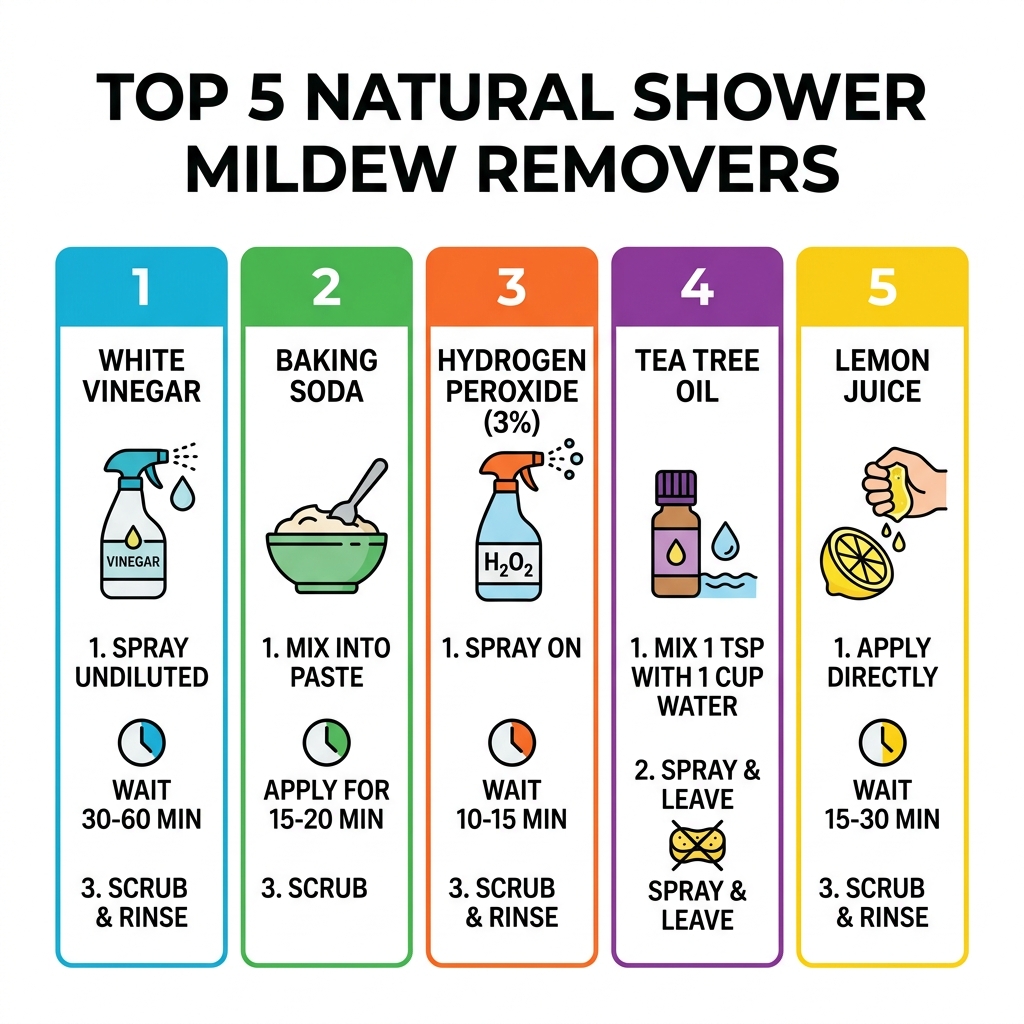
The best natural ingredients to remove shower mildew:
- White vinegar — spray undiluted, let sit 30–60 minutes, scrub, and rinse
- Baking soda — mix with water into a paste, apply for 15–20 minutes, then scrub
- Hydrogen peroxide (3%) — spray on, wait 10–15 minutes, scrub and rinse
- Tea tree oil — mix 1 tsp with 1 cup water, spray, and leave without rinsing
- Lemon juice — apply directly, wait 15–30 minutes, scrub and rinse
That dark, dusty film creeping along your grout lines and shower corners isn’t just ugly — it’s mildew, and it thrives in damp, poorly ventilated spaces like yours. Most people’s first instinct is to grab a bottle of bleach. But harsh chemicals aren’t your only option, and they come with real downsides for your health, your surfaces, and the environment.
The good news? Your kitchen pantry likely already holds everything you need to fight back — safely and effectively.
I’m Marlen, and I’ve spent years testing and refining natural shower mildew remover methods for real homes with real humidity problems. In this guide, I’ll walk you through exactly what works and why.
Mildew vs. Mold: Identifying Your Bathroom Invader
Before we grab our spray bottles, we need to know exactly what we’re up against. In the cleaning world, we often use “mold” and “mildew” interchangeably, but they are actually different stages or types of fungal growth.
Mildew is the “early bird” of bathroom fungi. It typically appears as a flat, powdery, or downy growth. You’ll usually see it in shades of white, gray, or yellow. The good news about mildew is that it lives primarily on the surface. It loves your shower curtain, the top layer of your grout, and those flat surfaces on your soap dish. Because it doesn’t root deeply, a natural shower mildew remover can usually wipe it out with minimal elbow grease.
Mold, on the other hand, is the more stubborn older sibling. It tends to look fuzzy or slimy and comes in darker colors like deep green, navy blue, or the dreaded black. Unlike mildew, mold can grow into porous surfaces like drywall or deep into bathroom grout.
Both are fungi that thrive in the damp, humid environment of a bathroom, and both release microbial volatile organic compounds (mVOCs) — that’s the “musty basement” smell that hits you when you walk in. Identifying them early is key to preventing respiratory issues, allergy attacks, and headaches.
Why Choose a Natural Shower Mildew Remover?
You might be wondering, “Why bother with vinegar and essential oils when I can just blast it with bleach?” It’s a fair question, but once you look at the facts, the “natural” path becomes the obvious choice for a healthy home.
- Respiratory Health: Traditional chemical cleaners often contain ammonia or chlorine bleach. These emit harsh fumes that can irritate the lungs, eyes, and skin. If you’ve ever felt like your lungs were “filling with bleach” while scrubbing a small shower stall, you know exactly what we mean.
- Surface Protection: Harsh chemicals can actually degrade your bathroom surfaces over time. Bleach can weaken grout and take the shine off certain fixtures. Natural solutions are generally gentler on your home’s infrastructure.
- Environmental Impact: What goes down your drain eventually ends up in the water system. Natural ingredients like lemon juice and baking soda are biodegradable and non-toxic to aquatic life.
- Cost-Effectiveness: A gallon of white vinegar often costs about a dollar. Compare that to specialized “industrial strength” bathroom cleaners that can run five to ten times that price.
Choosing a non-toxic cleaning routine isn’t just about being “green”—it’s about creating a bathroom that actually feels (and smells) clean without the chemical hangover.
Top 5 Ingredients and Recipes for Success
We’ve tested dozens of combinations, and these five ingredients consistently come out on top. They each bring a different “superpower” to the fight against fungi.
| Ingredient | Best For | Surface Safety | Effectiveness |
|---|---|---|---|
| White Vinegar | Killing spores & soap scum | Avoid natural stone | Very High (82% of species) |
| Baking Soda | Scrubbing & deodorizing | Safe for most surfaces | High (abrasive) |
| Hydrogen Peroxide | Whitening grout | Test on colored fabrics | Very High (oxidizer) |
| Tea Tree Oil | Long-term prevention | Safe for most surfaces | Excellent (antifungal) |
| Lemon Juice | Light stains & fresh scent | Avoid natural stone | Moderate (5% acid) |
Is a Natural Shower Mildew Remover Effective for Heavy Growth?
The short answer is: Yes. Research shows that undiluted white vinegar is effective at treating over 80% of mold species. It works by using acetic acid to disrupt the cellular structure of the fungus.
For heavy growth, we recommend a “synergistic” approach. Many of our readers have found that mixing 1 cup of blue dish soap with white vinegar creates a “magic potion” that melts through mildew and soap scum overnight. The soap helps the vinegar “cling” to vertical surfaces, giving it more time to work its magic.
If you’re dealing with stubborn spots, don’t be afraid to let the solution sit longer. For more non-toxic tips, consistency is more important than harshness.
The Power of Essential Oils
If you want to level up your natural shower mildew remover, look to your essential oil collection.
- Tea Tree Oil: This is a powerhouse. It contains terpinen-4-ol, which has been shown to reduce mold in the air even better than some industrial disinfectants.
- Clove Oil: Studies suggest clove oil is incredibly effective at inhibiting mold growth in the air and on surfaces.
- Grapefruit Seed Extract: This extract has been shown to eliminate 60 types of bacteria and yeasts. It’s nearly odorless, making it a great choice for those sensitive to the smell of vinegar or tea tree.
Step-by-Step Guide: How to Apply Your Natural Shower Mildew Remover Safely
Cleaning your shower naturally doesn’t have to be a workout. Follow this simple process for the best results:
- Prep the Surface: Take down your shower curtain or liner. Run hot water over the tiles for a minute to moisten the mildew. Damp mold actually detaches easier than dry, crusty mold.
- Apply the Solution: Spray your chosen natural shower mildew remover liberally over the affected areas.
- Dwell Time: This is the most important step! Let the solution sit for at least 30 minutes (or up to an hour for vinegar). For extreme cases, soak an old towel in the cleaner and press it against the moldy area to ensure deep penetration.
- Scrub Gently: Use a soft-bristled brush. You want to lift the mildew without creating tiny scratches in your grout or tile where new spores can hide.
- Rinse and Dry: Rinse with hot water. Use a squeegee or microfiber cloth to dry the surfaces completely.

Essential Supplies for Your Natural Shower Mildew Remover
To get the most out of these recipes, we recommend keeping a dedicated “Natural Cleaning Kit” in your bathroom.
- Glass Spray Bottles: Essential oils and high concentrations of vinegar can degrade plastic over time. Dark glass bottles also protect the potency of essential oils.
- Microfiber Cloths: These are superior for picking up spores rather than just pushing them around.
- Soft Brushes: An old toothbrush is perfect for grout lines.
- Distilled Water: Using distilled water in your sprays prevents mineral buildup from tap water.
Creating a zero-waste cleaning routine means you can reuse these supplies for years, saving money and reducing plastic waste.
Surface Safety and Precautions
Even natural ingredients require a bit of caution:
- Natural Stone Warning: Never use vinegar or lemon juice on marble, granite, or limestone. The acid will “etch” the stone, leaving permanent dull spots. Stick to baking soda or specialized stone cleaners for these surfaces.
- The Peracetic Acid Trap: NEVER mix white vinegar and hydrogen peroxide in the same bottle. While they are both great cleaners individually, combining them creates peracetic acid. This is a corrosive substance that can irritate your skin, eyes, and respiratory system.
- Patch Test: Always test a new cleaner on a small, inconspicuous area first to ensure it doesn’t discolor your grout or fixtures. For more safety advice, check out our bathroom cleaning tips.
Long-Term Prevention and Professional Thresholds
Once you’ve kicked the mildew out, you want to make sure it stays out. Mildew is a squatter—it will move back in the moment you stop paying attention.
- Ventilation: This is non-negotiable. Run your exhaust fan during your shower and for at least 30 minutes afterward. If you don’t have a fan, open a window.
- Squeegee After Every Use: It takes 30 seconds but removes 90% of the moisture that mildew needs to grow.
- Daily Maintenance Spray: Keep a bottle of diluted tea tree oil or vinegar in the shower. Give the walls a quick mist after you squeegee. Because tea tree oil is antifungal, leaving a light residue helps prevent new spores from taking root.
- Dry Your Fabrics: Shake out your shower curtain so it doesn’t stay bunched up and wet. Ensure bath mats are hung up to dry.
For more ways to keep your bathroom sparkling, explore our natural bathroom cleaning hacks.
When to Call a Professional
Sometimes, a DIY natural shower mildew remover isn’t enough. According to EPA guidelines, if the moldy area is larger than 10 square feet (roughly a 3-foot by 3-foot patch), it’s time to call in the pros.
You should also seek professional help if:
- The mold is “fuzzy” and black and seems to be coming from behind the wall.
- You have a persistent musty smell despite deep cleaning.
- You suspect a hidden leak behind your shower walls.
- You or your family members are experiencing unexplained respiratory issues.
Dealing with large-scale infestations requires specialized equipment to prevent spores from spreading to the rest of your home. You can find more info on advanced bathroom maintenance in our related guides.
Frequently Asked Questions about Natural Mildew Removal
Can I mix vinegar and hydrogen peroxide?
No. As mentioned earlier, mixing them in one container creates peracetic acid, which is toxic and irritating. You can use them sequentially (spray vinegar, wipe it off, then spray peroxide), but never mix them in the same spray bottle.
How long should I leave natural cleaners on the surface?
For general cleaning, 15–20 minutes is usually enough. For stubborn mildew or mold, we recommend 30–60 minutes. The “magic” of natural cleaners is in the “dwell time”—let the chemistry do the work so you don’t have to scrub as hard.
Does tea tree oil really kill mold spores?
Yes. Tea tree oil is a potent antifungal. For best results, look for oil that has a terpinen-4-ol content of at least 30% and a cineole content of less than 15%. This ensures you’re getting the most effective grade for cleaning.
Conclusion
At MoneyFinPro, we believe that a clean home shouldn’t come at the cost of your health or your wallet. Switching to a natural shower mildew remover is one of the easiest steps you can take toward a non-toxic lifestyle. Whether you choose the bubbling power of hydrogen peroxide or the antifungal strength of tea tree oil, you’re making a choice that’s better for your family and the planet.
Ready to transform the rest of your home? Explore more DIY cleaning guides and start your journey toward a fresher, safer living space today!
