
Why Your Floors Deserve a Homemade Polish
Homemade floor polish is a simple, natural alternative to store-bought products — and it works surprisingly well. Here’s a quick overview of the most popular DIY recipes:
| Floor Type | Key Ingredients | Quick Ratio |
|---|---|---|
| Hardwood | Olive oil + white vinegar | 2:1 oil to vinegar |
| Laminate | White vinegar + warm water | 1 cup vinegar per 4 litres water |
| Any wood | Vegetable oil + white vinegar | 2.5 cups oil + 1.5 cups vinegar |
| Furniture/cabinets | Jojoba oil + lemon oil + vinegar | 3:1 oil to vinegar |
Over time, even beautiful floors lose their shine. They start looking dull, worn, and tired — not because they’re damaged, but because they need a little care.
The good news? You don’t need expensive commercial products to fix that. Most effective floor polishes can be made from things already in your kitchen: vinegar, olive oil, lemon juice, and a few drops of essential oil.
Commercial polishes often contain harsh chemicals, can leave waxy buildup, and cost far more than necessary. A simple DIY solution can clean, condition, and restore your floors — without the toxins or the price tag.
I’m marlen, and I’ve spent years exploring budget-friendly, eco-conscious home care solutions — including testing dozens of homemade floor polish recipes across different floor types. Let me walk you through exactly what works, what doesn’t, and how to get the best results safely.
Why Choose Homemade Floor Polish Over Commercial Products?
When we walk into a big-box store, the cleaning aisle greets us with rows of brightly colored bottles promising “diamond shine” and “instant restoration.” But if you flip those bottles over, you’ll often find a list of ingredients that look more like a chemistry final exam than something you want near your family.
Choosing a homemade floor polish isn’t just about being “crafty”; it’s a conscious decision for a healthier home. Commercial polishes frequently rely on petroleum-based solvents and synthetic fragrances that can degrade indoor air quality. By switching to DIY, we embrace Green Cleaning Tips for Floors that prioritize safety without sacrificing results.
One of the biggest culprits in commercial products is wax. While it looks great for a week, it eventually builds up, creating a cloudy, plastic-like film that traps dirt. Our natural recipes focus on nourishing the wood rather than just coating it. This is especially important for households with pets and children who spend a lot of time playing on the floor. If your toddler drops a cracker on a floor polished with olive oil and lemon, it’s a lot less worrying than one coated in industrial-grade silicone.
Furthermore, going DIY is incredibly budget-friendly. Most of us already have a gallon of white vinegar and a bottle of vegetable oil in the pantry. Repurposing these staples is part of Going Green: Homemade Plant-Friendly Cleaning Solutions, allowing us to save money while protecting the planet.
Essential Ingredients for DIY Floor Polishes
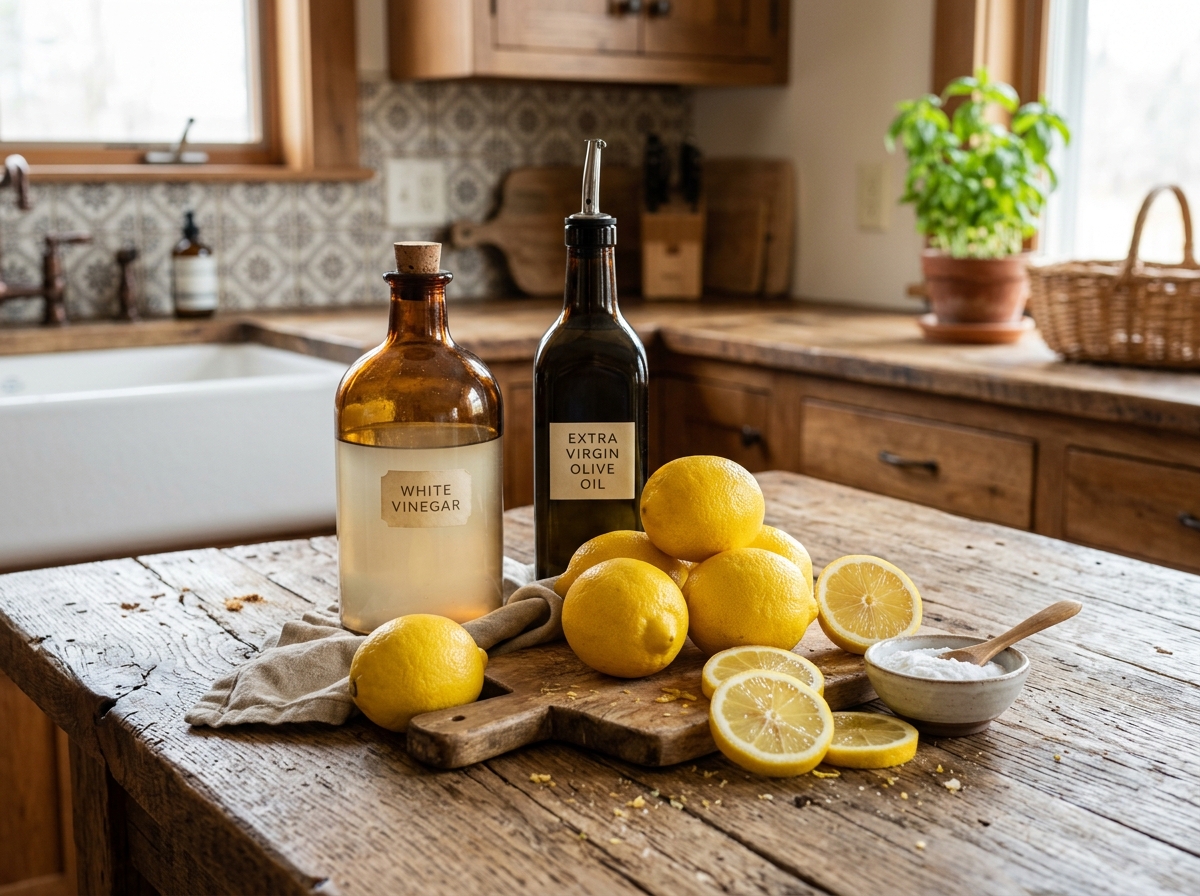
To create a high-quality homemade floor polish, we need to understand the roles each ingredient plays. It’s a bit like cooking; the balance of acidity and fat determines the final “flavor” (or in this case, the finish).
The Cleaners: Vinegar and Lemon Juice
White vinegar is the MVP of the DIY world. Its mild acidity cuts through grease and grime without the need for harsh scrubbing. We’ve covered The Magic of Vinegar in Homemade Cleaning Products before, and its role here is to act as the primary cleaning agent. Lemon juice offers similar acidic properties but brings a fresh, natural degreasing power that’s hard to beat. You can learn more about Unlocking the Power of Citrus in Homemade Cleaning Solutions to see why it’s a favorite for wood surfaces.
The Conditioners: Oils
If vinegar cleans, oil nourishes. Wood is a natural material that can become “thirsty” and brittle over time.
- Olive Oil: Excellent for providing a deep, rich glow.
- Vegetable Oil: A frugal alternative that works surprisingly well for high-traffic areas.
- Jojoba Oil: Though more expensive, it has a massive shelf life (up to 5 years) and doesn’t go rancid as quickly as food-grade oils.
The Extras: Essential Oils and Glycerin
Essential oils like lavender, lemon, or cedarwood aren’t just for scent; many possess antimicrobial properties. A few drops of lemongrass can add extra cleaning “oomph” and make your home smell like a spa. Vegetable glycerin is another secret weapon; it acts as an emulsifier to help the oil and water mix more effectively and adds a subtle, long-lasting luster to the finish.
The Protective Layer: Beeswax
For those looking for a more traditional, “hard” polish, melted beeswax creates a protective barrier that resists scratches and moisture. It requires a bit more effort to prepare, but the results are incredibly resilient.
Top Recipes for Every Floor Type
Not all floors are created equal. What works for a 100-year-old oak plank might be disastrous for modern laminate. Here is how we tailor our homemade floor polish to the surface.
| Floor Material | Recipe Ingredients | Why it Works |
|---|---|---|
| Sealed Hardwood | 1/2 cup vinegar, 1/2 cup olive oil, 2 cups warm water | The oil hydrates while vinegar removes surface scuffs. |
| Laminate | 1 cup isopropyl alcohol, 1 cup vinegar, 1 gallon water | Alcohol ensures quick evaporation to prevent moisture damage. |
| Engineered Wood | 1/4 cup lemon juice, 3/8 cup olive oil, 1/2 gallon hot water | Gentle degreasing with a light moisturizing finish. |
| Dark Wood (Pine/Beech) | 2 black tea bags steeped in 2 cups water | Tannins in the tea restore deep color and natural sheen. |
The “Homestead” Hardwood Polish
This is a classic favorite for real wood. Combine 2 1/2 cups of inexpensive vegetable oil with 1 1/2 cups of white vinegar. If you have an old squirt bottle, reuse it! The oil fills in micro-scratches, while the vinegar lifts away the “gray” look of aged floors. This is a great way to use up “unhealthy” hydrogenated oils that you might not want to cook with anymore.
The Laminate Revitalizer
Laminate is essentially a photograph of wood covered in a wear layer. It hates standing water. For these floors, we recommend a mixture of vinegar and water, but with a twist: add a splash of rubbing alcohol. This helps the solution dry almost instantly, preventing the edges of the laminate from swelling. For more tips on wood-look surfaces, check out Your Ultimate Guide to Homemade Wood Floor Cleaner.
How to Apply Homemade Floor Polish in 5 Easy Steps
Applying homemade floor polish is a therapeutic process, but it requires a bit of technique to avoid a slippery mess. Follow our proven 5-step method for a professional finish.
Step 1: Deep Cleaning
You can’t polish dirt. Before you even think about the polish, you must sweep or vacuum the area thoroughly. Any grit left on the floor will act like sandpaper once you start mopping. Use Eco-Friendly Mop and Broom Tips for a Greener Home to ensure your tools aren’t adding more dust to the equation.
Step 2: Mixing the Solution
Since natural polishes don’t contain chemical emulsifiers, they separate quickly. Whether you are using a spray bottle or a bucket, give it a vigorous shake or stir immediately before application. If using a spray bottle, glass is preferred if you’ve added essential oils, as they can degrade plastic over time.
Step 3: The Patch Test
This is the most skipped step, and the most important. Choose an inconspicuous area—like the floor inside a closet or under the sofa—and apply a small amount of your homemade floor polish. Let it dry completely. Check for any discoloration or unexpected slipperiness before proceeding to the main event.
Step 4: Application with the Grain
Always work in the direction of the wood grain. This helps the oils penetrate the fibers and ensures that any streaks blend in naturally. Use a damp (not soaking) microfiber mop. If you’re using a spray-and-mop method, mist the floor lightly. Never let the liquid pool, as this can cause the wood to warp or the laminate to buckle.
Step 5: Buffing for Shine
This is where the magic happens. After the polish has had a few minutes to settle, take a dry microfiber cloth or a clean, dry mop head and buff the surface. This removes excess oil and brings out a high-gloss shine. Think of it like buffing a car; the more you “work” the surface, the better it looks.
Safety Precautions and Maintenance Tips
While homemade floor polish is safer than commercial alternatives, it’s not without risks. The primary concern is slipperiness. Because we are using oils, the floor will be slick for a short period. We recommend wearing socks with grips or staying off the floor for at least an hour after application.
Avoiding Residue and Buildup
If your floors start to feel “tacky,” you’re likely using too much oil or not enough vinegar. Vinegar helps break down the oil so it doesn’t sit on the surface. If you do encounter a stubborn stain during the process, Unveiling the Power of Baking Soda: DIY Cleaning Solutions can help lift the spot without scratching the finish.
Ongoing Maintenance
You shouldn’t need to polish your floors every week. In fact, doing so can lead to buildup. Aim for a full polish every 2–4 weeks depending on foot traffic. Between polishes, stick to dry dusting with a microfiber cloth. For non-wood areas, you might find The Novice’s Guide to Homemade Tile Floor Cleaner helpful to keep the whole house unified.
Protective Measures
- Felt Pads: Place these under all furniture legs to prevent deep scratches.
- Rugs: Use mats at entryways to catch grit before it reaches your polished wood.
- Wring it Out: Always wring your mop until it is just damp. Over-wetting is the enemy of wood and laminate.
Homemade Floor Polish for Furniture and Cabinets
One of the best things about these recipes is their versatility. Most homemade floor polish recipes for wood floors work beautifully on furniture and kitchen cabinets.
When working on furniture, we often suggest a slightly higher oil-to-vinegar ratio (3:1) because furniture doesn’t face the same “slip-and-fall” risk as a floor. A mixture of jojoba oil and a few drops of lemon essential oil can revive an antique hutch or a dry dining table in seconds.
For intricate carvings, use a soft toothbrush dipped in the polish to reach the crevices, then buff with a soft cotton cloth. This not only restores the shine but also prevents the wood from becoming brittle and cracking over time.
Storing Your Homemade Floor Polish
Homemade solutions don’t have the preservatives found in store-bought jugs.
- Shelf Life: If you use olive or vegetable oil, the mixture can go rancid after about 6 months. Using jojoba oil extends this to years.
- Container: Store in a cool, dark place. Light can cause oils to break down faster.
- The “Shake” Rule: Always label your bottle clearly and remember to shake it before every single use. Since water and oil are natural enemies, they will have separated since your last cleaning session.
Frequently Asked Questions about Homemade Floor Polish
Can I use vinegar on all types of wood floors?
Generally, yes, but only when properly diluted. Undiluted vinegar is too acidic and can eat away at the finish over time. For unsealed or waxed floors, be extra cautious; the moisture in any DIY solution can penetrate the wood more deeply. Always refer back to Your Ultimate Guide to Homemade Wood Floor Cleaner for specific dilution ratios.
How often should I apply a homemade polish?
For most homes, once a month is the “sweet spot.” If you have big dogs or a busy family, you might find every two weeks is necessary in the hallway or kitchen. The goal is to maintain the glow without creating a thick layer of oil that attracts dust.
Will olive oil make my floors dangerously slippery?
It can if you over-apply. The secret is the “buffing” step. If you spray lightly and buff thoroughly with a dry microfiber cloth, the oil should be absorbed into the wood or wiped away, leaving only the shine behind. If it feels greasy, go over it once more with a cloth dampened only with water and a splash of vinegar.
Conclusion
At MoneyFinPro, we believe that taking care of your home shouldn’t cost a fortune or compromise your health. Mastering the art of homemade floor polish is a rewarding way to bring natural brilliance back to your living space. By using simple, pantry-stable ingredients, you can protect your investment and enjoy the peace of mind that comes with a toxin-free environment.
Ready to dive deeper into natural home maintenance? Check out More info about DIY cleaners for more recipes and tips to keep your home sparkling the eco-friendly way!
