
Why Energy Efficient Air Purifiers Deserve a Spot in Your Home
Energy efficient air purifiers are air cleaning devices that deliver strong filtration performance while using significantly less electricity than standard models — and they can save you real money every year.
Quick answer: Best energy efficient air purifiers at a glance
| Model | Wattage | CADR (CFM) | Efficiency Ratio | Best For |
|---|---|---|---|---|
| Blueair 511i Max | 20W | 152 | 7.6 CADR/W | Best overall efficiency |
| Levoit Core 400S | 38W | 260 | 6.8 CADR/W | Medium-large rooms |
| Xiaomi 4 Lite | 33W | 212 | 6.4 CADR/W | Budget pick |
| Bosch Air 2000 | 20W | 106 | 5.3 CADR/W | Small rooms |
| Blue Pure 511 | 16W | ~122 | ~7.6 CADR/W | Compact spaces |
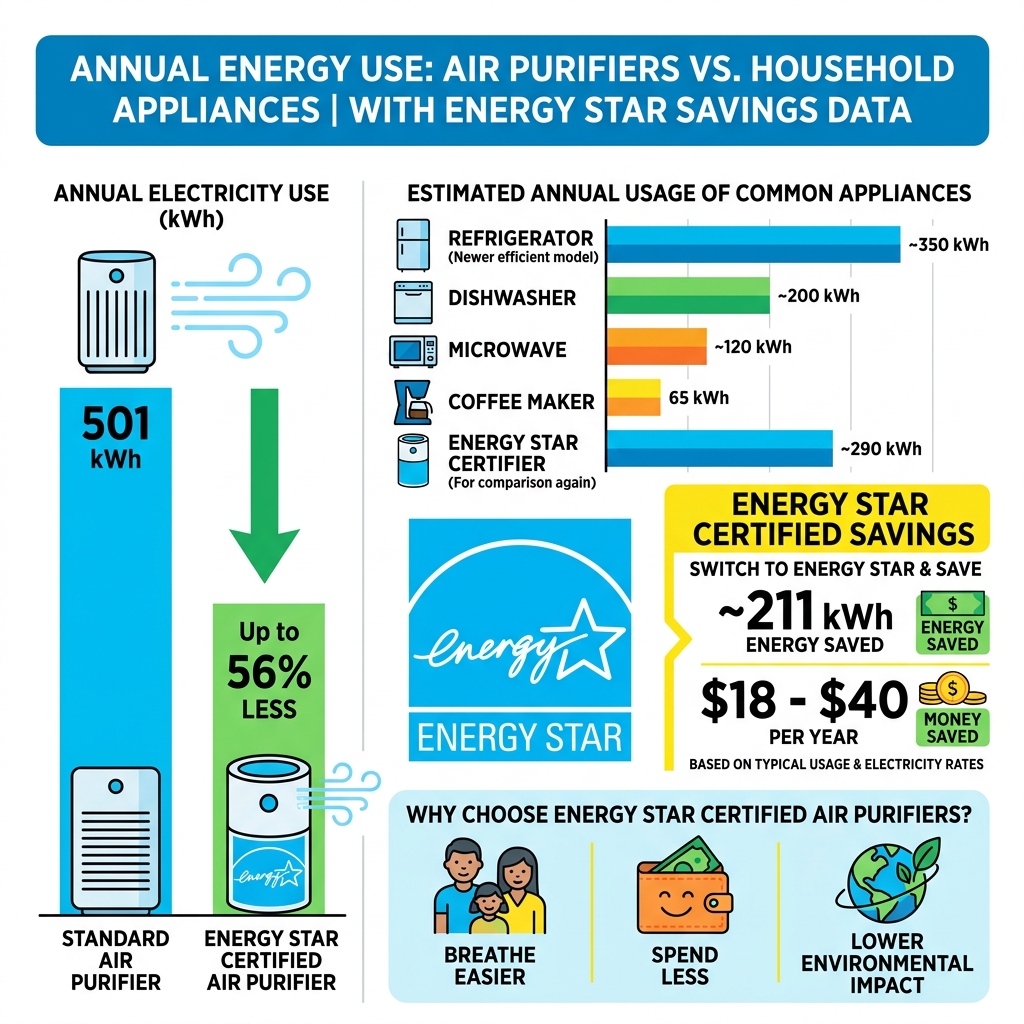
Here’s something that might surprise you: a standard room air cleaner running continuously uses around 501 kWh of electricity per year — more than some new refrigerators. That’s a meaningful chunk of your energy bill, and most people never think twice about it.
The good news? Switching to an ENERGY STAR certified model can cut that energy use by up to 56%, saving roughly 211 kWh and between $18 and $40 every year, depending on your unit size and local electricity rates.
Indoor air quality matters too. Cooking, cleaning products, outdoor pollution, and even building materials constantly release particles and gases into the air you breathe at home. An efficient air purifier tackles those problems without running up your electricity bill.
I’m marlen, and I’ve spent years researching home energy use and indoor air quality solutions, including hands-on evaluation of energy efficient air purifiers across a range of budgets and room sizes. In this guide, I’ll walk you through exactly what to look for — so you can breathe easier and spend less doing it.
Understanding the Metrics of Energy Efficient Air Purifiers
When we talk about energy efficient air purifiers, we aren’t just talking about low wattage. We are talking about how much clean air you get for every watt of power consumed. To understand this, we need to look at two primary metrics: the Integrated Energy Factor (IEF) and the CADR-to-Watt ratio.
The Integrated Energy Factor (IEF)
The IEF is the official metric used by ENERGY STAR to measure efficiency. It calculates the Clean Air Delivery Rate (CADR) per watt, but it also accounts for the energy used while the device is in standby mode. This is vital because most modern purifiers are “always on,” waiting for a signal from a remote or a smart app. Some top-tier models, like the Rainbow Luggable XL Ultra, achieve IEF ratios as high as 26.2 cfm/Watt. You can explore a full list of these high performers through the Product Finder — ENERGY STAR Certified Room Air Cleaners.
The CADR-to-Watt Ratio
Think of this as the “miles per gallon” for your air purifier. It is calculated by dividing the CADR (the volume of filtered air produced) by the power consumption in watts. For example, the Blueair 511i Max produces 152 CFM of clean air while drawing only 20W of power. This results in a ratio of 7.6—the highest tested efficiency in its class. In contrast, older or poorly designed models might have oversized motors that draw 80W or more to produce the same amount of clean air.
Motor and Fan Technology
The secret sauce behind these numbers is often the motor. Energy-efficient models typically utilize brushless DC motors. Unlike standard AC motors found in older appliances, these DC motors are significantly more efficient at varying speeds and generate less heat. Combined with advanced fan blade geometry and lower-density filters that don’t “choke” the airflow, these units can move massive amounts of air using the same amount of energy as a 60-watt light bulb.
The Financial and Environmental Benefits of ENERGY STAR
Choosing an ENERGY STAR certified model isn’t just a “green” choice; it’s a financially savvy one. Because these units are up to 56% more efficient than standard models, the savings add up quickly.
Real-World Cost Savings
If you run a standard, non-certified air purifier 24/7, it can cost you a surprising amount over a decade. However, an ENERGY STAR certified unit typically saves about 211 kWh per year. At an average utility rate, that is $18 to $40 back in your pocket annually. Over the typical five-to-seven-year lifespan of the device, the purifier practically pays for itself in energy savings alone.
Beyond the Electric Bill
The environmental impact is equally compelling. By reducing electricity consumption, we collectively lower the demand on power plants, which in turn reduces greenhouse gas emissions. If every air purifier sold in the U.S. were ENERGY STAR certified, the energy savings would be enough to light millions of homes for an entire year.
Incentives and Rebates
In many regions, the government and local utility companies want you to make the switch. There are often government programs or utility rebates available that can provide up to $75 off the purchase price of an ENERGY STAR certified model. We always recommend checking the Air Cleaners | ENERGY STAR page to find the Rebate Finder tool. Just enter your zip code, and you might find a deal that makes your new purifier even more affordable.
Key Features to Look for in Energy Efficient Air Purifiers
To find the perfect balance between performance and power, you need to look past the marketing fluff and focus on specific technical features.
Sizing and CADR
The most common mistake we see is people buying a purifier that is too small for their room. This forces the unit to run on “Turbo” mode constantly, which is noisy and less efficient.
- The 2/3 Rule: Your smoke CADR should be at least 2/3 of your room’s square footage.
- Air Changes per Hour (ACH): For true efficiency, look for a unit that can provide 4.8 ACH for your specific room size. This means the air is completely swapped out every 12.5 minutes.
Smart Sensors and Auto Mode
An air purifier is only energy-efficient if it isn’t running at full blast when the air is already clean. Look for units with integrated particle sensors. In “Auto Mode,” the device will throttle down to a whisper-quiet, low-wattage setting (sometimes as low as 1-5W) when air quality is good, and only ramp up when it detects pollutants like cooking smoke or dust. This is one of the best energy-efficient-cleaning-methods to keep your home healthy without wasting power.
Advanced Filtration Technology
- HEPASilent™: Used by brands like Blueair, this technology combines electrostatic charging with mechanical filtration. Because the particles are “charged,” they stick to the filter more easily, allowing the filter material to be less dense. This means the fan doesn’t have to work as hard to push air through, saving energy and reducing noise.
- Brushless DC Motors: As mentioned, these are the gold standard for efficiency and longevity.
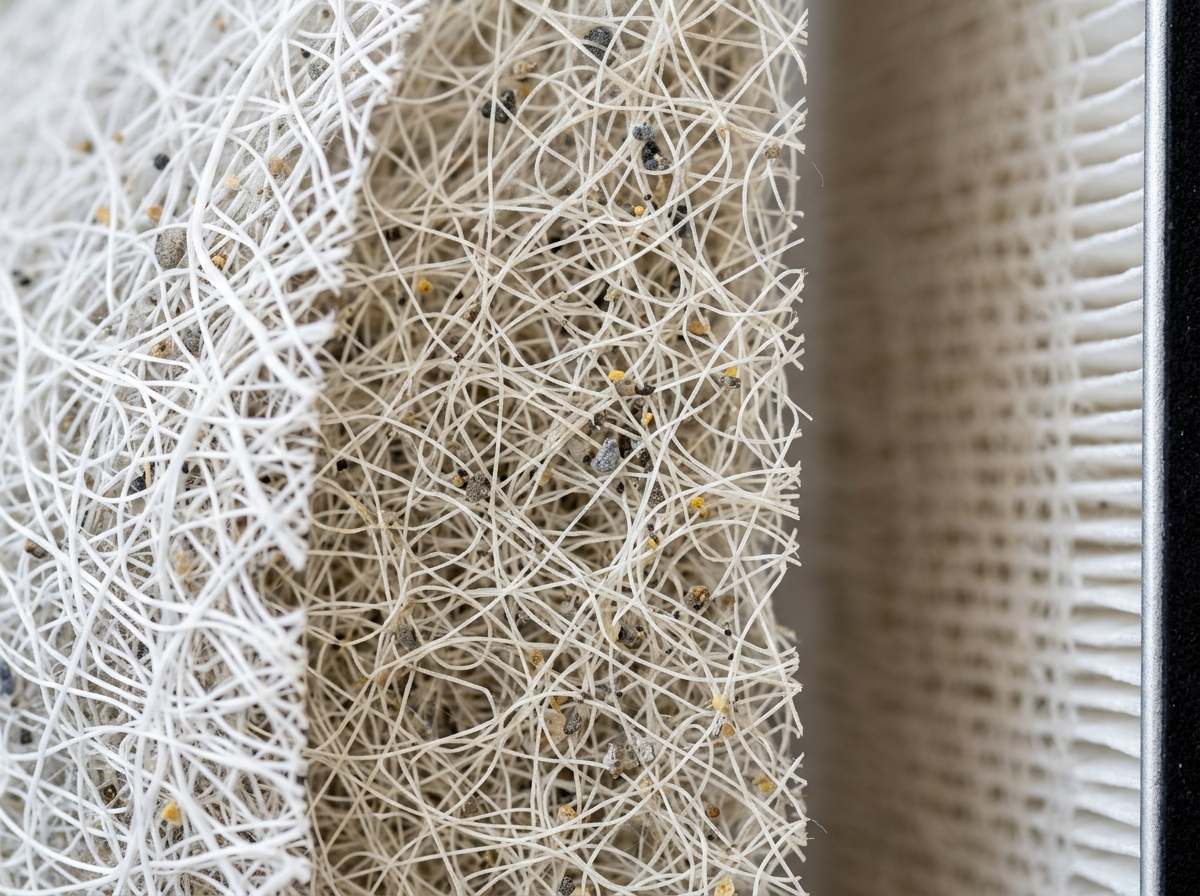
- Washable Pre-filters: These catch large clumps of dust and pet hair before they reach the expensive HEPA filter. Keeping these clean ensures the motor doesn’t have to strain against a clogged intake.
Top-Rated Energy Efficient Air Purifier Models
We have analyzed dozens of models to find the ones that truly deliver on their efficiency promises. Here are our top picks for various needs.
The Efficiency King: Blueair 511i Max
The Blueair 511i Max is currently the benchmark for efficiency. With a 20W motor and a CADR of 152 CFM, it achieves a stellar 7.6 ratio. Running this unit 24/7 on its highest setting costs approximately $1.73 per month (at $0.12/kWh). It’s perfect for bedrooms or small living areas up to 236 sq. ft.
The Smart Powerhouse: Coway Airmega 250
For larger spaces, the Coway Airmega 250 is a top contender. It covers up to 930 sq. ft. with two air changes per hour. What makes it special is its “Eco Mode.” If the air quality remains purified for more than 10 minutes, the fan shuts off entirely to save energy, only waking up if the sensors detect a drop in air quality.
The Versatile Performer: Levoit Core 400S
The Levoit Core 400S is a favorite for medium-to-large rooms (around 403 sq. ft.). It offers a CADR of 260 CFM at 38W. While its ratio of 6.8 is slightly lower than the Blueair, its smart app integration and highly accurate laser sensors make it incredibly effective at managing energy use in real-time.
The Technology Leader: Vornado PCO375DC
The PCO375DC Energy Smart Air Purifier uses a DC motor that uses up to 80% less energy than traditional motors. It features “Silverscreen” technology, which uses UV light to destroy VOCs and bacteria on a molecular level, providing a level of clean that goes beyond standard HEPA filtration.
Maximizing Efficiency with Smart Maintenance
Even the most energy efficient air purifiers will lose their edge if they aren’t maintained. A dirty filter is like trying to breathe through a thick wool blanket—it takes a lot more effort.
Maintain the Pre-Filter
Most modern units come with a fabric or mesh pre-filter. This is your first line of defense. We recommend vacuuming or washing this every two to four weeks. By keeping the intake clear, you reduce the “pressure drop” across the main filter, allowing the motor to run more efficiently. This aligns with broader energy-efficient-cleaning-methods-2 that focus on equipment longevity.
Strategic Placement
Don’t hide your purifier in a corner or behind a couch. For the 360-degree intake models (like the Blue Pure 221), placement in the center of a wall or near the middle of the room is ideal. Obstructing the airflow forces the fan to work harder to circulate the air, which wastes electricity and reduces the effective CADR.
Sensor Calibration
If your unit has an “Auto Mode,” the sensors can sometimes get dusty. If you notice your purifier staying on “High” even when the air seems clean, try gently cleaning the sensor opening with a cotton swab or a puff of compressed air. Accurate sensing is the key to minimizing runtime and maximizing savings.
Subscription Services
Many brands now offer filter subscriptions that save you 15-25% on the cost of the filters. More importantly, they ensure you have a fresh filter exactly when you need it. Running a HEPA filter past its expiration date doesn’t just result in dirtier air; it results in higher energy consumption as the motor struggles against the clogged media.
Frequently Asked Questions about Energy Efficient Air Purifiers
How much can I save with energy efficient air purifiers?
On average, switching from a standard model to an ENERGY STAR certified unit saves about 211 kWh per year. In dollar terms, this translates to $18–$40 annually. While that might seem small, air purifiers are often run 24/7. Over five years, that’s up to $200 in savings—often the entire cost of the unit itself. Furthermore, efficient units often put less strain on their motors, potentially leading to a longer product lifespan and a better long-term ROI.
What is the best CADR-to-Watt ratio for energy efficient air purifiers?
Currently, a ratio above 5.0 is considered very good, and anything above 7.0 is world-class. The Blueair 511i Max holds one of the top spots with a 7.6 ratio. When shopping, look for the wattage used at the “High” or “Turbo” setting and compare it to the CADR. If a unit uses 80W to get a 200 CADR (ratio of 2.5), it is significantly less efficient than a unit using 30W to get the same 200 CADR (ratio of 6.6).
Do these units effectively remove VOCs and mold?
Yes, but you need the right technology. While HEPA filters are amazing at catching 99.97% of particles like mold spores and dust down to 0.3 microns (and some down to 0.1 microns), they don’t stop gases. To remove VOCs (volatile organic compounds) and odors, look for a purifier with a substantial activated carbon filter. For even more protection, models like the Vornado Silverscreen use photocatalytic oxidation (PCO) to break down viruses, bacteria, and gases that are too small for a standard filter to catch.
Conclusion
At MoneyFinPro, we believe that sustainable living should also be affordable living. Investing in energy efficient air purifiers is a rare “win-win” scenario: you get a healthier home environment with fewer allergens and pollutants, and you get a lower monthly power bill.
By focusing on ENERGY STAR certified models, understanding metrics like the CADR-to-Watt ratio, and performing simple maintenance like cleaning your pre-filters, you can ensure your home stays fresh without the environmental or financial guilt. Whether you choose a compact Blueair for your bedroom or a smart Coway for your living room, the transition to energy-efficient air cleaning is a breath of fresh air for both your lungs and your wallet.
