
How to Make Homemade Hardwood Floor Polish for Pennies
Why Your Floors Deserve a Better Polish — Made Right at Home
Homemade hardwood floor polish is one of the simplest, cheapest ways to keep your floors looking beautiful without harsh chemicals. Here’s a quick overview of the most effective DIY recipes:
| Recipe | Key Ingredients | Best For |
|---|---|---|
| Vinegar & Olive Oil | 2 tbsp olive oil, 1 tbsp white vinegar, 2 cups warm water | Everyday shine and conditioning |
| Beeswax & Turpentine | 1 cup grated beeswax, 1 cup turpentine | Deep protection and resilience |
| Castile Soap Cleaner | 1 tsp castile soap, 4 cups water | Gentle cleaning of sealed floors |
| Lemon & Olive Oil | 1/4 cup lemon juice, 3/8 cup olive oil, 1/2 gallon hot water | Degreasing and natural shine |
Commercial floor polishes can cost $7 to $20 per bottle. A single $16 bottle of castile soap, by contrast, can make nearly 200 equivalent mixtures. That’s a massive difference — and you skip the synthetic chemicals too.
The good news? Most of these recipes use ingredients you probably already have in your kitchen.
I’m Marlen, and I’ve spent years researching and testing homemade hardwood floor polish recipes for natural, budget-friendly home care. In this guide, I’ll walk you through everything you need to know to get your floors gleaming safely and affordably.
Why Choose Homemade Hardwood Floor Polish Over Commercial Products?
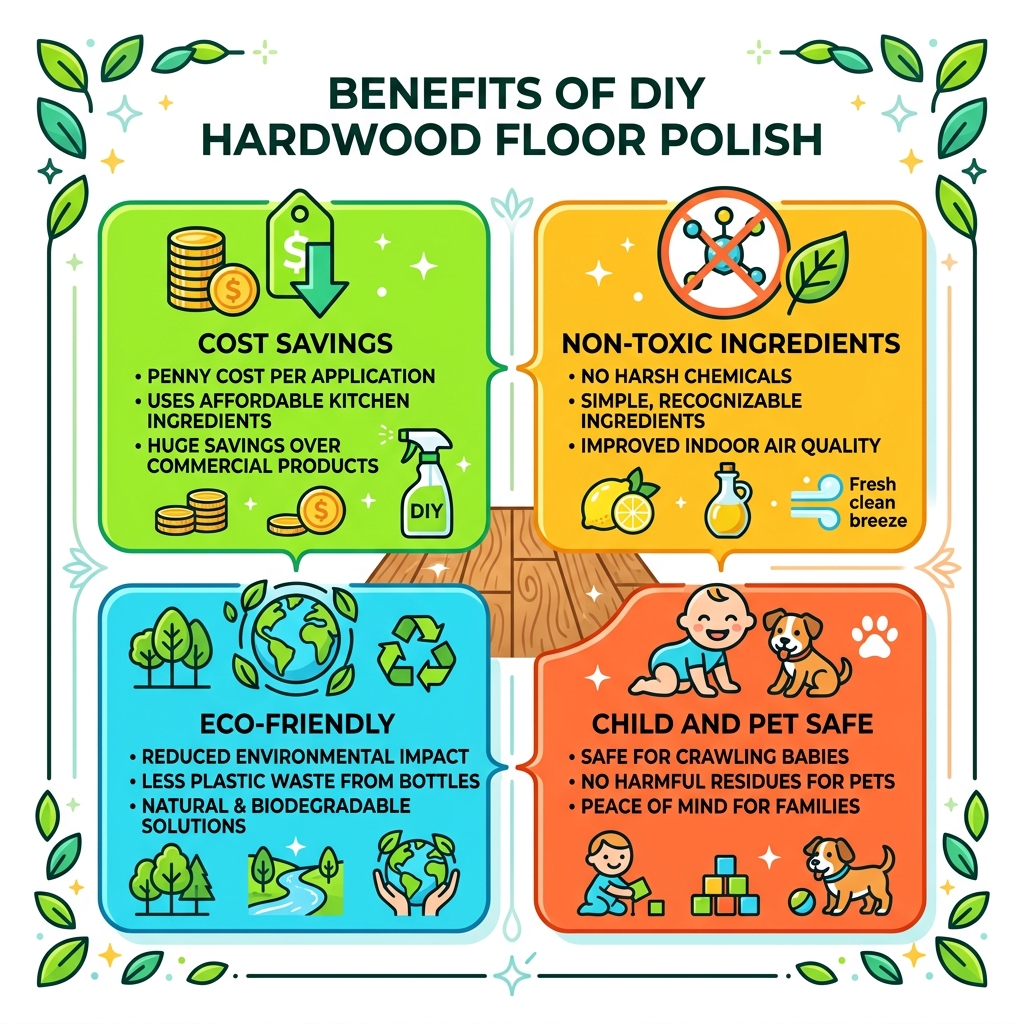
When we look at the gleaming surface of a well-maintained wood floor, we often think of luxury. But achieving that look doesn’t have to come with a luxury price tag-or a cocktail of synthetic chemicals. Choosing a homemade hardwood floor polish is a vote for a healthier home environment.
Commercial polishes often contain “fragrances” that are anything but natural, contributing to poor indoor air quality. By making your own, you can reduce chemicals in home cleaning significantly. This is especially vital for families with small children who spend their time crawling on the floor, or pets who might lick their paws after walking across a freshly polished surface.
Beyond safety, there is the undeniable benefit of natural DIY solutions for shiny, healthy hardwood floors. Natural oils like olive or linseed don’t just sit on top of the wood; they nourish it, preventing the wood from becoming dry and brittle over time. Plus, from a budget perspective, the savings are astronomical. While a commercial bottle might last you a month or two, the ingredients for a DIY batch cost mere pennies per application. For a general overview of hardwood flooring and how finishes work, see Hardwood floor.
Best Ingredients for a Safe and Effective Homemade Hardwood Floor Polish
To get the best results, we need to understand our “pantry pharmacy.” Not every household liquid is a friend to wood. Here are the heavy hitters we recommend:
- White Vinegar: This is the ultimate cleaner. It cuts through grease and grime without leaving a soapy film. However, it must always be diluted to protect the wood’s seal.
- Olive Oil or Vegetable Oil: These act as the “polishing” agent. They provide the shine and hydrate the wood fibers.
- Castile Soap: An eco-conscious favorite, castile soap cleans gently. It’s particularly effective for sealed urethane finishes because it doesn’t strip the protective coating.
- Lemon Juice: A natural degreaser that adds a bright, clean scent. We love unlocking the power of citrus in homemade cleaning solutions because it balances the pH of the mixture.
Before you start mixing, it is essential to know how to DIY homemade hardwood floor cleaner correctly to ensure you aren’t using too much water, which is the number one enemy of hardwood.
Essential Oils for Fragrance and Function
Why settle for a “haunted motel” synthetic lemon scent when you can have the real thing? Essential oils do more than just smell good; many possess antimicrobial properties.
For a 3-ingredient wood floor polish, we recommend:
- Lemon or Sweet Orange: For a refreshing, clean energy.
- Lavender: For a calming atmosphere and antibacterial benefits.
- Cedarwood: Complements the natural scent of the wood and can even help repel certain pests.
Cleaning vs. Polishing: Knowing the Difference
It is a common mistake to confuse cleaning with polishing. Cleaning involves removing surface dirt, dust, and sticky spills. Polishing is about deep conditioning and restoring the “glow” of the finish.
As noted in your ultimate guide to homemade wood floor cleaner, you should always clean your floors before you polish them. If you polish over dirt, you are essentially “sealing in” the grime, which leads to a cloudy, dull appearance.
Top 3 Recipes for Homemade Hardwood Floor Polish
1. The Classic Vinegar and Olive Oil Homemade Hardwood Floor Polish
This is the gold standard for many homeowners. It uses a simple ratio (usually 2:1 or 1:1 depending on how much shine you want) to clean and condition simultaneously.
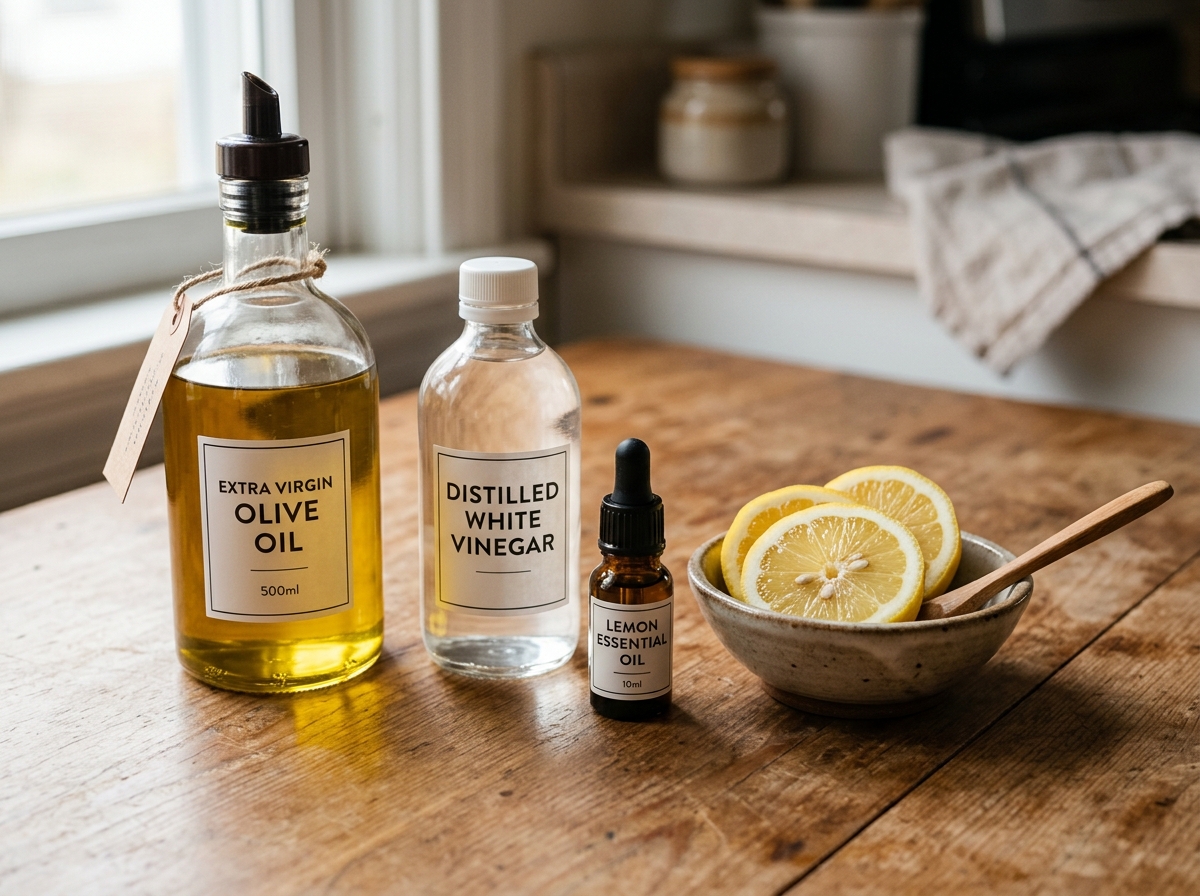
- The Recipe: 2 tablespoons olive oil, 1 tablespoon white vinegar, and 2 cups of warm water.
- Why it works: The vinegar cleans while the olive oil stays behind to provide a rich, warm glow. This is perfect for homemade hardwood floor polish enthusiasts who want a quick, effective solution.
2. The Heavy-Duty Beeswax and Turpentine Polish
If your floors are older or have lost their protective seal, you might need something more substantial. This recipe adds a literal physical layer of protection.
- The Recipe: Melt 1 cup of grated beeswax in a double boiler, then carefully stir in 1 cup of turpentine.
- The Result: This creates a paste wax that makes floors incredibly resilient to scratches. This requires a 12-hour dry time, as mentioned in many homemade floor polish guides.
3. The Gentle Castile Soap and Essential Oil Shine
For modern floors with a urethane finish, you want to avoid heavy oils or acids.
- The Recipe: 1 teaspoon castile soap, 4 cups warm water, and 10 drops of lemon essential oil.
- The Benefit: This is one of the best green cleaning tips for floors because it is incredibly gentle. It provides a subtle shine without the risk of making the floor dangerously slippery. You can also find variations of this in DIY natural wood polishing cleaner recipes.
How to Properly Apply Your Homemade Hardwood Floor Polish
Applying homemade hardwood floor polish isn’t just about splashing it on and hoping for the best. Technique matters! First, ensure you have used the magic of vinegar in homemade cleaning products to prep the surface by removing all loose debris and dust.
Testing and Surface Compatibility
Never apply a new DIY mixture to your entire floor at once. Different finishes react differently to oils and acids.
- The Spot Test: Choose an inconspicuous area (like inside a closet or under a rug). Apply a small amount and wait 24 hours.
- Compatibility: Most DIY recipes are safe for sealed wood. However, if you have engineered hardwood or laminate, be very careful with water. According to industry experts, excess moisture can cause these materials to swell or warp.
Step-by-Step Application Technique
- Clear the Area: Remove rugs and furniture.
- Spray Sparingly: Use a spray bottle to apply the polish in small, 3-square-foot sections.
- Follow the Grain: Always mop or wipe in the direction of the wood grain. This prevents visible streaks.
- Buff it Out: Once the section is covered, use a dry microfiber cloth to buff the area in circular motions. This “sets” the shine and removes any excess oil that could cause slips.
Maintenance and Safety Tips for Long-Lasting Shine
Once you’ve achieved that mirror-like finish, you’ll want to keep it.
- Drying Time: While some cleaners dry in minutes, oil-based polishes can take up to 24 hours to fully cure. Keep kids and pets off the area during this window.
- Slipperiness: This is the biggest safety concern. If the floor feels slick, you likely used too much oil. A quick buff with a dry towel usually fixes this. For more on furniture care, see our guide on safe cleaning for wooden furniture.
- Preventive Care: Use furniture pads and encourage a “no-shoes” policy indoors to prevent micro-scratches from dulling the shine.
Common Mistakes to Avoid with Homemade Hardwood Floor Polish
- Over-wetting: Wood is like a sponge. Too much liquid leads to “cupping” or warping.
- Using Abrasives: Never use baking soda or steel wool on hardwood. While we love unveiling the power of baking soda for other tasks, it is too scratchy for delicate wood finishes.
- Over-Polishing: You only need to do a heavy polish about once a year. Doing it monthly can lead to a sticky buildup.
Troubleshooting Streaks and Residue
If your floors look “cloudy” after polishing, it’s usually due to one of two things: leftover cleaner residue or a bad dilution ratio.
- The Fix: Re-buff the area with a slightly damp (water only) microfiber cloth and then immediately dry it.
- Shelf Life: Homemade hardwood floor polish doesn’t have the preservatives of store-bought versions. Most mixtures stay fresh for about 2–4 weeks. If it smells “off,” toss it and make a fresh batch. For more floor types, check the novice’s guide to homemade tile floor cleaner.
Frequently Asked Questions about Homemade Hardwood Floor Polish
How often should I apply homemade hardwood floor polish?
For high-traffic areas, a light polishing every 1 to 3 months is sufficient. For the rest of the house, a deep polish once a year is plenty. Regular weekly cleaning with a damp (not wet) mop will maintain the luster in between.
Is homemade floor polish safe for pets and children?
Generally, yes! That is the primary reason many of us switch to DIY. However, be cautious with specific essential oils (like tea tree) which can be toxic to cats and dogs in high concentrations. Always ensure the floor is 100% dry before letting them back into the room.
Can I use vegetable oil instead of olive oil for polishing?
Absolutely. In fact, many homesteaders prefer using cheap, hydrogenated vegetable oil for floors because it’s a great way to repurpose an oil they might not want to cook with. It provides a similar shine to olive oil but at an even lower price point.
Conclusion
Embracing homemade hardwood floor polish is more than just a cleaning choice—it’s a step toward a more sustainable and budget-conscious lifestyle. At MoneyFinPro, we believe that maintaining a beautiful home shouldn’t require a cabinet full of expensive, toxic chemicals.
By using simple pantry staples like vinegar, oil, and citrus, you can protect your investment and keep your family safe. For more ways to transform your home maintenance routine, explore our other DIY cleaners and join the movement toward a greener, cleaner home. Happy polishing!
