
Why Your Leather Deserves a Non-Toxic Conditioner
Non toxic leather conditioner keeps your leather soft, strong, and safe — without harsh chemicals that can harm your family, pets, or the planet.
Here are the top non-toxic leather conditioners worth knowing about:
| Product | Key Ingredients | Best For |
|---|---|---|
| Leather Honey | Non-toxic, allergen-free formula | All-around use, 6-month protection |
| Chamberlain’s Auto Refreshener No. 4 | Water-based, UV protectants | Car interiors, sun-exposed leather |
| Pure Polish Cleaner & Conditioner | Orange oil, coconut oil, beeswax, vitamin E | Shoes, boots, furniture |
| Leatherology Conditioner | Beeswax, seed oil | Bags, purses, everyday leather |
| MooBuzz | Neatsfoot oil, beeswax | Waterproofing, outdoor leather |
| Verdana Coconut Formula | Oxidation-stable coconut oil | Sofas, car seats, daily-use items |
Leather is a natural material. It breathes, absorbs, and ages — just like skin. When you use products loaded with solvents, silicones, or synthetic chemicals, you risk clogging its pores, stripping its natural oils, or leaving behind residue that breaks it down faster over time.
The good news? Natural alternatives work just as well — and in many cases, better.
I’m Marlen, and I’ve spent years researching non-toxic home care products, including non toxic leather conditioner options that are safe for everyday households. I’ll walk you through everything you need to make a confident choice.
What Defines a Truly Non Toxic Leather Conditioner?
When we talk about a non toxic leather conditioner, we aren’t just using a marketing buzzword. A truly safe product is one formulated without substances that off-gas VOCs (volatile organic compounds) or leave behind endocrine-disrupting residues. Since leather is porous, it acts like a sponge. If you apply a chemical-heavy cream to your sofa, those chemicals eventually end up on your skin and in your lungs.
A high-quality non toxic leather conditioner should be:
- PFAS-Free: Devoid of “forever chemicals” often used for waterproofing.
- Silicone-Free: Silicone can create a plastic-like shine that eventually suffocates the leather and makes it impossible to re-condition.
- Petroleum-Free: Many cheap conditioners use mineral oil or paraffin, which can actually degrade leather fibers over time.
- Biodegradable: Safe for the environment once it washes away or the item reaches the end of its life.
- Human Skin Safe: You should be able to apply it without gloves (though a cloth is usually better for the leather!).
The effectiveness of these natural formulas often surprises skeptics. For instance, a single application of a premium non toxic leather conditioner can provide up to 6 months of protection. These formulas are designed for deep pore penetration, reaching the inner fibers to restore suppleness rather than just sitting on the surface. This focus on health is a key part of how we reduce chemicals in home cleaning across the board.
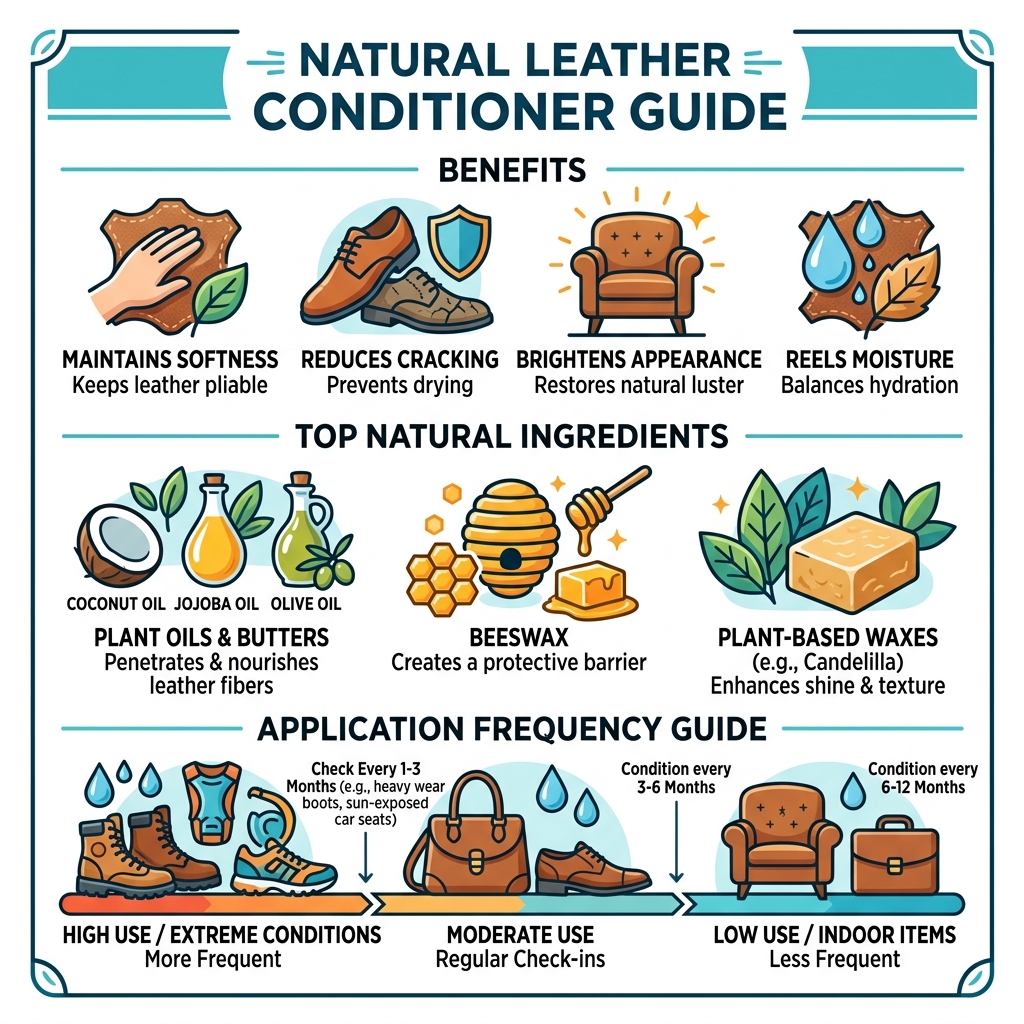
Best Natural Ingredients for Leather Health
Nature provides some of the best emollients for animal hides. When scanning labels, look for these power players:
- Beeswax: A natural water-proofer that provides a protective barrier while allowing the leather to breathe.
- Seed Oils & Jojoba Wax: Jojoba is technically a liquid wax, not an oil. It is highly stable, meaning it won’t go rancid, and it mimics the natural oils found in leather.
- Refined Coconut Oil: Specifically “refined” or “fractionated” versions are best as they have a long shelf life and won’t smell like a tropical vacation after a month.
- Orange Oil: Often used in cleaners like Pure Polish, it helps break down surface grime without harsh solvents. You can learn more about unlocking the power of citrus in homemade cleaning solutions for other areas of your home.
- Neatsfoot Oil: A traditional favorite derived from cattle, though modern non-toxic versions are often blended with vegetable oils for better stability.
- Vitamin E (Tocopherols): Acts as a natural preservative to keep the oils in the conditioner fresh.
Avoiding Harmful Chemicals in Non Toxic Leather Conditioner
It is just as important to know what isn’t in the bottle. Many commercial conditioners rely on solvents to speed up drying time or synthetic dyes to mask scuffs. However, these can be harsh on the respiratory system and may cause skin irritation.
Avoid products containing:
- Phthalates: Often hidden under the term “fragrance.”
- Parabens: Used as cheap preservatives but linked to hormonal issues.
- Drying Agents: Alcohol-based additives that make the product dry fast but leave the leather thirstier than before.
- Animal Fats (Unrefined): While some animal-derived ingredients are fine, unrefined fats can go rancid and cause the leather to smell or rot.
Choosing better products for your furniture is a cornerstone of our eco-friendly furniture cleaning guide.
Top-Rated Natural Leather Conditioners for Every Need
Finding the right non toxic leather conditioner depends on what you’re treating. A heavy-duty boot salve might be too greasy for a delicate designer handbag, while a light spray might not be enough for a parched 20-year-old leather armchair.
| Brand | Price Range | Highlight |
|---|---|---|
| Leather Honey | $27.99 (8oz) | #1 Best-seller, 50+ year history |
| Verdana | $8.90 (8oz) | Budget-friendly, coconut-based |
| MooBuzz | $15.00+ | Simple 2-ingredient formula |
| Leatherology | $12.00 (4oz) | Odorless, great for accessories |
| Chamberlain’s | $20.00+ | Specialized for auto and UV |
Leather Honey on Amazon remains a top contender because of its long-standing reputation. It was originally developed for use on a family horse farm in 1968 and has since gained a “cult following” among car enthusiasts and furniture makers. It is completely allergen-free—no nuts, gluten, or dairy—making it exceptionally safe for households with sensitive members.
Best Non Toxic Leather Conditioner for UV Protection
Your car’s interior is a literal greenhouse. Between the heat and the direct sun, leather seats can crack and fade in a single season. For these high-stress environments, we recommend a water-based formula with added UV protectants.
Chamberlain’s Auto Refreshener No. 4 is a standout here. It uses cosmetic-grade ingredients (some joke it’s safe enough to drink, though we don’t recommend a “Leather Milk” cocktail!) and features a light coconut scent that dissipates quickly. It’s designed to strengthen fibers against sun damage without leaving a greasy residue that would ruin your clothes. For a full interior refresh, you might also check out our easy guide to DIY car interior cleaner.
Best Value and Size Options for Home Care
If you have a large sectional sofa, a tiny 2oz tin isn’t going to cut it. Brands like Leather Honey offer various sizes, including a Leather Honey 8oz Conditioner for smaller projects and larger 32oz jugs for the big jobs.
When considering value, look at the concentration. A 4oz jar of a dense cream like Pure Polish can provide roughly 12 applications for shoes or cover two full leather sofas because a little goes a long way. Always check for subscription discounts or “starter kits” that include applicators and cleaners, as these often provide the best bang for your buck.

How to Apply Natural Conditioners for Professional Results
Applying a non toxic leather conditioner is a bit of an art, but it’s one anyone can master. Proper preparation is the difference between a blotchy mess and a factory-fresh finish.
- Clean the Surface First: Never condition dirty leather. You’ll just be sealing the grime into the pores. Use a dedicated leather cleaner or a very mild solution. Some even use a dilute vinegar mix for light cleaning; see the magic of vinegar in homemade cleaning products for tips.
- Spot Test: This is the golden rule. Apply a tiny amount to an inconspicuous area (like the underside of a cushion or the back of a boot) and let it dry for 24 hours. This ensures the product won’t darken the leather more than you like.
- Apply in Thin Layers: Use a lint-free cloth or a foam applicator. Apply a quarter-sized drop and work it in using circular motions. If the leather is very dry, it might “drink” the conditioner instantly.
- Drying Time: Most natural conditioners need at least two hours to penetrate, but overnight is best.
- Buffing: After the drying period, use a clean, dry cloth to buff away any excess. This brings out a natural glow and ensures no sticky residue is left behind.
If you’re working on fabric sections of furniture simultaneously, you can whip up your own eco-friendly upholstery cleaner to keep the whole piece looking uniform.
Debunking DIY Myths and Material Compatibility
There is a lot of “kitchen cupboard” advice on the internet that can actually ruin your leather. Let’s clear some things up:
- The Olive Oil Myth: While it seems natural, olive oil is a non-drying oil that will eventually go rancid inside your leather. This leads to a bad smell and can actually attract bacteria that break down the hide.
- The Coconut Oil Caveat: Raw, unrefined coconut oil can also go rancid or solidify in cold temperatures, leaving white spots on your leather. Only use “refined” or “oxidation-stable” coconut formulas like Verdana.
- Drying Oils (Hemp, Flax, Linseed): Leather furniture makers warn against these. They polymerize (harden) as they dry, which can make your leather brittle and prone to cracking.
- Suede and Nubuck: Most conditioners are not for suede. They will flatten the nap and turn it into a shiny, dark mess. Always look for “suede-safe” specifically.
- Faux Leather: Since faux leather is essentially plastic, a non toxic leather conditioner designed for pores won’t do much. It will just sit on top and create a slippery hazard.
Keeping your home safe for everyone is a priority, which is why we focus on safe cleaning for pets and kids. Just as you’d use safe cleaning for wooden furniture, your leather deserves specialized, non-toxic attention.
Frequently Asked Questions about Leather Care
Does natural conditioner darken leather?
Most conditioners will slightly deepen the color of the leather, especially if it is very dry. This is usually seen as a “restoration” of the original color rather than a permanent stain. However, porous leathers like aniline or very light-colored tans are more susceptible to darkening. Always spot test! If you’re worried about dust affecting the finish, check out non-toxic homemade solutions for dusting to keep the surface prep clean.
How often should I condition my leather items?
- High-Use Items (Boots, Bags): Every 1–3 months, or more often if exposed to rain and snow.
- Furniture & Car Seats: Every 3–6 months is generally sufficient to prevent drying and cracking.
- Seasonal Items: Condition them before putting them into storage for the winter or summer to prevent them from becoming brittle. For more furniture-specific advice, see our eco-friendly upholstery cleaning tips.
Can I use non-toxic conditioners on car seats?
Yes, and you should! Because you spend a lot of time in your car, using a non-toxic formula prevents you from breathing in chemical fumes in a confined space. Look for non-greasy finishes so you don’t slide around while driving. For more pet-friendly car tips, see homemade pet-safe cleaning solutions.
Conclusion
At MoneyFinPro, we believe that maintaining your belongings shouldn’t come at the cost of your health or the environment. Choosing a non toxic leather conditioner is a small but impactful step toward a more sustainable home. Whether you’re loyal to the classic Leather Honey or prefer the simple, two-ingredient approach of MooBuzz, your leather will thank you with years of extra life and a beautiful, natural patina.
Ready to dive deeper into a chemical-free lifestyle? Explore our Sustainable Living Guide for more tips on eco-conscious consumerism.
