
Why a DIY Tile Stain Remover Works Better Than You Think
A diy tile stain remover is easier to make than most people realize — and it works surprisingly well.
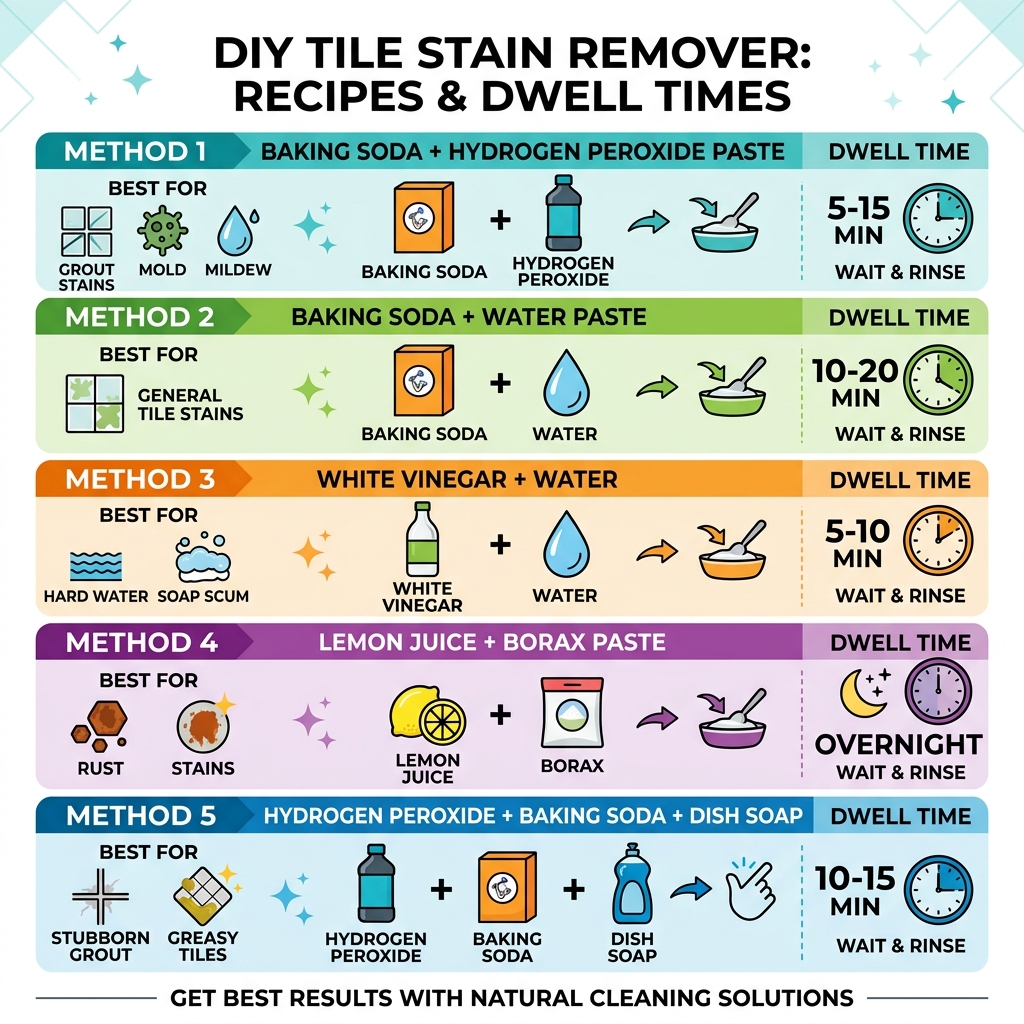
Here are the most effective DIY options you can make right now:
| Method | Best For | Dwell Time |
|---|---|---|
| Baking soda + hydrogen peroxide paste | Grout stains, mold, mildew | 5–15 minutes |
| Baking soda + water paste | General tile stains | 10–20 minutes |
| White vinegar + water | Hard water, soap scum | 5–10 minutes |
| Lemon juice + borax paste | Rust stains | Overnight |
| Hydrogen peroxide + baking soda + dish soap | Stubborn grout, greasy tiles | 10–15 minutes |
Tiles are easy to maintain — but stains from soap scum, hard water, food spills, and mold can make even clean bathrooms look dingy. The good news? Most solutions are already sitting in your pantry.
The biggest mistake most homeowners make is reaching for harsh commercial cleaners when simple, natural alternatives do the job just as well — without the toxic fumes or high cost.
I’m marlen, and I’ve spent years researching eco-friendly, budget-conscious home care solutions, including hands-on testing of diy tile stain remover recipes that actually deliver results. Let’s walk through exactly what works.
The Best Ingredients for a DIY Tile Stain Remover
When we look at our kitchen pantries, we aren’t just looking at ingredients for dinner; we’re looking at a powerful laboratory of cleaning agents. The beauty of a diy tile stain remover lies in its simplicity and safety. Unlike commercial cleaners that often rely on caustic chemicals, our homemade solutions use basic science to lift grime.
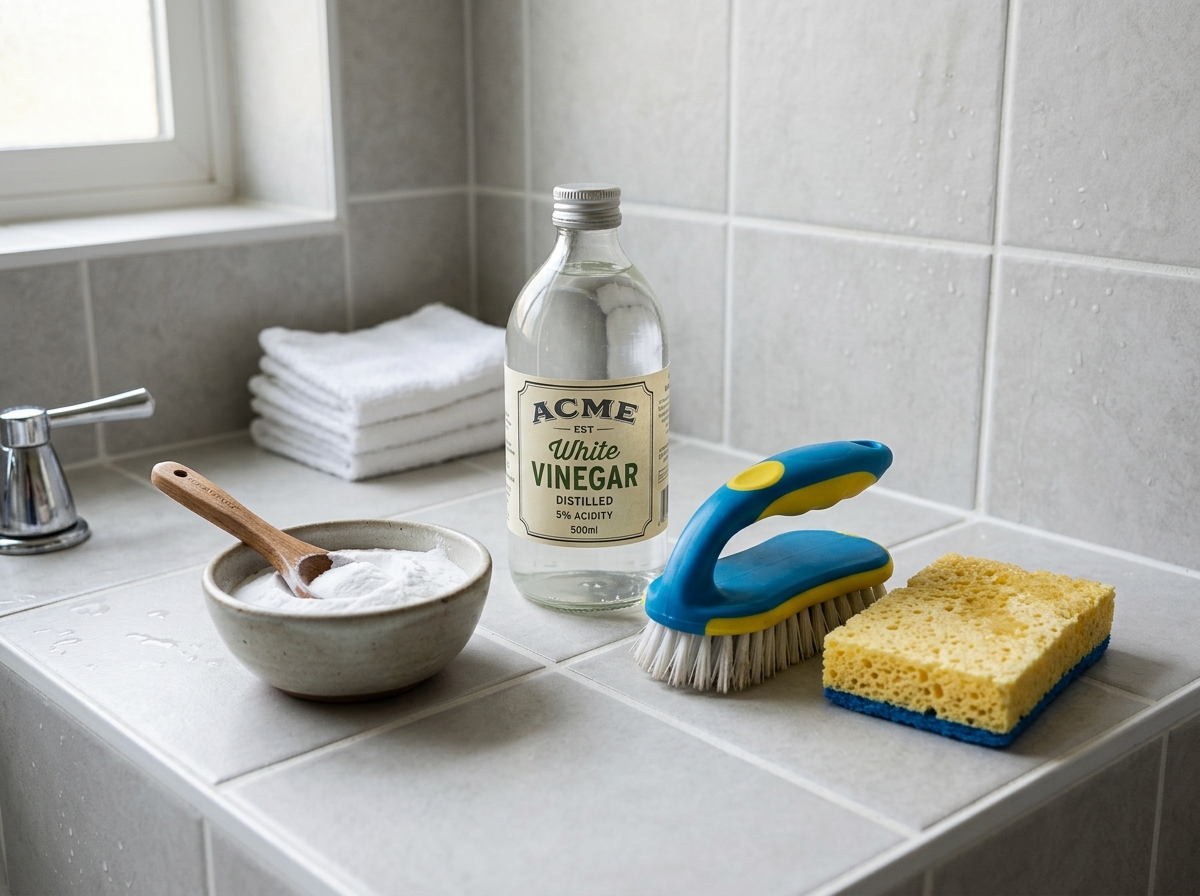
To understand why these work, we have to look at their chemical properties. Baking soda is alkaline, while vinegar is acidic. When used correctly, they can tackle almost any household mess. For a deeper dive into these staples, check out our guides on Unveiling the Power of Baking Soda: DIY Cleaning Solutions and The Magic of Vinegar in Homemade Cleaning Products.
Using Baking Soda as a DIY Tile Stain Remover
Baking soda (sodium bicarbonate) is perhaps the most versatile tool in our cleaning arsenal. It acts as a mild abrasive, which is essential for scrubbing away physical buildup without scratching the delicate surface of ceramic or porcelain tiles.
One of its secret weapons is its ability to deodorize. Because grout is porous, it tends to trap odor-causing molecules. Baking soda neutralizes these rather than just masking them. When we mix it with a small amount of water to create a “pudding-like” consistency, it clings to vertical surfaces like shower walls, allowing it to work its magic.
| Stain Type | Recommended Dwell Time |
|---|---|
| Light food spills | 10 minutes |
| Dried mud or dirt | 15 minutes |
| Deep-set grime | 20 minutes |
According to research from 7 Home Remedies for Cleaning Tiles and Grout, a simple baking soda scrub can be enhanced by adding a tablespoon of dish soap to two gallons of hot water for a general floor mop. For spot treatment, however, the paste is king.
Hydrogen Peroxide: A Powerful DIY Tile Stain Remover
If baking soda is the “scrubber,” hydrogen peroxide is the “brightener.” Specifically, using a 3% concentration (the kind found in most first-aid aisles) acts as an oxygen bleach. It is incredibly effective at killing mold spores and lifting organic stains like coffee, wine, or juice.
When we combine hydrogen peroxide with baking soda, a chemical reaction occurs that creates effervescence. This bubbling action isn’t just for show; it physically helps to lift dirt out of the tiny pores of your grout. Many experts, including those at Martha Stewart, recommend a ratio of two parts baking soda to one part hydrogen peroxide for the ultimate whitening paste.
Step-by-Step Guide to Removing Stubborn Tile Stains
Cleaning doesn’t have to be a marathon. If we follow a systematic approach, we can restore our floors and walls in a fraction of the time it takes to “scrub blindly.”
For those just starting their natural cleaning journey, The Novice’s Guide to Homemade Tile Floor Cleaner offers a great foundation. But when it comes to specific stains, here is our proven process.
Preparation and Testing
Before we apply any diy tile stain remover, we must prepare the surface.
- Clear the Debris: Sweep or vacuum the area thoroughly. If you apply a wet cleaner to a dusty floor, you’re just making mud, which will settle deeper into the grout lines.
- The “Secret Spot” Test: This is the most important step. Always test your DIY solution on an inconspicuous area—like the tile behind the toilet or under a kitchen appliance. This ensures the cleaner won’t cause discoloration or “etching” (dulling of the finish).
- Pre-treat with Heat: For particularly greasy kitchen tiles, wiping the area with a cloth soaked in very hot water can help soften the grime before the cleaner is applied.
Application and Dwell Time
Once we’ve confirmed our cleaner is safe, it’s time to apply. For grout, we recommend using a squeeze bottle for precision, as suggested in How to Make Homemade Grout Cleaner.
Apply the paste or solution and let it sit. This is called “dwell time.” Most DIY recipes require 10 to 20 minutes to effectively break down the molecular bonds of the stain. If you are using a viral hack—like the one involving Blue Dawn Dish Soap, hydrogen peroxide, and baking soda—you’ll notice the mixture start to bubble. This is the oxygenation process at work, penetrating the pores of the tile and grout.
Scrubbing and Rinsing
After the dwell time, it’s time for a little elbow grease. We find that a stiff-bristled grout brush is best, but an old toothbrush works wonders for tight corners.
- Circular Motions: Instead of just scrubbing back and forth, use small circular motions to ensure the bristles reach every nook and cranny.
- Rinse Thoroughly: Use warm, clean water to rinse. If you leave baking soda residue behind, it will create a dull white film once dry.
- The Final Wipe: Use a microfiber cloth to buff the tiles dry. This prevents water spots and gives the tile a “like-new” shine.
Essential Precautions for Different Tile Types
Not all tiles are created equal. While ceramic and porcelain are generally “bulletproof” when it comes to DIY cleaners, natural stones require a much gentler touch. Using the wrong diy tile stain remover can permanently damage expensive flooring.
Avoiding Acid on Natural Stone
If you have marble, limestone, travertine, or slate, you must keep vinegar and lemon juice far away. These stones are “calcitic,” meaning they react chemically with acids. Vinegar has a pH level between 2 and 3; if applied to marble, it will “etch” the surface, leaving behind dull, permanent white marks that look like water rings.
For these surfaces, we recommend staying with pH-neutral cleaners or very diluted dish soap. For more safe recipes, see our guide on Easy Peasy Recipes for Natural Grout Cleaners.
Protecting Porous Grout
Grout is essentially a mixture of sand and cement, making it highly porous. This is why it stains so easily. While we want to clean it, we also want to protect its structural integrity.
- Avoid Bleach: While 1 part bleach to 4 parts water can whiten grout, frequent use can weaken the bond between the tile and the grout.
- No Metal Brushes: Never use steel wool or wire brushes. They can scratch the tile glaze and pull chunks of grout out of the joints.
- Never Mix Chemicals: This is a major safety rule. Never mix bleach with vinegar or ammonia, as it creates toxic chlorine or chloramine gas. Stick to one recipe at a time!
Long-Term Maintenance and Prevention Tips
The best way to deal with a stain is to prevent it from ever happening. By establishing a few simple habits, we can keep our tiles sparkling without needing a deep scrub every month.
Regular Cleaning Schedule
Consistency is the secret to a clean home.
- Weekly Mopping: Mop your floors once a week with a mild solution of water and a drop of dish soap. For more details on bathroom-specific care, read Bathroom Grout Cleaning Naturally.
- The Squeegee Method: In the bathroom, use a squeegee after every shower. This removes the water that carries soap scum and minerals, preventing hard water stains from forming.
- Kitchen Degreasing: Kitchen backsplashes are magnets for grease. Wiping them down after cooking with a natural grease remover prevents the yellowing of grout lines.
Sealing for Protection
If your grout is clean and dry, it’s time to seal it. Grout sealer acts as a moisture barrier, filling the pores so that liquids (like spilled wine or muddy paw prints) sit on top rather than soaking in.
- Frequency: Most professionals recommend resealing grout every 6 to 12 months, especially in high-traffic areas like entryways or damp areas like showers.
- Drying Time: When applying a high-gloss sealer, allow 45–60 minutes for drying before applying a second coat.
Frequently Asked Questions about DIY Tile Stain Remover
What is the best DIY recipe for rust stains on tiles?
Rust is a common issue in bathrooms where metal shaving cream cans or razors sit on the tile. The most effective diy tile stain remover for rust is a paste made of equal parts lemon juice and borax. Apply the paste to the rust spot and let it sit for several hours (or overnight for deep stains) before scrubbing and rinsing.
Can I use vinegar on all types of tile?
No. While vinegar is excellent for ceramic, porcelain, and fiberglass, it should never be used on natural stone like marble, travertine, or limestone. Its acidity will eat away at the stone’s surface. Also, use it sparingly on grout, as excessive acid can eventually erode the grout material.
How often should I deep clean my grout?
In high-traffic areas like the kitchen or a main bathroom, we recommend a deep clean once a month. For low-traffic areas like a guest bedroom or dry laundry room, once or twice a year is usually sufficient. For more tips on maintaining different areas, check out our guide on Natural Ways to Lift Food Stains and Pet Hair.
Conclusion
At MoneyFinPro, we believe that a clean home shouldn’t come at the cost of your health or your wallet. Transitioning to a diy tile stain remover is a simple yet impactful step toward sustainable living. By using ingredients like baking soda, hydrogen peroxide, and vinegar, you can achieve professional-level results while keeping your home non-toxic and eco-friendly.
Whether you’re tackling a stubborn wine spill or refreshing years of grime on your bathroom floor, these methods are proven to work. Ready to take the next step in your DIY journey? Explore more DIY Cleaners and join our community of homeowners dedicated to smarter, greener cleaning solutions!
