
Why Efficient Steam Mop Cleaning Is the Smarter Way to Clean Your Floors
Efficient steam mop cleaning is one of the fastest ways to sanitize your floors without chemicals, buckets, or heavy scrubbing. Here’s a quick overview of how to do it right:
- Sweep or vacuum first — remove loose dirt and debris
- Fill the tank with distilled water — prevents mineral buildup
- Wait for heat-up — most mops are ready in 15–30 seconds
- Mop in straight lines — move corner to exit, overlapping strokes
- Keep the mop moving — never let it sit still on one spot
- Clean your pad after use — wash and store for next time
A steam mop heats water to nearly 250°F, turning it into pressurized steam that lifts dirt, kills bacteria, and dries almost instantly. No harsh chemicals. No soaking wet floors.
This matters especially if you have kids, pets, or grout lines that seem to trap every bit of grime no matter how hard you scrub.
I’m marlen, and my experience with efficient steam mop cleaning spans years of testing cleaning routines for busy households looking for eco-friendly, low-effort solutions. In this guide, I’ll walk you through everything you need to get the most out of your steam mop — from prep to pad care.
The Science of Sanitization and High-Temperature Steam
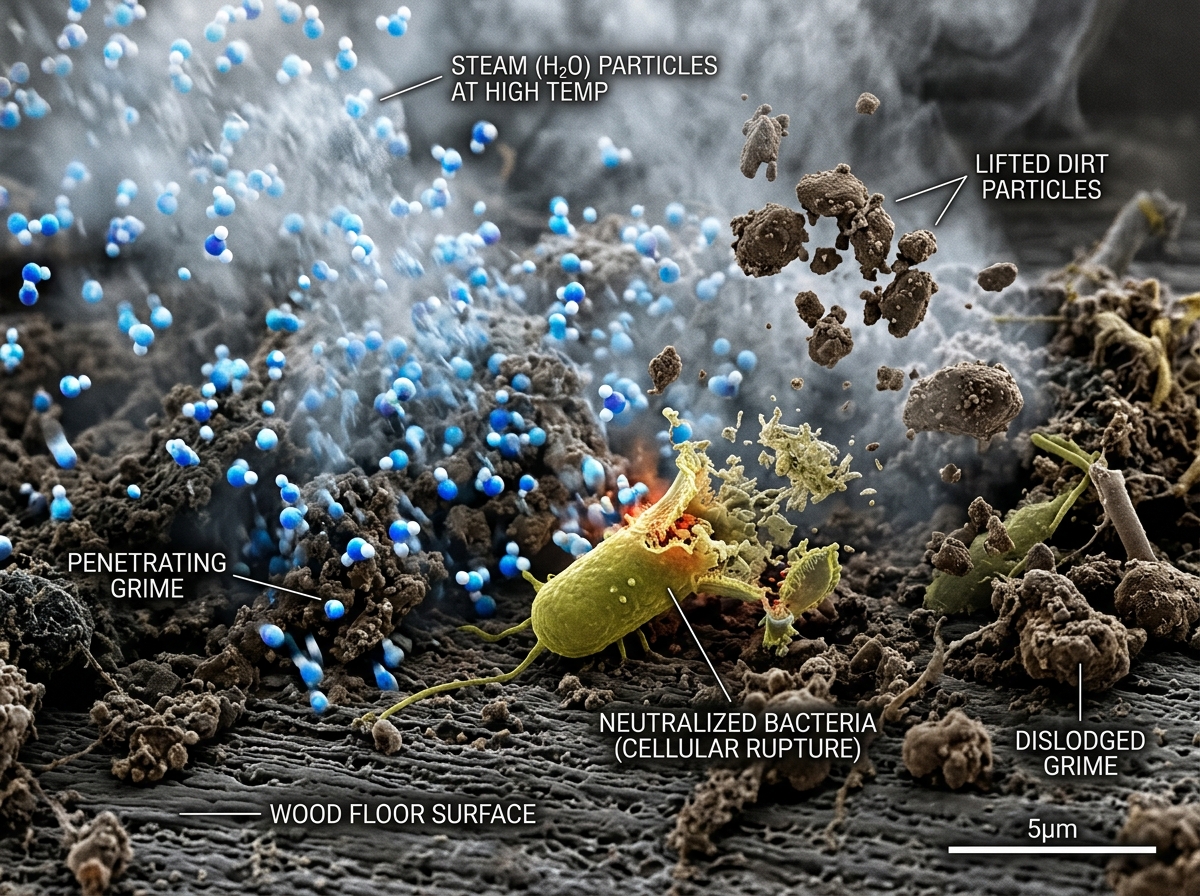
To truly master efficient steam mop cleaning, we need to understand the “magic” happening inside that water tank. Steam mops work by heating water to incredibly high temperatures—often reaching nearly 250°F. This isn’t just warm water; it is pressurized vapor that acts as a natural solvent.
When this high-temperature steam hits your floor, it weakens the physical bonds between the dirt and the surface. This allows the microfiber pad to lift away grime that a traditional mop would simply move around. Beyond just looking clean, steam provides a level of hygiene that cold water and soap struggle to match.
Research shows that steam mops can eliminate 99.9% of common household germs, including bacteria like Staphylococcus aureus, viruses such as Influenza A (H1N1), and even mold or dust mites. This chemical-free sanitization is a cornerstone of Energy-Efficient Cleaning Methods, as it relies on the thermal energy of water rather than the production and transport of synthetic detergents. For families with allergy sufferers or pets who spend their time on the floor, this “steam-only” approach provides peace of mind without leaving behind toxic residues.
A Step-by-Step Guide to Efficient Steam Mop Cleaning
Efficiency isn’t just about how fast the mop moves; it’s about the preparation you do before you ever plug the machine in. If you skip the prep, you’ll likely end up pushing wet mud around your kitchen.
Step 1: Pre-Cleaning is Non-Negotiable
Before you start the steam, you must clear the floor of loose debris. Sweep, dust-mop, or vacuum the area thoroughly. Steam mops are designed to deep-clean and sanitize, not to pick up crumbs, pet hair, or large pieces of grit. Leaving these on the floor can lead to scratching or unsightly streaks. For more on preparing your surfaces, check out these Green Cleaning Tips for Floors.
Step 2: The Right Water Matters
While it’s tempting to use tap water, most experts and manufacturers recommend distilled water. Tap water contains minerals that, when heated, create scale buildup inside the mop’s internal heater. Over time, this “hard water” buildup can clog the steam vents, reducing the machine’s efficiency or causing it to fail entirely.
Step 3: Preparing the Mop
Fill the reservoir (most modern tanks hold between 12 and 19 ounces) and attach a clean microfiber pad. Many high-efficiency models, like the PurSteam 10-in-1, heat up in as little as 30 seconds. Once the indicator light tells you it’s ready, you’re set to go.
Mastering Efficient Steam Mop Cleaning Techniques
To achieve a professional-grade finish, your technique matters as much as your equipment. Following Simple Green Cleaning Routines means working smarter, not harder.
- The Corner-to-Exit Path: Always start in the corner furthest from the door and work your way backward. This ensures you don’t step on your freshly cleaned, damp floor.
- Straight Lines and Overlapping Strokes: Move the mop in slow, steady, straight lines. Overlap each stroke by about an inch to ensure no spot is missed.
- Constant Movement: This is the golden rule of efficient steam mop cleaning. Never let a steam mop sit stationary on a sealed wood or laminate floor while the steam is running. The concentrated heat can damage the finish or warp the material.
- Let the Steam Do the Work: You don’t need to put your weight into it. For tough spots, like dried chocolate or soda, simply pass over the area a few extra times. In testing, high-quality mops removed chocolate in as little as two to four swipes.
Flooring Compatibility: What’s Safe to Steam?
One of the most common mistakes in floor care is using steam on a surface that can’t handle the moisture or heat. Because steam is “thin” water, it can penetrate cracks that liquid water cannot.
| Flooring Type | Steam Safe? | Notes |
|---|---|---|
| Ceramic & Porcelain Tile | Yes | Excellent for grout cleaning and sanitization. |
| Sealed Hardwood | Yes (Caution) | Must be perfectly sealed; use the lowest steam setting. |
| Laminate | Use Caution | Only for “steam-safe” laminate; moisture can cause swelling. |
| Vinyl / LVP | No | High heat can melt adhesives or warp the planks. |
| Marble & Granite | Yes | Ensure the stone is properly sealed to prevent etching. |
| Unsealed Wood | No | Will cause immediate warping and water damage. |
Always check with your flooring manufacturer before starting. If you are cleaning sealed hardwood, do a quick “test patch” in a closet or under a rug to ensure the finish doesn’t cloud or peel.
Maximizing Performance and Avoiding Common Mistakes
To keep your cleaning routine running like a well-oiled machine, you need to avoid the pitfalls that slow most people down.
- Don’t Over-Saturate: If the floor looks soaking wet, you are using too much steam or moving too slowly. The floor should dry within a minute or two of mopping.
- Change Pads Frequently: If you are cleaning a large area, don’t try to do the whole house with one pad. Once the microfiber is saturated with dirt, it stops cleaning and starts smearing. Having a stash of Reusable Cleaning Cloths or extra mop pads is essential.
- Avoid Chemical Additives: Never put floor cleaners, vinegar, or bleach into the water tank unless the manual specifically says you can. These can damage the internal seals and void your warranty.
- Maintenance is Key: After every use, empty the water tank and remove the damp pad. Washing your pads with a boost of OxiClean or a similar eco-friendly cleaner keeps them absorbent and effective. For more maintenance advice, look into Eco-Friendly Mop and Broom Tips for a Greener Home.
Essential Features for Efficient Steam Mop Cleaning
If you’re in the market for a new tool, certain features significantly contribute to efficient steam mop cleaning:
- 30-Second Heat-Up: Reduces “waiting around” time.
- Motorized Pumps: These provide a continuous flow of steam without you having to manually pump the handle.
- Swivel Heads: Essential for navigating around chair legs and tight bathroom corners.
- Variable Steam Modes: Allows you to turn the “blast” up for tile grout and down for delicate hardwoods.
- LED Headlights: It might sound like a gimmick, but lights help you see hair and dust in dark corners that you might otherwise miss.
Frequently Asked Questions
Can steam mops be used on any type of flooring?
No. Steam mops should only be used on sealed, water-resistant surfaces. This includes ceramic tile, linoleum, and well-sealed hardwood. You should strictly avoid unsealed wood, traditional laminate (which can swell at the seams), and most luxury vinyl planks (LVP), as the heat can damage the wear layer or the glue.
How often should the mop pad be changed during cleaning?
For an average-sized room (like a kitchen), one pad is usually enough. However, if you are cleaning the entire house or if the floor is particularly dirty (think muddy paw prints), you should change the pad as soon as it looks grey or dark. Using a dirty pad is the fastest way to leave streaks on your floor. Always wash your pads after every use to maintain their “scrubbing” power.
Do I need to use cleaning chemicals with a steam mop?
One of the best parts of efficient steam mop cleaning is that you do not need chemicals. The heat of the steam does the disinfecting. Using only distilled water makes the process safe for pets and children who spend time on the floor. If you miss the “clean” smell, some models allow you to insert scent discs into the mop head, but the cleaning power comes entirely from the water.
Conclusion
At MoneyFinPro, we believe that a clean home shouldn’t come at the cost of your time or the environment. By embracing efficient steam mop cleaning, you can ditch the harsh chemicals and the back-breaking buckets in favor of a faster, more hygienic solution.
Remember: prep your floors, use distilled water, and keep that mop moving! With these simple habits, you’ll spend less time cleaning and more time enjoying your sparkling, sanitized home. Ready to take your eco-friendly home to the next level? Master your home cleaning today by exploring our latest guides on sustainable living.
