
Why Soap Scum Is Such a Stubborn Bathroom Problem
A natural soap scum remover is the safest, most affordable way to cut through that chalky, grimy buildup on your shower walls, tub, and glass doors — without harsh chemicals.
Quick answer: Here’s how to remove soap scum naturally:
- Mix equal parts white vinegar and liquid dish soap in a spray bottle
- Spray liberally on affected surfaces
- Wait at least 15 minutes to let it break down the buildup
- Scrub gently with a microfiber cloth or non-scratch sponge
- Rinse thoroughly with hot water
That’s it. No toxic fumes. No expensive products.
If your shower looks cloudy no matter how much you scrub, you’re not imagining it. Soap scum is notoriously resistant to plain water — because it’s not just leftover soap. It’s a hard mineral deposit that forms when soap reacts with calcium and magnesium in your tap water.
The good news? A few simple pantry ingredients can dissolve it faster than most store-bought cleaners — and for a fraction of the cost.
I’m marlen, and I’ve spent years testing DIY cleaning solutions — including natural soap scum removers — to find what actually works in real bathrooms. Let me show you exactly how to make and use one that works every time.
Understanding Soap Scum and Why It Forms
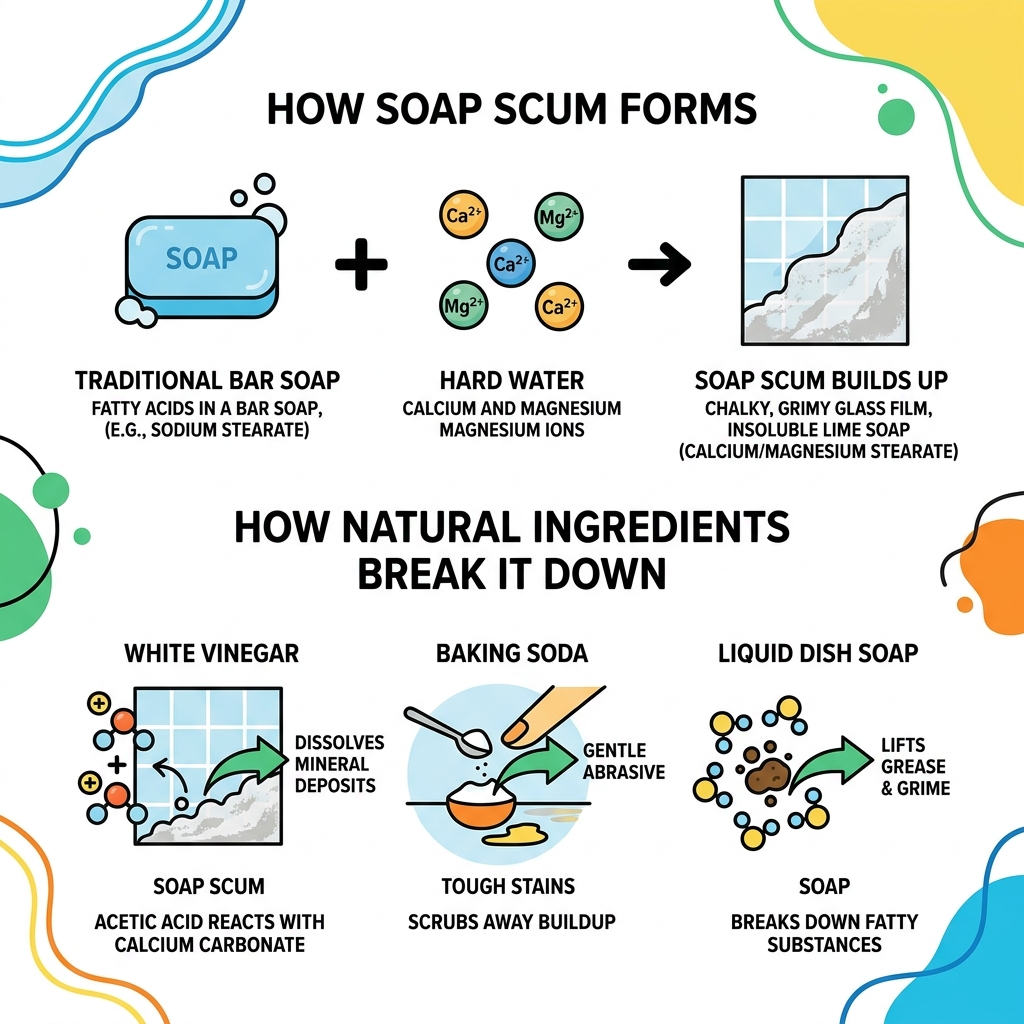
To defeat your enemy, you must first understand it. We often think soap scum is just “old soap” that didn’t rinse away, but the chemistry is a bit more complex. Soap scum is actually a white or greyish film that forms through a chemical reaction between the fatty acids found in traditional bar soaps and the minerals—specifically calcium and magnesium—present in hard water.
When these elements meet, they create an insoluble salt known as “lime soap.” Because this substance is insoluble, water alone won’t wash it away. Instead, it clings to your fiberglass tubs, glass shower doors, and ceramic tiles like a stubborn magnet.
Beyond just looking “yuck” and making your bathroom appear dull, soap scum is a literal breeding ground for bacteria. It traps body oils, skin cells, and dirt, creating a textured surface where mold and mildew can easily take root. This is why a natural soap scum remover is essential; it doesn’t just make things shiny—it makes them hygienic.
The Science Behind Your Natural Soap Scum Remover
Why do DIY recipes often outperform expensive, blue-tinted commercial cleaners? It comes down to the science of pH and surfactants.
Most natural soap scum removers rely on acetic acid (found in white vinegar) or citric acid (found in lemons). These acids are the “dissolvers.” They attack the calcium and magnesium bonds in the soap scum, breaking the mineral “glue” that holds the grime to your shower wall.
Then, we have the surfactants. Ingredients like liquid dish soap or castile soap reduce the surface tension of water. This allows the cleaner to penetrate the oily, fatty layers of the scum. When you combine an acid with a surfactant, you get a one-two punch: the acid dissolves the minerals, and the soap lifts the grease and oils so they can be wiped away.
Choosing a natural approach isn’t just about saving money (though it certainly does that, costing pennies per bottle). It’s about indoor air quality. Many commercial removers use strong synthetic acids and VOCs (volatile organic compounds) that can cause headaches or respiratory irritation in small, poorly ventilated bathrooms. By using soap-scum-and-homemade-cleaners-the-perfect-match, we protect our health and our plumbing.
The Classic Vinegar and Dish Soap Natural Soap Scum Remover
This is the “holy grail” of DIY cleaning. Social media is full of success stories for this recipe—and for good reason. It has garnered over 10,000 shares on platforms like Pinterest because it actually works.
The Recipe:
- 1 cup distilled white vinegar
- 1 cup liquid dish soap (blue Dawn is a popular choice for its grease-cutting power)
The Secret Technique: For the best results, heat the vinegar in the microwave for about 30–60 seconds until it is hot but not boiling. Pour the warm vinegar into a spray bottle first, then add the dish soap. Gently swirl (don’t shake violently, or you’ll just have a bottle of bubbles) to combine. The heat helps the vinegar penetrate the buildup even faster.
Heavy-Duty Baking Soda Scouring Paste
Sometimes, a spray isn’t enough for those “ring around the tub” situations. This is where we turn to mechanical action. Baking soda is a mild alkali and a gentle abrasive. It provides the “grit” needed to scrub away thick layers of grime without scratching delicate surfaces like porcelain or acrylic.
You can create a powerful natural-bathroom-cleaning-hacks paste by mixing:
- 1/2 cup baking soda
- Enough liquid dish soap to create a frosting-like consistency
- (Optional) A few drops of water if it’s too thick
This paste clings to vertical surfaces better than a spray and is incredibly satisfying to use. As one user noted, the grime practically “melts off” when this mixture is applied and scrubbed gently.
How to Use Your Natural Soap Scum Remover for Best Results

The biggest mistake people make with a natural soap scum remover is rushing the process. Because natural ingredients are gentler than industrial acids, they need “dwell time.”
The 15-Minute Rule
Whether you are using a spray or a paste, you must let it sit. We recommend a minimum of 15 minutes, though for heavy buildup, 30 to 60 minutes is even better. During this time, the acid is busy eating through the mineral deposits. If you scrub too early, you’re doing all the hard work that the vinegar was supposed to do for you!
Scrubbing Tools
Once the dwell time is up, use the right tools. A microfiber cloth is excellent for glass doors as it grabs the loosened particles. For textured tile or grout, a soft-bristle brush or a non-scratch sponge (like a Scrub Daddy) works wonders. Check out more non-toxic-cleaning-tips-for-bathroom to see which tools pair best with your surfaces.
Application Steps for a Natural Soap Scum Remover
To get that professional, “sparkling resort” finish, follow these steps:
- Steam it up: Run the hot shower for a minute or two before you start. The steam helps soften the soap scum.
- Apply liberally: Spray your vinegar-soap mixture from the top down. If you’re using a foaming trigger spray, even better—the foam will cling to the walls longer.
- Wait: Set a timer for 15–20 minutes. Go grab a coffee!
- Scrub: Use circular motions to lift the loosened scum.
- The Hot Water Rinse: Always rinse with the hottest water possible. Hot water helps melt away any remaining fatty acids and soap residue.
- Dry: This is the most important step! Use a squeegee or a dry microfiber cloth to remove all moisture.
Surface Safety and Material Precautions
While vinegar is a miracle worker, it is not a “one-size-fits-all” solution. Because vinegar is acidic, it can cause permanent damage to certain materials.
- Avoid Natural Stone: Never use vinegar or lemon-based cleaners on marble, granite, limestone, or travertine. The acid will “etch” the stone, leaving dull, white marks that are very expensive to repair. For these surfaces, stick to pH-neutral soaps or specialty stone cleaners.
- Porous Surfaces: Be cautious with unglazed tile or cracked grout, as the vinegar can seep in.
- Ventilation: Even though it’s natural, the smell of warm vinegar can be quite strong. Always turn on the bathroom fan or open a window while cleaning.
- Safety First: If you have sensitive skin, wear gloves. Vinegar is mild, but prolonged contact can be drying. For more safety advice, see our non-toxic-cleaning-tips-for-bathroom-2 guide.
Pro Tips to Prevent Future Soap Scum Buildup
The best way to handle soap scum is to stop it from forming in the first place. A few small habit changes can reduce your deep-cleaning time by 90%.
| Feature | Bar Soap | Liquid Soap / Body Wash |
|---|---|---|
| Residue Level | High (contains talc and fatty acids) | Low (mostly synthetic detergents) |
| Scum Formation | Rapid in hard water | Minimal |
| Cleaning Frequency | Weekly deep clean required | Monthly maintenance |
Our Top Prevention Hacks:
- Switch to Liquid Soap: Most “liquid soaps” are actually synthetic detergents that do not react with water minerals to create scum.
- The Squeegee Habit: It takes 30 seconds after a shower to squeegee the walls and glass. If the water isn’t there to evaporate, the minerals can’t stay behind.
- Daily Shower Spray: Keep a bottle of diluted vinegar (1 part vinegar to 3 parts water) in the shower and give the walls a quick mist after your final rinse.
- Shower Filters: If you have very hard water, a shower head filter can catch many of the minerals before they ever touch your skin or your tiles.
Implementing a zero-waste-bathroom-cleaning-routine can help you stay on top of these habits while remaining eco-friendly.
Frequently Asked Questions about Natural Cleaning
Is natural soap scum remover safe for acrylic tubs?
Yes! One of the benefits of a vinegar and dish soap natural soap scum remover is that it is non-abrasive. Unlike harsh scouring powders that can dull the finish of acrylic or fiberglass, this liquid solution cleans without scratching. If you want a pleasant scent, add 10–15 drops of lavender or lemon essential oil to your mix.
Can I use vinegar-based cleaners on natural stone?
Absolutely not. As mentioned earlier, acid is the enemy of natural stone. If you have a marble or granite shower, you should avoid vinegar, lemon, and citric acid. Instead, use a mixture of warm water and a tiny bit of dish soap, and be sure to squeegee religiously to prevent buildup, as removing it from stone is much harder.
How often should I clean to prevent heavy buildup?
We recommend a quick weekly maintenance spray to keep things under control. If you wait months, the soap scum can become “fossilized” and may require multiple applications of the vinegar-soap mixture to fully remove. For more tips on keeping your bathroom surfaces pristine, check out our guide on bathroom-grout-cleaning-naturally.
Conclusion
Tackling bathroom grime doesn’t require a hazmat suit or a huge budget. By mixing a few simple ingredients from your kitchen, you can create a natural soap scum remover that is more effective—and much safer—than anything you’ll find in the cleaning aisle.
At MoneyFinPro, we believe that a clean home should also be a healthy home. Transitioning to eco-friendly, sustainable cleaning methods protects your family, your surfaces, and the environment. Give the heated vinegar and dish soap trick a try this weekend—your sparkling glass doors will thank you!
