
The Best DIY Shower Mold Recipes for a Chemical-Free Clean
Why Baking Soda Vinegar Mold Removal Works Better Than You Think
Baking soda vinegar mold removal is one of the most effective natural methods for tackling household mold — especially on bathroom tile and grout. Here’s a quick answer to what actually works:
Quick Answer: How to Remove Mold with Baking Soda and Vinegar
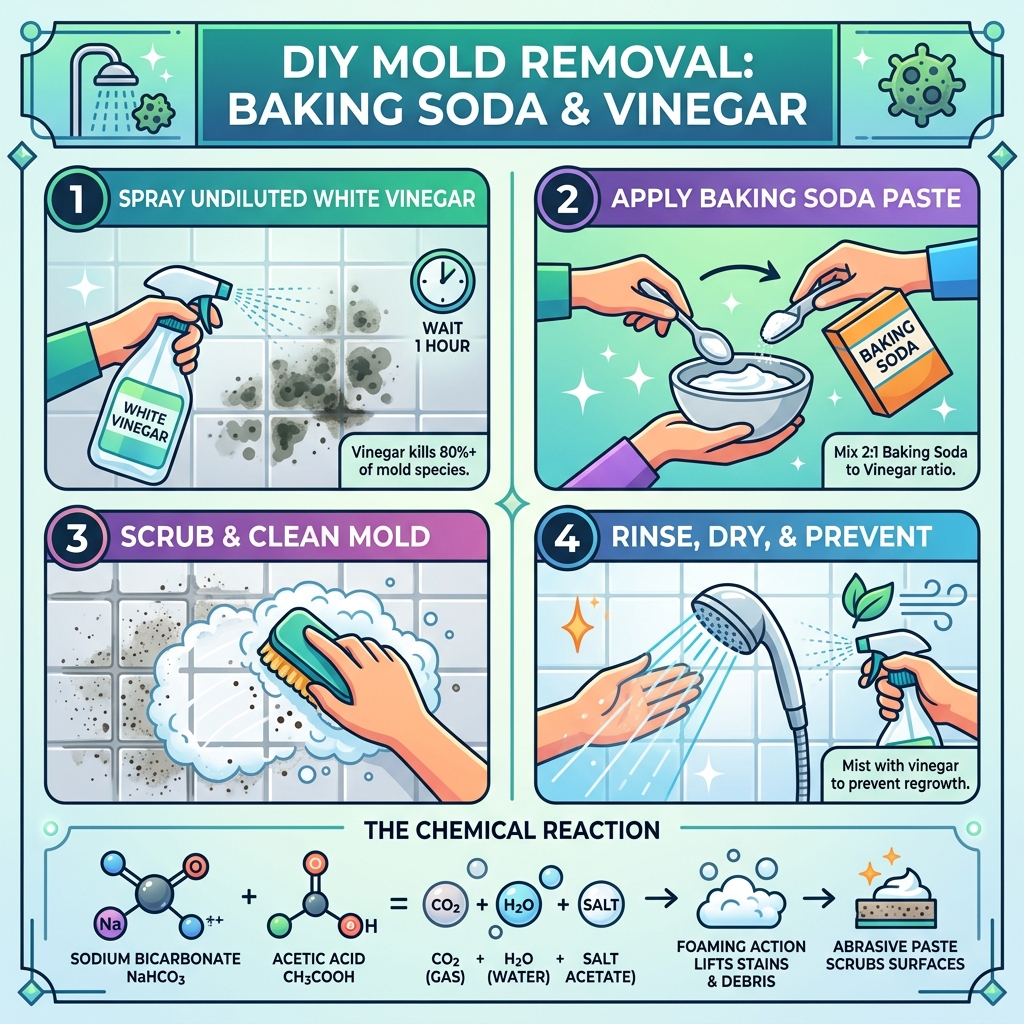
- Spray undiluted white vinegar directly onto the mold
- Wait at least 1 hour (vinegar kills 80%+ of mold species)
- Scrub with a baking soda paste (2:1 baking soda to vinegar ratio)
- Rinse with warm water and air dry
- Mist with vinegar again to prevent regrowth
Mold in the bathroom is frustrating. It creeps into grout lines, clings to tile, and keeps coming back no matter how often you scrub. Harsh chemical cleaners can work — but they come with fumes, skin irritation, and risks around kids and pets.
The good news? Two simple pantry staples — white vinegar and baking soda — are a surprisingly powerful, non-toxic alternative. Vinegar’s acetic acid penetrates mold at the root, while baking soda acts as a gentle abrasive and moisture absorber to stop it from coming back.
I’m marlen, and I’ve spent years researching and testing natural, chemical-free cleaning methods — including baking soda vinegar mold treatments — for everyday home use. In this guide, I’ll walk you through exactly how to use these two ingredients to get a genuinely clean, mold-free shower.
The Science Behind Baking Soda Vinegar Mold Removal
When we see mold, our first instinct is often to reach for the bleach. However, science tells us that for many household mold species, white vinegar is actually the superior weapon. White distilled vinegar typically contains about 5% acetic acid. This mild acid is powerful enough to disrupt the cellular structure of more than 80% of mold species, including the hazardous “black mold” (Stachybotrys chartarum).
Unlike bleach, which only kills mold on the surface and can actually leave the roots (hyphae) intact to grow back stronger, vinegar is able to penetrate porous materials. This is a critical distinction. If you only clean the surface, you aren’t solving the problem; you’re just giving the mold a haircut. To learn more about why this kitchen staple is so effective, check out our guide on The Magic of Vinegar in Homemade Cleaning Products.
Baking soda, or sodium bicarbonate, brings its own set of skills to the fight. While it isn’t as aggressive a “killer” as vinegar, it performs three vital roles:
- pH Alteration: Most molds thrive in acidic environments. Baking soda is alkaline, creating a surface environment that is inhospitable to fungal growth.
- Moisture Absorption: Mold needs water to survive. Baking soda draws moisture out of the air and the surface, essentially “starving” the mold.
- Mechanical Action: As a mild abrasive, it helps physically lift mold spores and stains away from the surface without scratching your expensive tiles.
When we combine these two, we get a foaming reaction. While the “volcano” effect is fun to watch, the real magic happens in the sequential application. By using vinegar to kill the spores and baking soda to scrub and deodorize, we address both the life cycle of the mold and the unsightly stains it leaves behind.
How to Clean Hard Surfaces: Tile, Grout, and Shower Walls
Hard surfaces like ceramic tile, glass, and shower walls are the most common places to find mold. Because these surfaces are mostly non-porous, they respond incredibly well to baking soda vinegar mold treatments.
For general cleaning of hard surfaces, we recommend starting with undiluted white vinegar. Do not dilute it with water! You want that 5% acidity to be at full strength to ensure you hit that 80-82% kill rate.
The Step-by-Step Process for Hard Surfaces:
- Pour undiluted white vinegar into a spray bottle.
- Saturate the moldy area completely.
- Let it sit for at least one hour. This “dwell time” is non-negotiable; the acid needs time to penetrate the mold’s defenses.
- After an hour, wipe the area with hot water.
- If stains remain, move on to the baking soda paste method.
Vinegar vs. Bleach for Mold Removal
| Feature | White Vinegar | Chlorine Bleach |
|---|---|---|
| Kill Rate | Kills 80-82% of mold species | Kills surface mold only |
| Porous Surfaces | Penetrates to kill roots (hyphae) | Cannot penetrate; may leave roots |
| Safety | Non-toxic, pet-safe, kid-safe | Toxic fumes, corrosive to skin/eyes |
| Surface Damage | Safe for most (except stone) | Can discolor grout and damage sealants |
| Environment | Biodegradable | Harsh chemical runoff |
If you are dealing specifically with the lines between your tiles, you might need a more targeted approach. You can find more details in our article on Bathroom Grout Cleaning Naturally.
How to Use Baking Soda Vinegar Mold Pastes on Grout
Grout is porous, meaning mold can dig deep into those narrow lines. This is where a paste is your best friend. A paste stays in place, allowing the ingredients to work on vertical surfaces like shower walls.
To make an effective paste, we use a 2:1 ratio of baking soda to vinegar (or water). For example, mix 8 tablespoons of baking soda with 4 tablespoons of vinegar. It will fizz—this is normal! Once the fizzing subsides, you’ll have a thick, spreadable paste.
Application Tips:
- Scrubbing: Use a stiff-bristled toothbrush or a dedicated grout brush. The abrasive nature of the baking soda helps dislodge the mold that the vinegar has already weakened.
- Wait Time: For light mold, let the paste sit for 10 minutes. For deeply embedded stains or very dirty grout, let it stand for up to 2 hours.
- The “Volcano” Effect: Applying vinegar over baking soda creates a bubbling action that can help lift dirt out of the tiny pores in the grout.
For more specific mixture ideas, see our Easy Peasy Recipes for Natural Grout Cleaners.
Rinsing and Preventive Misting
Once you’ve finished scrubbing, rinse the area thoroughly with clean, warm water. It’s important to remove all the baking soda residue, or it may leave a white, powdery film on your tiles.
The most important step for long-term success is what happens after the cleaning. To prevent the mold from returning, we recommend a “preventive misting” routine. Keep a spray bottle of undiluted vinegar in the shower. After your final shower of the day, give the walls and grout a light spritz. This keeps the pH level low and kills any new spores before they can take hold. For more daily habits, check out these Natural Bathroom Cleaning Hacks.
Removing Mold from Fabrics and Porous Materials
Mold isn’t just a bathroom problem; it can find its way onto shower curtains, towels, bath mats, and even clothing left in a damp laundry room. Treating fabrics requires a gentler touch than scrubbing tile.
For clothing or fabrics, an overnight soak is the most effective DIY method.
- Mix a 50/50 solution of water and white vinegar in a bucket or sink.
- Submerge the moldy item and let it soak for at least 8 to 12 hours.
- After the soak, wash the item in your washing machine on the hottest setting allowed by the care label.
- Add half a cup of baking soda to the wash cycle to help deodorize and lift stains.
One of the best “secret weapons” for fabric mold is actually the sun. If possible, hang your treated fabrics to dry in direct sunlight. Sunlight has natural bleaching properties and UV rays that help kill any remaining mold spores. This is a great way to ensure Safe Cleaning for Pets and Kids by avoiding heavy chemical detergents.
Treating Clothing and Upholstery
If mold has reached your carpet or upholstered furniture, you can’t exactly throw those in the wash. In these cases, we use a combination of vacuuming and spot treating.
Carpet and Upholstery Method:
- HEPA Vacuum: First, use a vacuum with a HEPA filter to remove as many dry spores as possible.
- Vinegar Spray: Lightly mist the area with a vinegar-water mix. Don’t soak it—excessive moisture is what caused the mold in the first place!
- Baking Soda Sprinkle: Sprinkle baking soda over the damp area. It will foam slightly.
- Dry and Vacuum: Let it dry completely (this may take several hours), then vacuum again.
For more laundry-specific tips, you might find our article on Unveiling the Power of Baking Soda: DIY Cleaning Solutions helpful. You can also add a tablespoon of borax to your baking soda paste for an extra boost against stubborn fabric stains.
Safety Precautions and Professional Limits
While we love a good DIY project, mold is a biological hazard. It can cause respiratory issues, allergic reactions, and in some cases, serious illness. Before you start your baking soda vinegar mold cleanup, you need to assess the scale of the problem.
The “10 Square Feet Rule” is the industry standard. According to the Environmental Protection Agency (EPA), if the mold covers an area larger than 10 square feet (roughly a 3×3 foot patch), you should stop and call a professional. Large infestations often indicate a deeper structural issue or a hidden leak that a spray bottle simply cannot fix. If you’re looking to Reduce Chemicals in Home Cleaning, doing the job safely the first time is key.
Safety Precautions for Baking Soda Vinegar Mold Cleanup
Even for small patches, protect yourself! Mold spores become airborne the moment you start scrubbing.
- N95 Respirator: A standard dust mask isn’t enough. You need an N95 mask to filter out microscopic spores.
- Gloves: Use long rubber or nitrile gloves to protect your skin.
- Goggles: Use goggles without ventilation holes to prevent spores from entering your eyes.
- Ventilation: Open windows and run exhaust fans. However, do not use a fan that blows directly on the mold, as this will spread spores throughout the house.
- Disposal: Any rags or sponges used to clean mold should be sealed in a plastic bag and thrown away immediately.
When to Call a Professional
DIY is great for surface mold on tile, but some situations require expert intervention:
- HVAC Systems: If you suspect mold is inside your heating or air conditioning ducts, do not attempt to clean it yourself. You could spread spores through the entire home’s air supply.
- Structural Damage: If the mold is growing on drywall that feels soft or “mushy,” the mold is likely inside the wall. The drywall will need to be replaced.
- Health Vulnerabilities: If someone in your home has asthma, severe allergies, or a compromised immune system, they should not be in the house during mold removal.
- Recurring Outbreaks: If the mold keeps coming back after multiple baking soda vinegar mold treatments, you likely have a hidden moisture source that needs professional detection.
Frequently Asked Questions
Does baking soda kill mold on its own?
Baking soda is an effective inhibitor, but it is less effective than vinegar at killing a wide range of mold species on its own. It works best as a partner. It alters the pH to make surfaces alkaline (which mold hates) and absorbs the moisture that mold needs to grow. While it can kill some strains of fungi, we always recommend using it in conjunction with vinegar for a complete “kill and scrub” cycle.
How long does it take for the treatment to work?
For hard surfaces, you must let the vinegar sit for at least one hour. For fabrics, an 8 to 12-hour soak is ideal. If you are using a baking soda paste on grout, give it anywhere from 10 minutes to 2 hours depending on the severity of the stain. Mold removal isn’t a “spray and wipe” instant process; patience is the secret ingredient!
What surfaces should I avoid using vinegar on?
Because vinegar is an acid, it can be destructive to certain materials. Never use vinegar on:
- Natural Stone: Granite, marble, and limestone will “etch” (lose their shine and develop pits) if exposed to acid.
- Aluminum and Cast Iron: Vinegar can cause corrosion.
- Waxed Wood: The acid can eat through the wax finish.
- Unsealed Grout: Always ensure your grout is sealed before using acidic cleaners regularly.
For more advice on floor care, see The Novice’s Guide to Homemade Tile Floor Cleaner.
Conclusion
At MoneyFinPro, we believe that a clean home shouldn’t come at the cost of your health or the environment. Using baking soda vinegar mold recipes is a scientifically sound, budget-friendly, and non-toxic way to keep your bathroom sparkling.
The best way to “clean” mold is to prevent it from growing in the first place. Keep your indoor relative humidity below 55%—if it’s higher, we strongly recommend using a dehumidifier. Fix leaks promptly, ensure your bathroom is well-ventilated, and keep that vinegar spray bottle handy for a quick post-shower mist.
For more tips on maintaining a healthy, chemical-free home, explore our full library of DIY Cleaners. Happy cleaning!
