
Why a Natural Upholstery Stain Remover Is All You Need for Cleaner Furniture
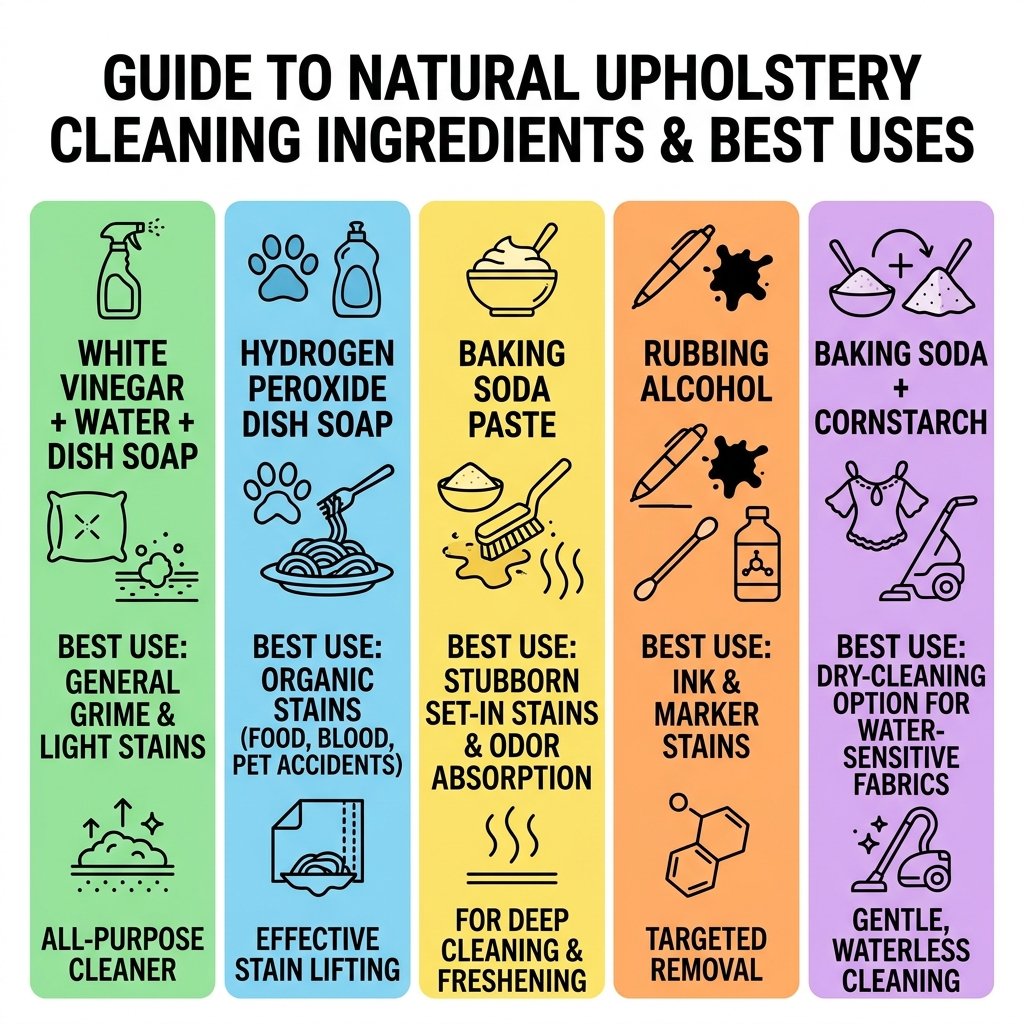
A natural upholstery stain remover works by using simple household ingredients to lift stains, neutralize odors, and freshen fabric — without harsh chemicals. Here are the most effective options:
- White vinegar + water + dish soap — best all-purpose cleaner for general grime and light stains
- Hydrogen peroxide + dish soap — best for organic stains like food, blood, and pet accidents
- Baking soda paste — best for stubborn set-in stains and odor absorption
- Rubbing alcohol — best for ink and marker stains
- Baking soda + cornstarch — best dry-cleaning option for water-sensitive fabrics
These ingredients are inexpensive, widely available, and safe for most households with kids and pets.
Spills happen. Whether it’s a glass of wine, a pet accident, or mystery marks left by kids, upholstered furniture takes a beating over time. The instinct is often to grab the strongest cleaner on the shelf — but harsh chemical products can fade fabric, leave residue, and fill your home with fumes.
The good news? You don’t need them.
Common pantry staples like white vinegar, baking soda, and dish soap have been tested on real stains — from 18-year-old dining chairs to cream recliners covered in food and drink spills — with impressive results. One home cleaner described reviving a heavily stained recliner after three years of use with two kids, bringing it back to looking nearly new using nothing but a DIY natural solution costing about $1 per batch.
Natural cleaners are also better for your furniture long-term. Commercial products sometimes contain ingredients that weaken fabric fibers or leave behind sticky residue that attracts more dirt.
My name is marlen, and I’ve spent years exploring eco-friendly home care solutions — including hands-on testing of natural upholstery stain remover recipes on a wide range of fabric types and stain challenges. In this guide, I’ll walk you through everything you need to clean your furniture safely and effectively.
Understanding Fabric Codes and Preparation
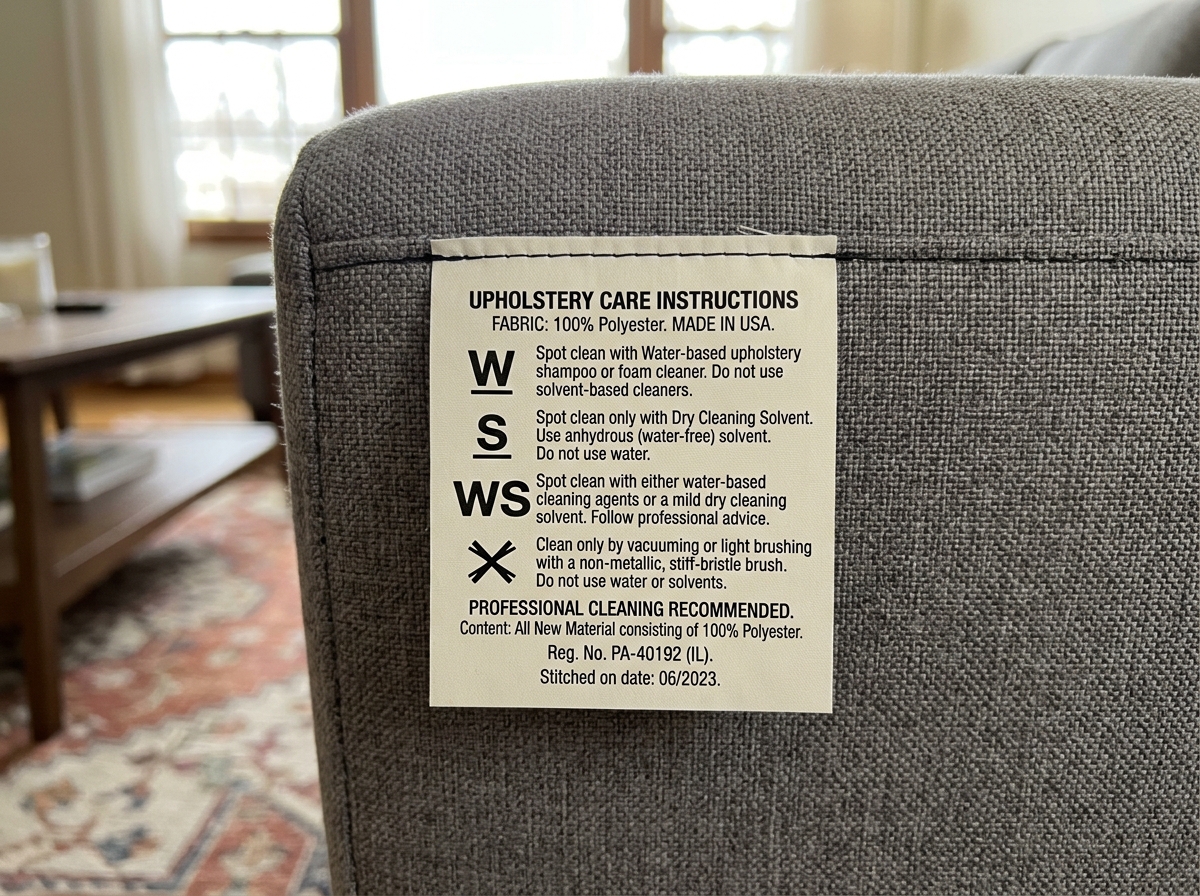
Before we dive into the mixing bowls, we have to talk about the “Golden Rule” of furniture care: check the tag. Every piece of upholstered furniture has a cleaning code, usually hidden under a cushion or on the bottom of the frame. Ignoring this code is the fastest way to ruin a sofa.
Deciphering the Cleaning Codes
- W (Water): This is the holy grail. You can use water-based cleaners (like our vinegar or soap recipes) safely.
- S (Solvent): Water is the enemy here. It can cause permanent rings or shrinkage. You must use a “dry” solvent-based cleaner, like rubbing alcohol or specialized dry-cleaning powders.
- WS (Water/Solvent): You have the best of both worlds. You can use water-based or solvent-based methods.
- X (Vacuum Only): Proceed with extreme caution. This fabric is delicate (like some silks or velvets) and should only be vacuumed. Professional help is usually required for stains.
The Pre-Cleaning Ritual
Once you know your code, the next step isn’t spraying—it’s vacuuming. Use your upholstery attachment to remove every bit of loose dust, pet hair, and crumbs. You’d be surprised how much a stain “fades” just by removing the grit trapped in the fibers. For old, set-in stains, vacuuming is essential to prevent you from rubbing surface dirt deeper into the fabric during the wet cleaning phase.
Finally, always perform a colorfastness test. Apply your chosen natural upholstery stain remover to a small, inconspicuous area (like the back of a leg or inside a hem). Let it dry completely. If the color bleeds or changes, stop immediately. For more detailed guidance, check out our eco-friendly upholstery cleaning tips.
Essential Ingredients for a Natural Upholstery Stain Remover
Nature has provided us with a surprisingly powerful toolkit for fighting grime. Most of these items are already in your kitchen, making them the most cost-effective way to maintain a healthy home.
- White Vinegar: The MVP of natural cleaning. Its acidity helps break down stubborn mineral deposits and neutralizes odors. Research shows that vinegar works really well on stubborn stains like coffee and tea.
- Baking Soda: A mild abrasive and a powerhouse deodorizer. It’s perfect for absorbing oils and lifting acidic soils.
- Hydrogen Peroxide (3%): This is nature’s bleach. It works through oxidation to break the chemical bonds of organic stains like blood or wine.
- Liquid Dish Soap: Acts as a surfactant, reducing the surface tension of water so it can penetrate the fabric and lift oil-based grime.
- Rubbing Alcohol: A solvent that evaporates quickly, making it ideal for ink stains or fabrics that can’t handle too much moisture.
- Cornstarch: Excellent for “dry cleaning” grease. It draws oil out of the fibers so you can vacuum it away.
Natural Ingredient Comparison Table
| Ingredient | Best For | Cleaning Action |
|---|---|---|
| White Vinegar | Odors, Coffee, Tea | Acidic breakdown |
| Baking Soda | Grease, Odors, Set-in stains | Absorption & Mild Abrasion |
| Hydrogen Peroxide | Blood, Wine, Pet Urine | Oxidation (Natural Bleaching) |
| Dish Soap | Food spills, General grime | Surfactant (Lifts oils) |
| Rubbing Alcohol | Ink, Paint, Marker | Solvent (Dissolves pigments) |
| Cornstarch | Fresh Grease/Oil | Capillary action (Draws out oil) |
Best DIY Natural Upholstery Stain Remover Recipes
Ready to mix? Having the right tools is just as important as the ingredients. We recommend using a high-quality spray bottle for even application and microfiber cloths, which are specifically designed to lift and trap dust rather than just pushing it around.
When you whip up your own eco-friendly upholstery cleaner, these solutions don’t contain preservatives. It’s best to mix them in small batches and use them within a week, especially recipes containing hydrogen peroxide, which loses its potency when exposed to light.
The All-Purpose Natural Upholstery Stain Remover
This is the go-to recipe for general “dinginess” on couches and chairs. It’s gentle enough for most “W” and “WS” fabrics but tough enough to handle everyday life.
- Recipe: 1/4 cup white vinegar, 3/4 cup warm water, and 1/2 tablespoon of natural dish soap.
- Instructions: Mix in a spray bottle and shake well. Mist the area lightly—do not soak the cushions! Use a microfiber cloth to scrub in circular motions.
- Expert Tip: To avoid watermarks, it is often better to clean the entire “section” (like the whole cushion) rather than just a tiny spot.
Heavy-Duty Oxygenated Natural Upholstery Stain Remover
For organic disasters (pet accidents, spilled juice), you need the power of science. This recipe relies on the chemical reaction between oxidation and surfactants.
- Recipe: 1 cup of 3% hydrogen peroxide and 1/4 cup of concentrated blue dish soap.
- Instructions: Combine gently in a dark spray bottle (to protect the peroxide). Spray the stain and let it “dwell” for 5-10 minutes.
- The “Rubbing Up” Technique: This is a professional secret. Instead of rubbing the stain down into the fabric or in circles, use a cloth to rub upwards toward your body. This helps pull the stain out of the fibers rather than pushing it into the foam padding below.
Step-by-Step Process for Tough Stains
Cleaning a stain is a marathon, not a sprint. If you rush it, you might end up with a permanent watermark or a “clean spot” that looks worse than the original mess.
- Blot, Don’t Rub: For fresh spills, use a clean, dry towel to blot as much liquid as possible. Press down hard, but don’t move the towel side-to-side.
- Steam (Optional): For old, set-in stains, a little steam from an iron (held an inch away) can help loosen the fibers before you apply your natural upholstery stain remover.
- Apply and Dwell: Spray your cleaner and let it sit. This “dwell time” allows the ingredients to break the chemical bonds of the stain.
- Agitate: Use a soft-bristle brush or microfiber cloth to gently work the cleaner into the fibers using that “upward” motion.
- Rinse: Use a separate cloth dampened with plain water to “rinse” the soap away. Leftover soap residue will actually attract more dirt later!
- Dry Properly: This is the most overlooked step. Use a fan or open windows to ensure the fabric dries within 4 hours. If it stays damp too long, you risk mold or musty odors.
Specific Solutions for Wine, Ink, and Grease
- Red Wine: If a fresh spill occurs, blot immediately. If it’s stubborn, many experts suggest specialized natural removers like Wine Away, which are designed to target the pigments in grapes. Alternatively, use the hydrogen peroxide and soap mix.
- Ink and Marker: Dip a cotton ball in rubbing alcohol and dab the stain. The alcohol dissolves the ink. Blot with a clean paper towel immediately to lift the dissolved pigment.
- Grease and Oil: Sprinkle a thick layer of baking soda or cornstarch on the spot. Let it sit for at least 20 minutes (or overnight for old stains) to soak up the oil, then vacuum. If a mark remains, follow up with the dish soap and vinegar solution.
- Pet Urine: Use an enzymatic cleaner if possible, or a heavy-duty peroxide mix. The goal is to break down the uric acid crystals that cause the lingering smell.
Frequently Asked Questions about Natural Cleaning
Can I use vinegar and baking soda together on upholstery?
While the “volcano” reaction is fun for science fairs, mixing them in a bottle actually neutralizes both. The vinegar (acid) and baking soda (base) turn into mostly salty water. It’s better to use them in phases: use a baking soda paste first to lift the stain, let it dry, vacuum, and then follow up with a vinegar spray to rinse and deodorize.
How do I dry my furniture quickly after spot cleaning?
Air circulation is key. Point a floor fan directly at the damp spot. If you have a shop-vac, you can use the suction to pull excess moisture out of the fabric before air drying. Never use a hair dryer on high heat, as some synthetic fabrics (like polyester) can actually melt or “set” the stain permanently.
Is hydrogen peroxide safe for dark-colored fabrics?
Generally, 3% hydrogen peroxide is safe for most colorfast fabrics, but it is a mild bleaching agent. This is why the inconspicuous spot test is non-negotiable. If you’re worried about a dark navy or black sofa, stick to the vinegar and water solution.
Conclusion
Maintaining a beautiful home shouldn’t require a cabinet full of toxic chemicals. By understanding your fabric codes and keep a few simple ingredients on hand, you can tackle almost any mess life throws at your furniture. Whether you’re using a vinegar-based natural upholstery stain remover for a quick refresh or a heavy-duty peroxide mix for a major spill, the key is patience and the right technique.
Regular maintenance—like vacuuming weekly and treating spills immediately—will extend the life of your furniture and keep your living space healthy for your family and pets. At MoneyFinPro, we believe that small, sustainable changes in how we care for our homes can lead to a big impact on our well-being and the environment.
Start your journey toward a more sustainable home today and discover how easy it is to live a chemical-free life!
