
Why Zero VOC Fabric Cleaners Are Worth Your Attention
Zero VOC fabric cleaners are non-toxic cleaning products that contain little to no Volatile Organic Compounds — the harmful chemicals that evaporate into your home’s air from many traditional cleaners.
Here are the top zero VOC fabric cleaners worth knowing about:
| Product | Best For | VOC Content |
|---|---|---|
| AFM SafeChoice Multi-Purpose Cleaner | General fabric, carpet, upholstery | 0.0 g/L |
| HypoAir TotalClean | Fabric, odor removal, all surfaces | 0 g/L |
| ECOS Fabric Odor Eliminator | Carpets, bedding, curtains | Plant-powered, Safer Choice certified |
| Carpet Details Spot Cleaner | Wool rugs | 100% VOC-free |
| EnviroKlenz Carpet Deodorizer | Carpet odors | 100% VOC-free |
| CRC HydroForce Zero VOC Cleaner | General purpose fabric and surfaces | 0 g/L |
Most people don’t realize that the cleaning products they spray on their couch or carpet can release chemicals directly into the air they breathe every day. Traditional fabric cleaners often contain solvents and fragrances that contribute to poor indoor air quality — especially in closed rooms.
The good news? Zero VOC options have come a long way. They now match — and sometimes beat — conventional cleaners on performance, without the health trade-offs.
I’m marlen, a non-toxic living researcher with hands-on experience testing and reviewing zero VOC fabric cleaner products for everyday home use. Whether you’re dealing with pet stains on upholstery or just want safer options for your family, this guide covers everything you need to make a smart switch.
Understanding the Benefits of a Zero VOC Fabric Cleaner
When we talk about “clean” homes, we usually mean surfaces free of dust and grime. But at MoneyFinPro, we believe a truly clean home is one where the air is as pure as the upholstery. Using a zero VOC fabric cleaner is one of the most effective ways to protect your family’s respiratory health.
Volatile Organic Compounds (VOCs) are gases emitted from certain solids or liquids. In cleaning, these often come from the solvents used to break down grease or the synthetic fragrances used to mask odors. These compounds don’t just stay on the fabric; they “off-gas” into your living room, where they can cause headaches, dizziness, and long-term respiratory issues.
By switching to products with zero VOC specifications, we are choosing to eliminate these invisible irritants. For instance, technical cleaners like the CRC HydroForce Zero VOC General Purpose Cleaner are engineered to have 0 g/L VOC content. This means they don’t contribute to photochemical smog or indoor pollution.
Beyond personal health, these cleaners are significantly better for the environment. Traditional solvents can be halogenated or contain ozone-depleting substances. Zero VOC formulas avoid these entirely, ensuring that your cleaning routine doesn’t come at the cost of the planet. For more detailed strategies on maintaining a healthy home, check out our eco-friendly upholstery cleaning tips.
Why a Zero VOC Fabric Cleaner Is Safer for Pets and Children
Our pets and children spend a lot of time close to the ground—and the furniture. Whether it’s a toddler napping on a fabric sofa or a dog curled up on the rug, they are in direct contact with whatever cleaners we use.
Standard cleaners often leave behind toxic residues or “noxious fumes” that can irritate sensitive skin and developing lungs. A zero VOC fabric cleaner typically utilizes safer building blocks:
- Enzyme Cleaners: These use natural microbe cultures to “eat” organic stains like pet waste or food spills. They are highly effective but gentle enough for homes with active pets.
- Iodine-Based Formulas: Some advanced cleaners, like HypoAir TotalClean, use iodine and cuprous iodide. These ingredients are safe enough for use in hospitals but powerful enough to eliminate odors at a molecular level.
- Plant-Derived Surfactants: Instead of harsh petroleum-based chemicals, many eco-friendly options use sugars from plants like beets to lift dirt.
If you’re feeling adventurous, you can even whip-up-your-own-eco-friendly-upholstery-cleaner using simple, non-toxic household staples. This gives you total control over every ingredient that touches your family’s skin.
Improving Indoor Air Quality with Sustainable Products
We often think of air purifiers as the primary way to fix indoor air, but we like to say that air purification is just one piece of the puzzle. The more effective strategy is to stop the toxins from entering the home in the first place.
Many of the top zero VOC brands are leading the way in sustainable manufacturing. For example, ECOS manufactures its products in facilities powered by 100% renewable energy and has achieved a “climate positive” status. This means they restore more than 100% of the carbon, water, and energy used during production.
When we use biodegradable, zero VOC products, we are supporting a circular economy. These cleaners break down naturally without harming aquatic life when they go down the drain. For those looking to extend these benefits to the entire floor, our eco-friendly carpet cleaning tips offer a deeper dive into maintaining soft surfaces without the chemical haze.
Top-Rated Non-Toxic Cleaning Solutions for Every Home
Finding the right zero VOC fabric cleaner can feel overwhelming given the number of “greenwashed” products on the market. To help you choose, we’ve vetted the top performers based on their VOC levels and cleaning efficacy.
| Feature | Traditional Cleaner | Zero VOC Cleaner (e.g., AFM/HypoAir) |
|---|---|---|
| VOC Content | 50 – 200+ g/L | 0.0 g/L |
| Odor | Strong/Chemical/Floral | Odorless or light plant-scent |
| Residue | Often sticky (attracts dirt) | Low to no residue |
| Safety | May irritate skin/eyes | Generally safe for sensitive skin |
One standout is the AFM SafeChoice Multi-Purpose Cleaner. Known in some circles as “Super Clean,” it was specifically designed for chemically sensitive individuals. It is highly concentrated, meaning a single bottle can be diluted for various tasks, from light fabric refreshing to heavy-duty degreasing.
Another favorite is the ECOS Fabric Odor Eliminator. Unlike traditional air fresheners that just mask smells with synthetic perfume, this uses plant-powered ingredients to neutralize odor molecules on fabrics, bedding, and curtains.
Choosing a Zero VOC Fabric Cleaner for Wool and Silk
Delicate fabrics like wool and silk require a special touch. You cannot use high-pH cleaners or harsh solvents on these fibers without risking permanent damage or “burning” the natural proteins.
For these materials, we recommend mineral-based powders or pH-neutral liquids. Products like Carpet Details Spot Cleaner are 100% odorless and VOC-free, specifically formulated for wool. They work by using natural minerals to encapsulate dirt, which can then be easily blotted away.
If you are laundering delicate items, the ZERO Delicate Laundry Liquid is an excellent choice. It is “Allergy Approved” by the British Allergy Foundation and contains 0% fragrance and 0% coloring. It’s designed to work in cold washes (30-40°C), which is essential for preserving the integrity of silk and wool fibers.
Industrial Strength Performance Without the Chemicals
There is a common myth that “eco-friendly” means “weak.” We’re happy to report that’s simply not true anymore. Many zero VOC cleaners are now used in industrial settings to replace harsh chemicals like TSP (Trisodium Phosphate).
TSP is often used to clean walls or heavy grease, but it has a very high pH and can cause respiratory irritation. AFM SafeChoice serves as a non-toxic replacement that is strong enough to remove copy machine toner from fabric—a notoriously difficult task—without the health risks.
For precision industrial maintenance, products like Eco-Spray ZV-2 offer a zero VOC cleaner/degreaser that evaporates quickly and leaves no residue. It’s safe on all metals and composites, proving that you don’t need toxic solvents to get a professional-grade clean. For more on maintaining various furniture types, see our eco-friendly furniture cleaning guide.
How to Apply Non-Toxic Cleaners for Best Results
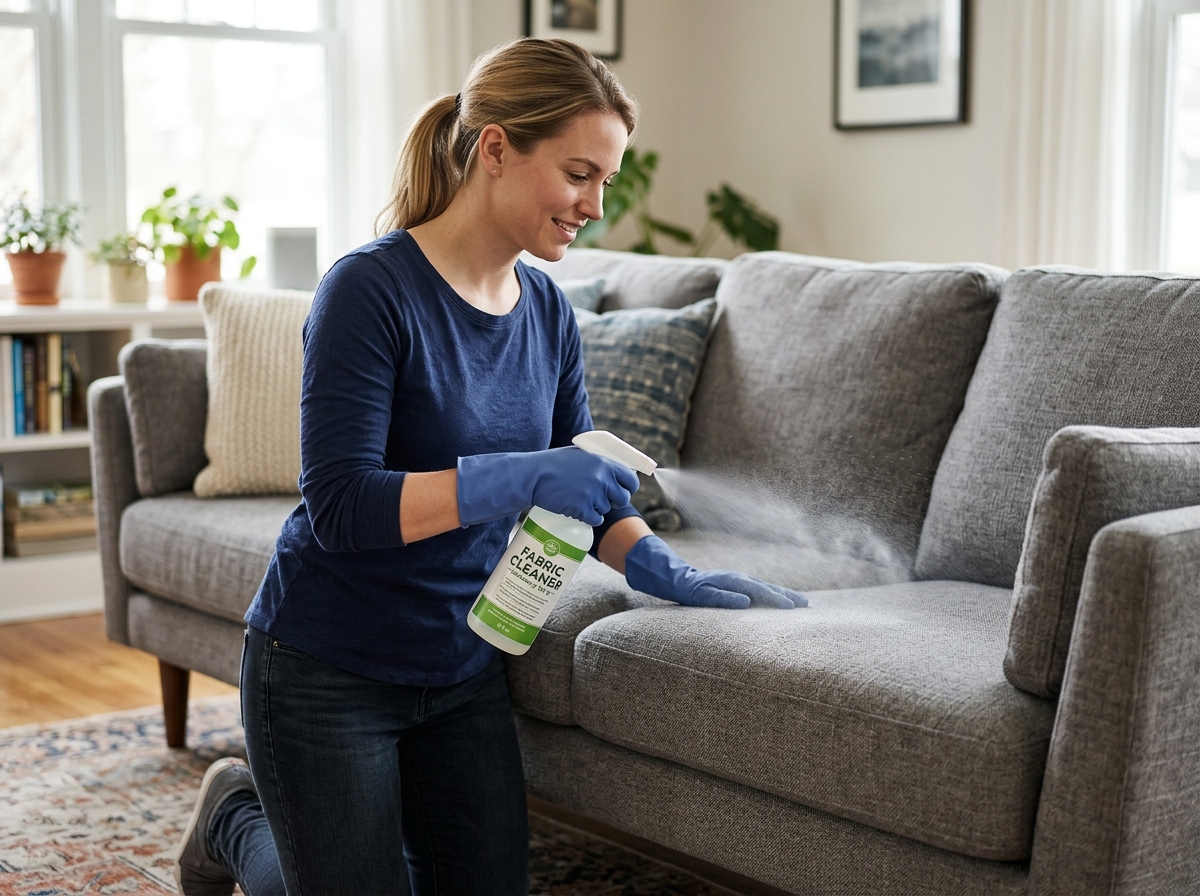
Using a zero VOC fabric cleaner effectively requires a slightly different approach than traditional “spray and pray” methods. Because these cleaners often lack the aggressive solvents that melt dirt instantly, they rely on “dwell time” and proper agitation.
- Vacuum First: This is the most skipped step. Always vacuum the fabric or upholstery thoroughly to remove loose dirt and debris. If you spray liquid onto a dusty couch, you’re just making mud.
- Pre-treat Stains: Lightly mist the cleaner over the affected area. If you’re using a concentrate like SafeChoice, ensure you’ve followed the dilution instructions for “upholstery.”
- Agitate Gently: Use a soft interior brush or a clean microfiber towel to work the cleaner into the fibers. You aren’t trying to scrub the fabric away; you’re just ensuring the cleaner reaches the base of the fibers.
- Dwell Time: Let the cleaner sit for 5-10 minutes. This allows enzymes or surfactants to break the bond between the stain and the fabric.
- Blot, Don’t Rub: Use a clean, dry white towel to blot the area. You’ll see the stain transfer to the towel.
- Extraction (Optional): For deep cleaning, a hot water extractor can be used after the pre-treatment to rinse away the loosened contamination.
This process is also applicable when you are transitioning to other surfaces in your home. For example, our guide on safe-cleaning-for-wooden-furniture emphasizes similar gentle techniques to preserve finishes.
Effective Stain and Odor Removal Techniques
Organic stains—think food, wine, or pet accidents—are the most common upholstery headaches. To tackle these without VOCs, we look toward molecular elimination.
- For Pet Messes: Use an enzyme-based spray. The enzymes continue to work as long as the area is damp, effectively “digesting” the organic matter that causes odors.
- For Greasy Spills: A zero VOC degreaser like ZER06 Fabric Clean is ideal. It’s a low-residue formula that prevents a “sticky” film from remaining on the fabric, which would otherwise attract more dirt later.
- Colorfastness Testing: Always, always test a small, hidden area first. Even non-toxic cleaners can react with certain dyes. Spray a small amount, wait, and blot with a white cloth to see if any color transfers.
Frequently Asked Questions about Non-Toxic Cleaning
Are zero VOC cleaners effective on heavy-duty stains?
Absolutely. While they might require a few extra minutes of dwell time, zero VOC cleaners like AFM SafeChoice and HypoAir TotalClean are designed for industrial performance. They can handle heavy grease, food spills, and even ground-in dirt. The key is the concentration; for heavy-duty tasks, use a stronger dilution ratio as recommended on the product label.
Can I use these cleaners on all surfaces?
Most zero VOC fabric cleaners are “all-purpose,” meaning they are safe for water-safe fabrics, carpets, and even hard surfaces like tile or stainless steel. However, there are exceptions. For instance, AFM SafeChoice is not recommended for use on aluminum as it can cause staining. Always check the label for surface compatibility, especially for delicate leathers or unsealed stone.
What safety certifications should I look for?
When shopping for a zero VOC fabric cleaner, look for these third-party stamps of approval:
- U.S. EPA Safer Choice: Indicates the product meets stringent human health and environmental criteria.
- Leaping Bunny: Guarantees the product and its ingredients are 100% cruelty-free.
- NSF Category A1: This means the cleaner is safe for use on surfaces that may come into contact with food.
- Allergy Approved: Certified by organizations like the British Allergy Foundation for being safe for sensitive skin.
Conclusion
Transitioning to a zero VOC fabric cleaner is more than just a cleaning choice; it’s a commitment to a healthier, more sustainable lifestyle. By choosing products that prioritize indoor air quality and avoid toxic off-gassing, we protect our families and our environment simultaneously.
At MoneyFinPro, we believe that everyone deserves a home that feels as good as it looks. Whether you are dealing with chemical sensitivities or simply want to reduce your household’s toxic load, the options available today prove that you don’t have to sacrifice cleaning power for safety.
Ready to take the next step in your eco-friendly journey? Start your journey toward a sustainable home and discover how small changes in your cleaning cupboard can lead to a lifetime of better health.
