
Why a Natural Wine Stain Remover Works Better Than You Think
Natural wine stain remover solutions are some of the most effective tools you have against red wine spills — and most of them are already in your kitchen.
Here are the best natural options to remove a red wine stain fast:
| Situation | Best Natural Remedy |
|---|---|
| Fresh stain on fabric | Blot immediately, flush with cold water, apply table salt |
| Dried stain on clothing | Soak in white vinegar or apply baking soda paste |
| Stain on carpet or upholstery | Baking soda + cold water, blot with microfiber cloth |
| White or light fabrics | Baking soda + hydrogen peroxide + liquid soap |
| Delicate fabrics (wool, silk) | Diluted white vinegar or milk soak |
| Away from home | Sparkling water or club soda, blot dry |
The golden rule: Act fast, blot — never rub — and always use cold water. Heat sets stains permanently.
Red wine is one of the most stubborn stains around. That deep crimson color comes from powerful natural pigments in the wine. If you just toss a stained shirt in the wash without pre-treating it, you are likely making it worse.
The good news? You do not need harsh chemicals. Simple, eco-friendly ingredients from your pantry can break down even set-in stains — when used correctly.
I’m marlen, and I’ve spent years researching and testing natural cleaning methods, including the best natural wine stain remover techniques for every surface and fabric type. In the sections below, I’ll walk you through exactly what works, what doesn’t, and why.

Natural wine stain remover terms at a glance:
The Science of Why Red Wine Stains Are So Stubborn
To defeat the enemy, we must first understand it. Red wine is essentially a masterclass in natural dyeing. The deep, beautiful hues we admire in a glass of Cabernet or Malbec are caused by anthocyanins. These are the same pigments found in blueberries and grapes, and they are incredibly efficient at bonding with organic fibers like cotton, linen, and wool.
Furthermore, red wine contains tannins. Historically, tannins have been used in the leather tanning process and to create permanent inks and dyes. When wine hits a fabric, these tannins act as a “mordant,” helping the color stick to the fibers. These chromogens (color-bearing molecules) penetrate deep into the microscopic pores of the material.
The acidity of the wine also plays a role. It can slightly soften the structure of certain fibers, making it easier for the pigment to settle in. This is why a red wine spill often feels like a “frantic bloodbath” on a white carpet. If you want to dive deeper into the chemistry of colors, check out the-green-guide-to-removing-stubborn-pigment-stains to see how these pigments differ from synthetic dyes.
Choosing the Right Natural Wine Stain Remover for Every Surface
Not all fabrics are created equal, and neither are all natural cleaners. Using the wrong ingredient on a delicate silk scarf could be just as damaging as the wine itself. We recommend keeping a “stain-fighting kit” of eco-friendly essentials on hand.
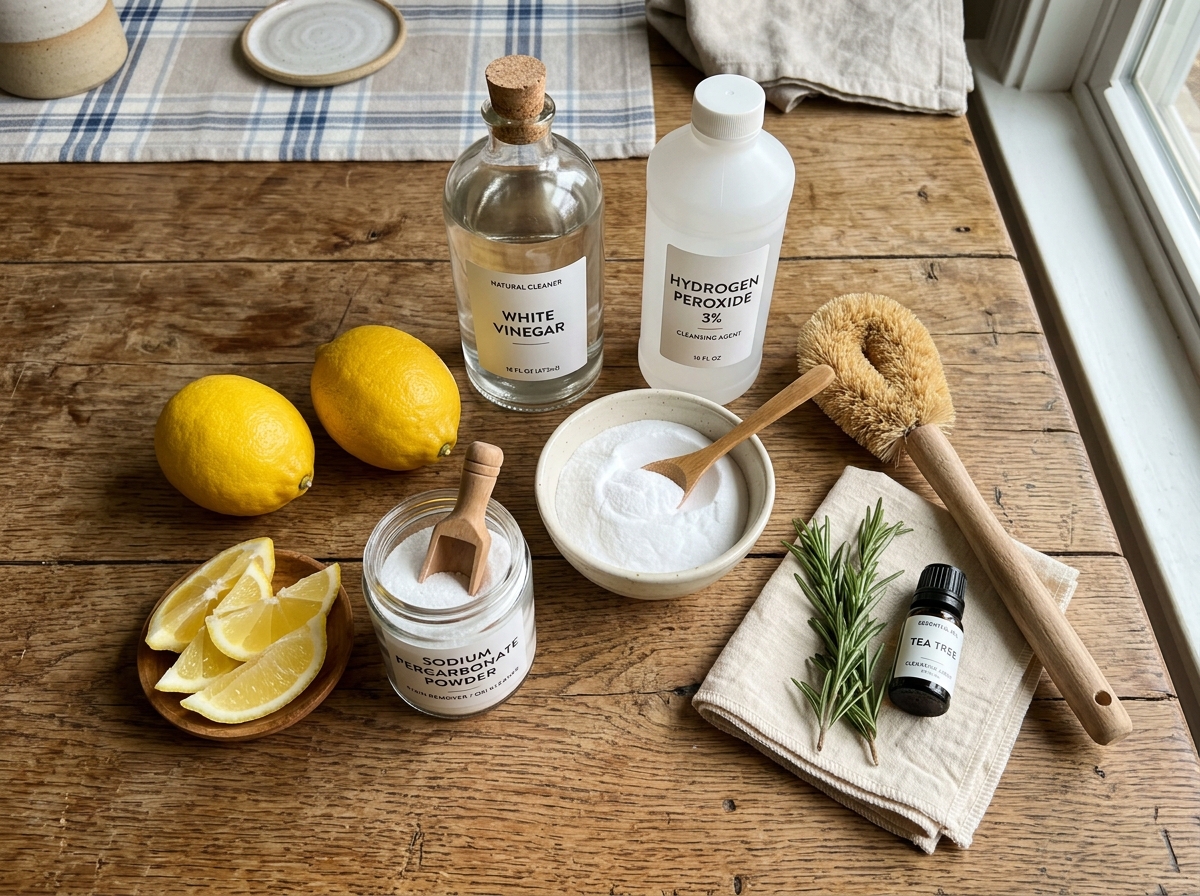
Here are the heavy hitters in our natural wine stain remover arsenal:
- Sodium Percarbonate: Often called “oxygen bleach,” this is a winery-insider secret. It decomposes into oxygen, water, and soda ash, making it incredibly eco-friendly and powerful for lifting pigments without the toxicity of chlorine bleach.
- White Vinegar: Its acetic acid helps break down the structure of the wine pigments.
- Hydrogen Peroxide: A mild bleaching agent that works wonders on whites (use a 3% solution, roughly hydrogen peroxide 2 TBSP mixed with water).
- Marseille Soap: A traditional vegetable-oil-based soap that is gentle yet effective at breaking down the organic compounds in wine.
- Lemon Juice: The citric acid acts as a natural whitener and stain lifter.
For more tips on general household messes, see our guide on natural-ways-to-lift-food-stains-and-pet-hair.
DIY Natural Wine Stain Remover Recipes for Fresh Spills
When the spill is fresh, your goal is “dilution and absorption.” Here is how we handle it:
- The Salt Method: Immediately blot the excess wine. Then, cover the area with a thick layer of table salt. The salt pulls the liquid (and the pigment) out of the fibers through capillary action. Leave it for at least 30 minutes, then rinse with cold water.
- Club Soda or Sparkling Water: The carbonation in club soda helps to physically lift the wine particles out of the fabric. Pour it on, blot, and repeat. It’s a classic for a reason.
- The Boiling Water Method (For Sturdy Fabrics): For a cotton tablecloth, stretch the stained area over a bowl and pour boiling water from a height of about a foot. The physical force and heat can flush the pigments out before they bond—but only do this for fabrics that can handle high heat!
- Cold Water Flush: If you have nothing else, a simple flush from the back of the fabric with cold water can prevent the stain from settling.
Reviving Fabrics with a Natural Wine Stain Remover for Dried Spots
If you wake up the next morning to a purple shadow on your favorite shirt, don’t panic. Dried stains require a bit more chemistry to re-hydrate and lift the pigment.
- Glycerin and Enzyme-Rich Soap: Applying a bit of vegetable glycerin can help soften a dried stain. Follow this with a plant-based-stain-lifters-that-make-laundry-day-eco-friendly solution. Plant-based enzymes (like proteases) are specifically designed to break down organic chains.
- The Milk Soak: It sounds like an old wives’ tale, but it works. Submerge the stained area in a bowl of milk for 30–60 minutes. The fats and proteins in the milk bond with the wine pigments, pulling them out of the fabric.
- The Toothpaste Hack: For non-delicate fabrics, a non-gel, whitening toothpaste can act as a mild abrasive to lift dried residue.
- Sodium Percarbonate Paste: Mix a small amount of sodium percarbonate with warm water to create a paste. Apply it to the stain and let it sit for several hours. This is the “heavy artillery” of the natural wine stain remover world.
Step-by-Step Guide for Carpet and Upholstery
Carpets and couches are tricky because you can’t just throw them in the washing machine. The key here is to avoid over-saturating the padding while still being thorough.
- Blot, Don’t Rub: Use a clean microfiber cloth to soak up as much wine as possible. Rubbing pushes the wine deeper into the carpet backing.
- Apply Baking Soda: Create a paste of 3 parts baking soda to 1 part water. Spread it over the stain and let it dry completely.
- The Vacuum Finish: Once the paste is dry, it will have absorbed much of the pigment. Vacuum up the residue.
- Vinegar Rinse: If a shadow remains, mist the area with a mixture of white vinegar and distilled water. Blot dry again.
- Cornstarch Absorption: If the area still feels damp or oily (some wines have higher residual sugar), sprinkle cornstarch to pull out the remaining moisture.
For pet owners, these methods are especially useful because they are non-toxic. You can find more pet-safe-stain-removers-that-actually-work-on-tough-odors in our dedicated guide.
Specialized Care for Delicate and Colored Fabrics
Delicate fibers like wool and silk require a gentler touch. High pH cleaners or harsh scrubbing can ruin the texture of these materials.
| Fabric Type | Recommended Natural Treatment | Precautions |
|---|---|---|
| Wool | Half water / half ammonia solution (or milk) | Never use high heat; rinse thoroughly |
| Silk | Diluted white vinegar or denatured alcohol | Test for colorfastness; do not soak for long |
| Cotton | Boiling water flush or sodium percarbonate | Generally sturdy, but check for bright dyes |
| Synthetic | Dish soap and hydrogen peroxide mix | Avoid melting fibers with high heat |
- The White Wine Trick: It sounds counterintuitive, but pouring white wine on a red wine stain can help neutralize the pigments. The enzymes in the white wine help keep the red pigments from setting.
- Denatured Alcohol: For silk, a small amount of denatured alcohol on a cotton ball can help lift the stain without water-spotting the fabric.
- Ammonia for Wool: While strong, a very diluted ammonia solution can be a lifter for stubborn wool stains. Always rinse with cool water afterward.
- How to Remove Grape Stains Naturally: Wine is just fermented grape juice. The same rules apply to grape juice spills—act fast with cold water and lemon juice to keep those purple shadows at bay.
Always perform a colorfastness test on an inconspicuous area before applying any natural wine stain remover. Apply a small amount of your cleaner to an inside seam, wait a few minutes, and blot with a white cloth. If the fabric’s color comes off, stop immediately.
Common Mistakes and Emergency On-the-Go Solutions
We’ve all been there: a “tipsy stumble” at a holiday party leads to a splash on your favorite sweater. In the heat of the moment, people often make the same three mistakes:
- Using Heat: Never use a hair dryer or hot water on a fresh stain. Heat “cooks” the proteins and pigments into the fiber.
- Scrubbing: Friction damages fibers and spreads the pigment.
- Waiting: The longer the wine sits, the more time the tannins have to act as a dye.
Emergency Solutions Away From Home:
- The Gin Method: If you’re at a bar and don’t have club soda, a splash of clear gin or vodka can act as a solvent to keep the pigment from bonding until you get home.
- White Napkin Blotting: Use only white napkins. Colored napkins can actually transfer their own dye onto your clothes!
- Salt from the Table: If you’re at dinner, ask for a salt shaker and pile it on. It’s the best “first aid” for a spill.
When to call a professional: If the stain is on a vintage heirloom, “dry clean only” silk, or natural suede/leather, do not attempt a DIY fix. These materials require specialized solvents and low-moisture techniques that only a professional can provide.
Frequently Asked Questions about Natural Wine Removal
Can baking soda damage my delicate fabrics?
Generally, baking soda is safe for most fabrics because it is only mildly alkaline. However, on very delicate silks or certain wools, the abrasive nature of the powder could cause slight pilling if rubbed too hard. Always “tamp” (tap) the powder in rather than scrubbing.
Is white wine actually effective at removing red wine?
Yes, but it’s not a “cleaner”—it’s a diluter. The white wine helps keep the red pigments from drying and bonding. You still need to follow up with a proper wash or a more potent natural wine stain remover like vinegar or soap.
Why did my wine stain turn blue or purple after treatment?
This is a chemical reaction! Anthocyanins are natural pH indicators. When you apply an alkaline substance (like baking soda or some soaps) to the acidic wine, it can change color to blue, green, or dark purple. Don’t panic; this usually means the cleaner is interacting with the pigment. Continue with a vinegar rinse (which is acidic) to help neutralize the color and lift the residue.
Conclusion
At MoneyFinPro, we believe that a clean home shouldn’t come at the cost of the environment. Whether you are dealing with a “sleepy splash” at home or a holiday party mishap, these natural wine stain remover techniques prove that you don’t need a cabinet full of chemicals to save your favorite fabrics.
By acting quickly, blotting instead of rubbing, and using the power of simple ingredients like vinegar, salt, and sodium percarbonate, you can keep your home eco-friendly and stain-free. For more tips on living a sustainable and eco-conscious lifestyle, explore our other green cleaning guides. Now, go ahead—pour that glass of Malbec with confidence!
